DJI Mic Mini 2S Launches July 2 with 14.5GB Onboard Storage and 32-Bit Float Recording
DJI has confirmed the Mic Mini 2S will go on sale on July 2, 2026 at 8 p.m. local time. The 12-gram wireless microphone transmitter adds 14.5GB of internal storage, native 32-bit float recording, and support for up to four transmitters paired to a single receiver — closing the most significant feature gap between the entry-level Mini line and the flagship Mic 3.
Highlights
- DJI Mic Mini 2S launches July 2, 2026, and is the first Mini-series transmitter to support onboard recording directly to 14.5GB of internal storage.
- The transmitter supports 32-bit float recording at 48kHz, providing enough dynamic range to recover audio from whispers to loud sounds without manual gain adjustment.
- Up to four Mini 2S transmitters can be paired to a single receiver simultaneously, doubling the two-transmitter limit of the original Mic Mini 2.
- At 12 grams (0.42 oz) and 400 metres (1,312 ft) of transmission range, the Mini 2S retains the Mini 2's compact form factor with only a 1-gram weight increase.
- Pricing has not been announced; the Mic Mini 2 launched at approximately $89 in the U.S., and the 2S is expected to be priced higher but below the flagship Mic 3.
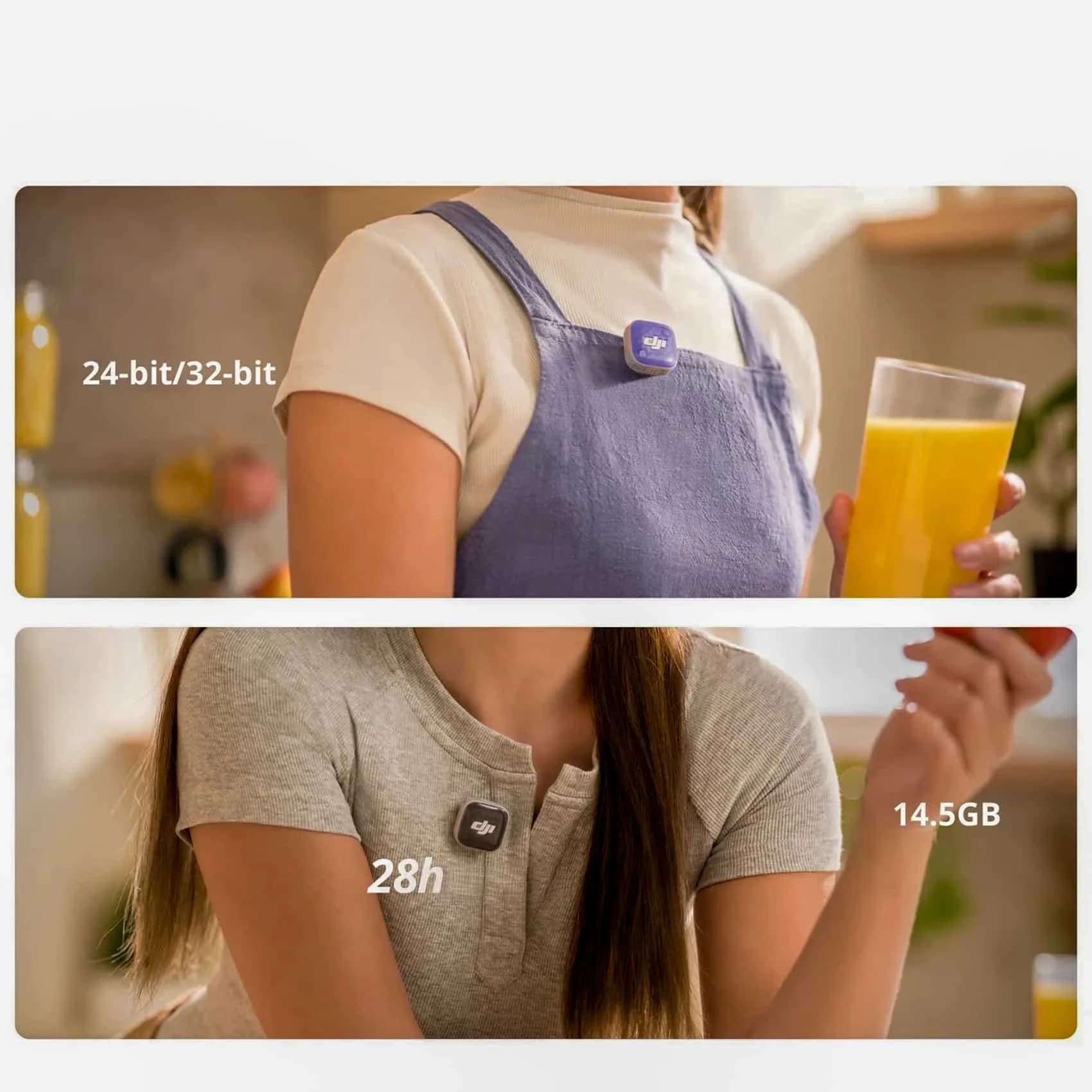
DJI has officially confirmed that the Mic Mini 2S will go on sale on July 2, 2026 at 8 p.m. local time. The smallest product in DJI's audio lineup receives a major upgrade with 14.5GB of internal storage and support for both 24-bit and 32-bit float recording. The announcement closes the most significant functional gap between the entry-level Mini series and the flagship Mic 3.
Image credit: DJI
The Mini 2S carries forward the 12-gram (0.42 oz) transmitter form factor and 400-metre (1,312 ft) effective transmission range introduced with the Mic Mini 2, which launched in April 2026. The critical change: when the receiver loses signal, the transmitter continues recording locally.
This makes the Mic Mini 2S the first DJI Mini-series microphone capable of recording directly to the transmitter rather than streaming exclusively to a receiver. For solo creators and small drone filmmaking crews, the practical impact of this upgrade goes well beyond what the spec sheet conveys.
What the Mini 2S Adds Over the Original Mini 2
The Mic Mini 2 launched in April 2026, priced from $33 for a single-mic kit to $99 for a full bundle. It offered an 11-gram transmitter, 48kHz audio, 400-metre range, and up to 48 hours of total battery life with the charging case. It was the entry point into DJI's wireless audio ecosystem.
Its limitations were clear: no onboard recording, no 32-bit float support, and a maximum of two transmitters paired at once. The Mini 2S addresses all three in a single release.
Each transmitter now includes 14.5GB of storage, native 32-bit float recording, and support for up to four transmitters paired to a single receiver simultaneously.
Onboard Recording Is the Real Feature
Onboard recording on a wireless transmitter eliminates the most common catastrophic failure in wireless audio. When the receiver loses signal due to range, radio interference, or a body blocking the antenna, the transmitter keeps recording locally — preserving footage that can be rescued in post-production.
Image credit: DJI
32-bit float is particularly valuable for solo shooters. It removes the need to set gain manually in the field because its dynamic range is wide enough to recover both whispers and shouts from the same recording without clipping.
At 14.5GB per transmitter, that translates to roughly 14–16 hours of 32-bit float audio at 48kHz — enough for a full day of interviews or run-and-gun shooting without needing to clear storage between sessions.
Image credit: DJI
AI noise reduction now offers two intensity levels, compared to the single setting on the Mic Mini 2. Voice tone presets remain: Normal, Full/Rich, and Bright.
The editorial team at DroneXL shoots with the Mic 3, and onboard recording has become a non-negotiable part of the workflow. The Mini 2S brings that same capability — and its value is immediately apparent when local recording serves as a safety backup while the primary wireless signal drops mid-shoot.
This is professional-grade insurance. The peace of mind alone pays for the device across just a handful of commissioned shoots.
Hardware: 12 Grams, Ten Color Options, Familiar Form Factor
The Mini 2S transmitter weighs 12 grams (0.42 oz), one gram more than the Mini 2. The added weight comes from the storage chip and the controller required to support higher bit-depth recording.
Image credit: DJI
DJI retains the swappable magnetic faceplate design with ten color options. Panels swap without tools, allowing production crews to color-code transmitters across multi-camera shoots.
The 400-metre (1,312 ft) range figure is measured under ideal, line-of-sight conditions. In practical indoor or urban environments, usable range drops to 50–100 metres — consistent with other consumer wireless microphones at this price tier.
The Mini 2S maintains cross-compatibility with the Mic Mini 2 and DJI Mic 3 receivers. Creators already using a Mic 3 receiver can mix Mini 2S transmitters into the same shoot without purchasing a second receiver.
Pricing and Availability Not Yet Announced
DJI has not announced pricing for the Mic Mini 2S in any market. The Mic Mini 2 retailed at €33 in Europe and approximately $89 in the United States, so the 2S will carry a higher price — though it should remain well below the Mic 3's price bracket.
As of the time of writing, U.S. pricing and a confirmed U.S. launch date have not been announced. Given the regulatory environment DJI has faced in the United States over the past year, a delayed or limited U.S. release would not be surprising.
Full retail details, spec sheets, bundle pricing, and regional availability will be disclosed at the July 2 launch event.
Editorial Perspective
The Mini 2S is the version of the DJI Mic Mini that should have launched from the start. Onboard recording on a 12-gram transmitter transforms a wireless microphone from a convenient backup tool into a viable primary recording device for independent creators.
DJI continues to produce the best compact audio hardware at any price point, and the Mini 2S only extends that lead. The Rode Wireless Micro, Hollyland Lark M2, and Saramonic Blink Me each have their merits — but none combines 32-bit float, four-channel pairing, and 14.5GB of internal storage in a 12-gram form factor.
This launch matters beyond the spec upgrade. An increasing number of creators now self-shoot their drone review footage, and the Mini 2S eliminates their biggest excuse for delivering poor audio.
The critical unknown remains pricing. If DJI can deliver a two-transmitter, one-receiver bundle for under $200 in the U.S., it will directly threaten the Rode Wireless Micro's market position.
The Mini 2S will not replace the Mic 3 — but it will become what the original Mic Mini was always meant to be: the most compelling budget microphone available at the time of its release.
Image credit: DJI
The value-per-dollar shift is remarkable. For under $1,000, a creator can now own a camera capable of 4K 240fps D-Log capture (DJI Osmo Pocket 4, region dependent) and pair it directly with a microphone like this one — no adapters, no third-party receivers, no additional accessories required.
They pair automatically. The kind of workflow many creators now take for granted used to cost significantly more to achieve.
原文來源: 查看原文
FAQ
Reviewed and published by the LAETimes editorial desk ·