DJI O4 Wide Air Unit Debuts with 159-Degree FOV — But It's Completely Absent from the US Market
DJI has added a third member to its O4 Air Unit lineup: the O4 Wide Air Unit, featuring a 159-degree ultra-wide FOV, 4K/60fps recording, and a 10 km transmission range. However, FCC 'Covered List' restrictions mean the product cannot be sold or serviced in the United States, a situation DJI estimates will cost it $1.56 billion in US revenue this year. American FPV pilots who want the unit will have to source it through grey-market channels.
Highlights
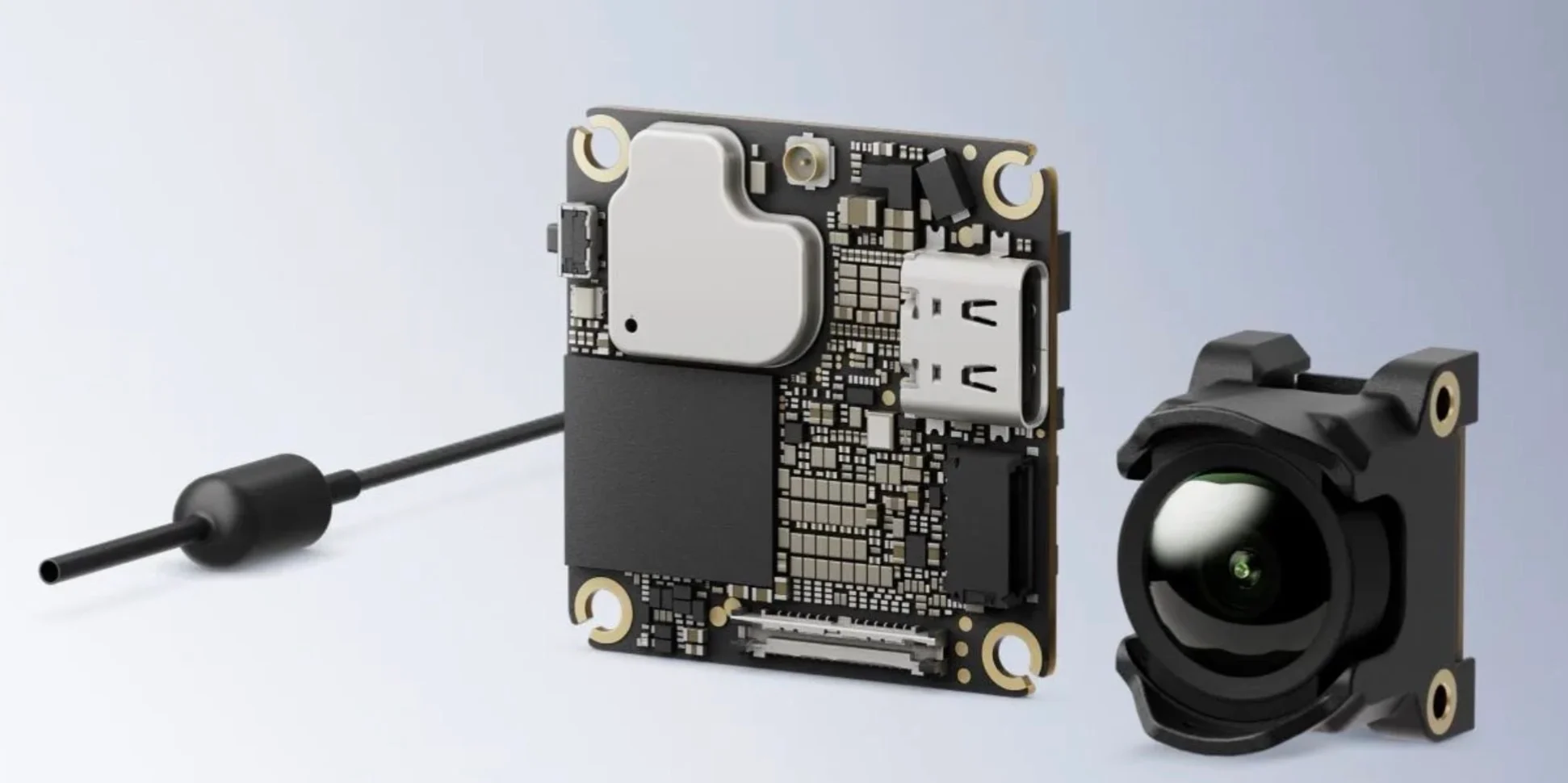
- The DJI O4 Wide Air Unit features a 159-degree ultra-wide FOV lens, upgrading from the standard O4's 117.6 degrees, and weighs approximately 13 grams with camera.
- The O4 Wide cannot be sold or serviced in the United States or Puerto Rico due to FCC Covered List restrictions that took effect on December 22, 2025.
- DJI estimates FCC Covered List restrictions will cost it $1.56 billion in US market revenue in 2026, with 5 drone models and 9 non-drone products already blocked.
- DJI is challenging the FCC designation in the Ninth Circuit Court of Appeals under Case No. 26-1029, arguing the government has never provided evidence justifying the listing.
- FPV reviewer Oscar Liang noted the O4 Wide uses the same vibration-sensitive ICM-40609-D gyroscope as the standard O4; FLYWOO plans a custom variant with the discontinued MP66 gyroscope.
DJI has added a third product to its O4 Air Unit lineup, and the headline specification is the field of view. The new DJI O4 Wide Air Unit upgrades the standard model's 117.6-degree lens to a 159-degree ultra-wide lens, giving FPV pilots the immersive, edge-to-edge view they have long had to pay for third-party lens modifications to achieve. The image sensor, recording specifications, and transmission system are carried over from the standard version — the only change is the lens itself.
That is what most coverage has focused on. But there is a critical detail that has been largely omitted: DJI's official support documentation states explicitly that the O4 Wide Air Unit is not sold in the United States or Puerto Rico, and that after-sales service does not apply in those regions. For a hobbyist product aimed primarily at builders of 2-inch micro quads, the most important specification for American pilots is this: you simply cannot add it to your cart on the DJI store. Having tracked DJI product launches for several years, the gap between "announced" and "available in the US" has widened with nearly every release since December of last year. For the FPV community, this particular gap is especially noticeable.
The O4 Wide Sits Between the Standard O4 and the Pro
The O4 Wide Air Unit fills the middle slot in a three-product lineup. It retains the same 1/2-inch sensor as the standard O4 Air Unit, supports up to 4K/60fps recording, and uses DJI's O4 video transmission system. The live feed outputs 1080p at up to 100fps in H.265, the stated maximum transmission range is 10 km (6.2 miles), and latency drops to as low as 20 milliseconds in race mode.
The differences come down to weight and field of view. The standard O4 Air Unit, launched in January 2025, weighs just 8.2 grams including the camera — the lightest option for gram-conscious builders. The Wide version comes in at approximately 13 grams with camera, making it better suited to slightly larger micro frames. At the top of the lineup sits the O4 Air Unit Pro, which features a larger 1/1.3-inch sensor, 4K/120fps recording, a dual-antenna design, and a maximum transmission range of 15 km (9.3 miles). The Wide is aimed at pilots who want the widest possible view without taking on the weight penalty of the Pro.
According to DJI's specifications, the 159-degree FOV is achieved in 4:3 aspect ratio, with the camera set to wide angle, and with Electronic Image Stabilization (EIS) disabled. That last condition matters: the widest field of view and in-camera stabilization are mutually exclusive on this unit — a trade-off worth understanding before installation.
DJI Built What FLYWOO Already Proved Pilots Wanted
Narrow field of view was one of the most common criticisms of the original O4 Air Unit, and the aftermarket addressed it before DJI did. FPV manufacturer FLYWOO, working with Runcam, released a modified wide-angle O4 module several months ago. FPV reviewer Oscar Liang, after testing the FLYWOO wide-angle version, wrote that a wide FOV should have been the factory default on the O4 from the start. Liang noted that DJI appears to have adopted a solution similar to FLYWOO's, possibly involving some form of collaboration between the two companies, though he said he had not confirmed this. In his view, DJI's own production line should deliver tighter quality control.
One specification DJI did not change is the gyroscope. The O4 Wide uses the same ICM-40609-D gyroscope as the standard version — a chip known in the community for being relatively sensitive to vibration, which can produce jello artifacts in stabilized footage on frames without adequate dampening. Liang noted that FLYWOO will offer a custom O4 Wide variant with the older, more reliable MP66 gyroscope swapped in by their technicians, though that chip is discontinued and stock is limited. If clean, stable footage is a priority, that substitution is worth tracking — and it is yet another option that US buyers cannot access through legitimate channels.
The US Market Block Stems from the 'Covered List'
The product's absence from the US market is not a marketing decision by DJI. It is the result of FCC regulation. On December 22, 2025, the FCC added DJI and all foreign-manufactured drones to its "Covered List," blocking new equipment authorizations and effectively preventing any new DJI radio equipment from being imported, marketed, or sold in the United States. This does not affect existing hardware; products that received authorization before that date remain legal to purchase and fly. But a new transmission module announced in mid-2026 has no pathway to FCC authorization while that designation stands.
This is precisely the scale of harm DJI presented in its case before the Ninth Circuit Court of Appeals: five drone models and nine non-drone products already blocked, 25 new 2026 products in limbo, and an estimated $1.56 billion in US market losses for the year. The O4 Wide Air Unit is a concrete example of what that figure represents — a low-cost accessory that would have quietly sold to thousands of American hobbyists and now cannot be listed at all. DJI is challenging the designation through the Ninth Circuit (Case No. 26-1029), arguing that the government has never produced evidence justifying the listing. It has also filed a petition for reconsideration with the FCC, which the Department of Defense has opposed by citing classified intelligence.
The FCC's exemption process has cleared 11 manufacturers to date — all non-Chinese companies, none of them DJI. Even a narrow exemption for toy drones carries requirements strict enough that the DJI Neo does not qualify. Under the current framework, a Chinese-manufactured FPV transmission module obtaining an exemption is effectively impossible.
The clearest evidence is on DJI's own website. The US support page for the O4 Air Unit lineup lists full FCC certification specifications for the standard O4 Air Unit and the O4 Air Unit Pro, including FCC-certified transmission ranges. The O4 Wide Air Unit does not appear in the comparison table at all. DJI is not hiding the product — it simply has not built a US-facing page for it, because there is no US market page to build.
DroneXL Editorial Perspective
This is what the DJI ban looks like on a workbench, and it is worth being precise about who it actually harms. The O4 Wide Air Unit is a 13-gram camera module for hobbyist FPV drones. It is not a surveillance platform. It is not a critical infrastructure tool. It is not a defense system. It is a component that a teenager solders onto a 2-inch quad to get better footage of their backyard. It is blocked from the US market not because anyone can prove it poses a threat, but because it shares a brand logo with a company the FCC rushed onto the Covered List the day before a deadline — and because the FCC has not conducted the audit Congress required of it all year.
American pilots will still get this product. They will buy it as grey-market imports from overseas sellers, pay a premium, and receive no warranty or after-sales service when something goes wrong — because DJI's official documentation confirms those services do not apply in the US. The ban does not stop the hardware from reaching American pilots' hands. It strips away the fair pricing, customer support, and consumer protections that come with a legitimate purchase. That is the opposite of what a security policy should accomplish: it leaves US FPV pilots worse off while having no effect on DJI's ability to sell this product to the rest of the world.
The most consequential development to watch is the Ninth Circuit. DJI Case No. 26-1029 is in progress, and if the court compels the government to produce supporting evidence it has never made public, the entire mechanism currently blocking products like this one faces a fundamental challenge. Until then, every DJI product launch will carry the same asterisk for American readers: it's a great product, but you can't buy it. The O4 Wide is just the latest name on that list.
Sources: DJI O4 Air Unit official support page; Oscar Liang review. Reporting and editorial perspective by Haye Kesteloo.
原文來源: 查看原文
FAQ
Reviewed and published by the LAETimes editorial desk ·