EASA Proposes Lowering Drone Registration Threshold to 100 Grams — Recreational Flyers Face the Biggest Hit
The European Union Aviation Safety Agency (EASA) has published draft regulation NPA 2026-103, proposing to lower the mandatory registration, training, and Remote ID threshold for drones from 250 grams to 100 grams — aligning with the UK's rules. The change would capture popular consumer models such as the DJI Mini and DJI Neo. At the same time, the draft eases administrative burdens for professional operators. Implementation is not expected before mid-2028, with the full regulatory framework unlikely to be operational until 2031.
Highlights
- EASA's draft regulation NPA 2026-103 proposes reducing the EU mandatory drone registration and training threshold from 250 grams to 100 grams, mirroring the UK CAA rule that took effect on 1 January 2026 and brought roughly 500,000 UK pilots into the registration system.
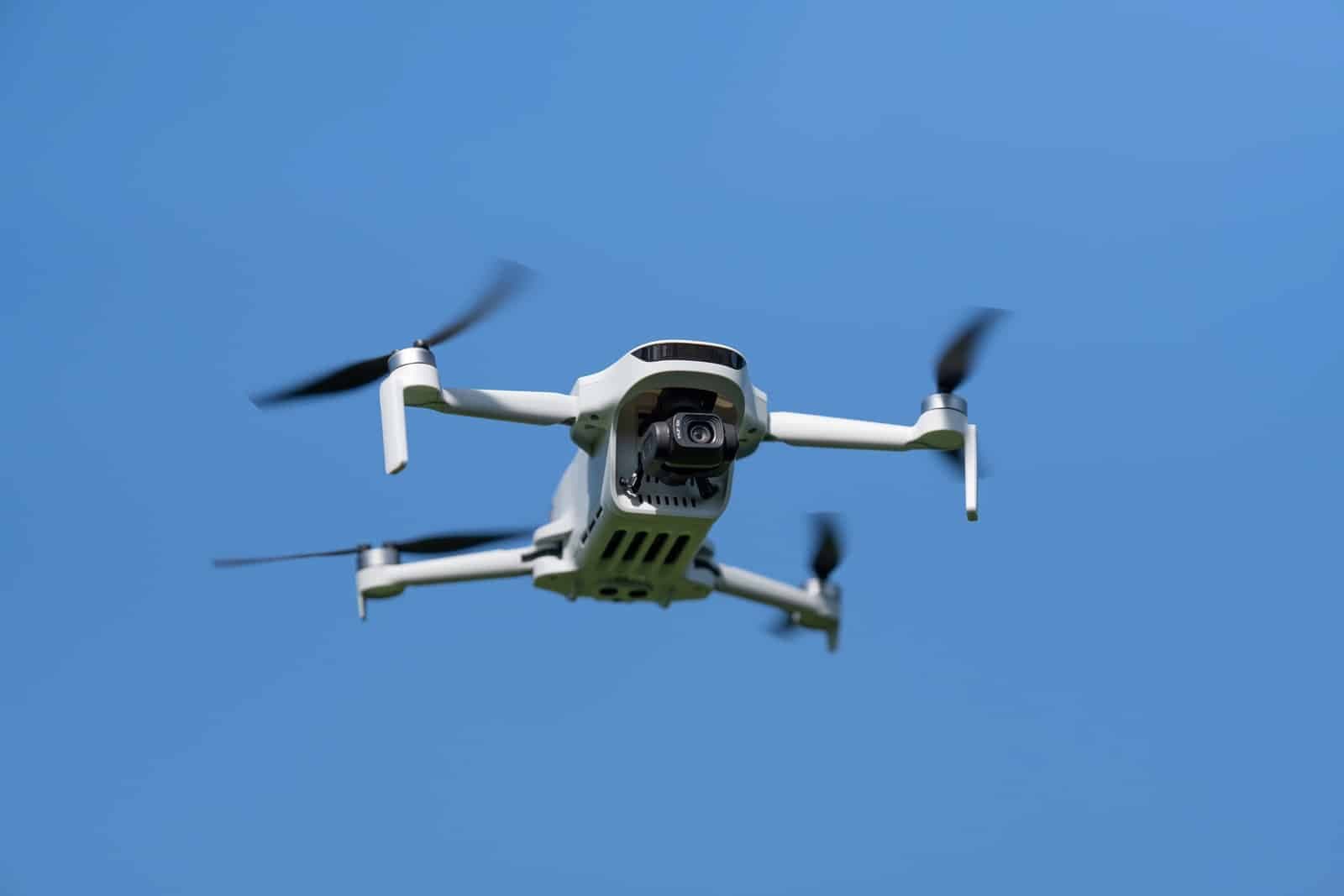
- Popular consumer models including the DJI Mini, DJI Neo, and DJI Lito series — designed to fly below the 250-gram limit — would be captured by the new threshold and require operator registration, basic online training, and Direct Remote ID compliance.
- Direct Remote ID would become mandatory for all drones above 100 grams, and EASA proposes blocking take-off if a valid operator registration number is not entered — shifting enforcement from authorities to the drone's own firmware.
- The draft simultaneously eases burdens for professional Specific Category operators by expanding SAIL II Standard Scenarios, reducing full SORA requirements, and introducing BVLOS Standard Scenarios for infrastructure inspection and agricultural drones up to 750 kg MTOW.
- NPA 2026-103 is an opening draft in a multi-year process; first amendments are expected no earlier than mid-2028, with the full framework not operational before 2031.
EASA Proposes Lowering Drone Registration Threshold to 100 Grams — Recreational Flyers Face the Biggest Hit
The European Union Aviation Safety Agency (EASA) has released a concrete regulatory draft in response to the 100-gram registration threshold proposed in Brussels in February of this year. If adopted, the rules would bring virtually all camera-equipped consumer drones in Europe under mandatory registration, operator training, and Remote ID requirements.
The draft, designated NPA 2026-103, proposes amendments to two core regulations governing drone flight across the EU — Delegated Regulation 2019/945 and Implementing Regulation 2019/947. EASA held an industry workshop at its Cologne headquarters this month to gather stakeholder feedback before finalising the next iteration of the draft.
If enacted, the weight threshold triggering mandatory training and registration would fall from 250 grams to 100 grams, capturing lightweight consumer models — including the DJI Mini and DJI Neo series — that were specifically designed to fall below the previous limit. The 250-gram figure has for years been the most important number in consumer drone design; moving it to 100 grams rewrites the rules for an entire product category.
It is important to note that this draft is still at an early stage. It is the first step in a multi-year process, not current law, with a timeline extending well into the next decade.
NPA 2026-103 Lowers Registration and Training Threshold to 100 Grams
EASA's central proposal is to reduce the mandatory training and registration threshold from the current 250 grams to drones exceeding 100 grams within the Open Category. Under present rules, operators flying sub-250-gram drones are generally exempt from training, though most still need to register if the aircraft carries a camera. The new rules would close that gap.
Pilots flying camera-equipped drones between 100 and 250 grams would be required to complete a basic online theory course — a change that directly affects popular models such as the DJI Mini, DJI Neo, and the newer DJI Lito series, the very products that have driven recreational drone sales in recent years. While the course itself is a knowledge test rather than a heavy compliance burden, it transforms what was a "buy and fly" purchase into a registered, trained activity.
Europe is not the first to set this threshold. The UK Civil Aviation Authority (CAA) moved its limit from 250 grams to 100 grams on 1 January 2026, bringing an estimated 500,000 UK pilots into the registration system. Brussels is now proposing to follow suit.
Japan offers a relevant precedent for how manufacturers respond to hard weight limits. When Japanese aviation law exempted aircraft under 200 grams, DJI released a Japan-exclusive version of the Mavic Mini in 2019, fitted with a smaller 1,100 mAh battery to bring its take-off weight to 199 grams (versus 249 grams in other markets). DJI representatives confirmed at the time that the variant was created specifically to meet the regulatory threshold. Japan has since moved its limit closer to 100 grams. The lesson for Europe is clear: hard weight thresholds reshape what manufacturers bring to market, and the lightest, most accessible models face redesign or withdrawal.
Direct Remote ID to Become Mandatory for Almost All Drones Above 100 Grams
EASA is also planning to extend the mandatory Direct Remote ID requirement to all drones exceeding 100 grams, breaking through the current 250-gram ceiling. Brussels additionally proposes to prohibit any Remote ID-capable drone from taking off without a valid operator registration number entered into the system — a dual mechanism that ties every flight to a registered identity.
Remote ID functions as a digital licence plate for drones, broadcasting identification and location data that can be read by law enforcement, emergency responders, and the general public using compatible receivers. EASA argues that broadening the requirement will improve transparency in low-altitude airspace and make it easier to identify drones involved in incidents. Mandatory ADS-L — which would make drones visible to other airspace users — is not included in the current draft.
The "no valid registration number, no take-off" mechanism is particularly significant: it shifts compliance enforcement from a police officer with a receiver to the drone's own firmware.
Draft Also Relaxes Rules for Professional 'Specific Category' Operations
NPA 2026-103 is not purely restrictive. The same document includes measures to reduce the administrative burden on professional operators. EASA acknowledges that thousands of "Specific Category" operations currently require individual authorisation despite posing relatively limited risk — creating unnecessary workload for both operators and national aviation authorities.
To address this, EASA plans to expand the scope of Standard Scenarios, particularly for SAIL II risk-level operations, allowing more flights to proceed via an operational declaration rather than prior authorisation. The agency also intends to shift part of the safety assessment responsibility from operators to manufacturers: where a drone and its operating concept have already been assessed against a defined standard, operators may no longer need to complete a full Specific Operational Risk Assessment (SORA) themselves.
This direction extends to new and updated BVLOS (beyond visual line of sight) Standard Scenarios, including close-proximity infrastructure and obstacle flying in non-standard airspace, as well as large agricultural drone operations with a maximum take-off weight of up to 750 kg (approximately 1,653 lbs). This ceiling aligns with EASA's airworthiness standard CS-LURS for light unmanned rotorcraft, allowing regulators to draft declaratory scenarios for heavy-lift aircraft without pushing them into the more onerous Certified Category.
Draft Stems from the European Commission's Counter-Drone Action Plan Published in February
NPA 2026-103 is the regulatory implementation of recommendations contained in the European Commission's Drone and Counter-Drone Safety Action Plan (COM(2026) 81 final), published on 11 February 2026. The plan sets a broad drone and counter-drone agenda, which Brussels has framed as a response to operational experience, technological change, and emerging security and enforcement challenges.
The drive for stricter rules was accelerated by a series of suspected drone incursions at European airports and sensitive sites in late 2025. Munich Airport closed twice within two days; Copenhagen and Oslo airports each suspended operations for several hours; and Belgium saw multiple airport closures in November. These incidents intensified political and public pressure for tighter low-altitude airspace oversight — even though the regulations now being drafted target a far broader population of operators than those responsible for the incursions.
Cross-Border Regulatory Consistency Remains a Long-Standing Industry Demand
The draft also seeks to clarify national drone conditions and geographic zone rules — a topic the industry has pushed for years. While a common EU framework nominally exists, cross-border operators routinely encounter meaningful differences between member states regarding exemptions and additional national requirements. Germany mandates liability insurance; Italy requires a visible QR code containing the operator's registration number; France enforces its own airspace restrictions — to name just three examples.
Nothing is final yet. NPA 2026-103 opens a multi-year process that will be revised in ongoing consultation with member states and industry stakeholders. The drone industry association UAV DACH confirmed that its vice-president participated in the Cologne workshop, and EASA plans to publish a supplementary NPA 2026-103 document in July specifically addressing U-space Regulation 2021/664. Under the current timeline, the first tranche of amendments could take effect as early as mid-2028, with the full revised framework unlikely to be fully operational before 2031.
Editor's Perspective
The real consumer impact of lowering the registration threshold to 100 grams was initially buried within a counter-drone security narrative. NPA 2026-103 makes that quietly significant policy shift official regulatory text — and attaches training requirements and a Remote ID-enforced take-off lock to it.
The core problem is this: the stated justification is the airport disruption of late 2025, but registration does nothing to address that threat. A state actor operating a military reconnaissance drone from a vessel offshore is not going to enter a valid operator ID before take-off. Many suspected sightings were subsequently identified as misidentified aircraft or celestial objects, and the real threats come precisely from operators who will never register. What the 100-gram threshold actually creates is a database of law-abiding hobbyists.
The Specific Category simplifications are genuinely useful. Shifting SORA workload to manufacturers, broadening SAIL II Standard Scenarios, and establishing workable BVLOS scenarios for infrastructure inspection and large agricultural drones are exactly the proportionate, risk-based regulation-making the industry has long called for. The professional end gets relief; the recreational end gets burdened — for a threat that the burden cannot solve.
The good news is that nothing is settled. This is only an opening draft in a process running to 2031, with the U-space supplementary document due in July. The UK has already crossed this line, and European recreational flyers can look directly to the UK compliance experience — the skies there have not become demonstrably safer as a result. The question worth watching is whether major civil aviation industry associations will directly challenge the 100-gram threshold during consultation, or treat it as a foregone conclusion. That choice will determine whether the registration threshold debate is still a live fight — or has already quietly ended.
Sources: European Commission, Drone and Counter-Drone Safety Action Plan (COM(2026) 81 final, 11 February 2026); UAV DACH workshop report.
原文來源: 查看原文
FAQ
Reviewed and published by the LAETimes editorial desk ·