Electra Secures 250-Unit Turbogenerator Supply Deal with Safran for EL9 Ultra-Short Takeoff Aircraft
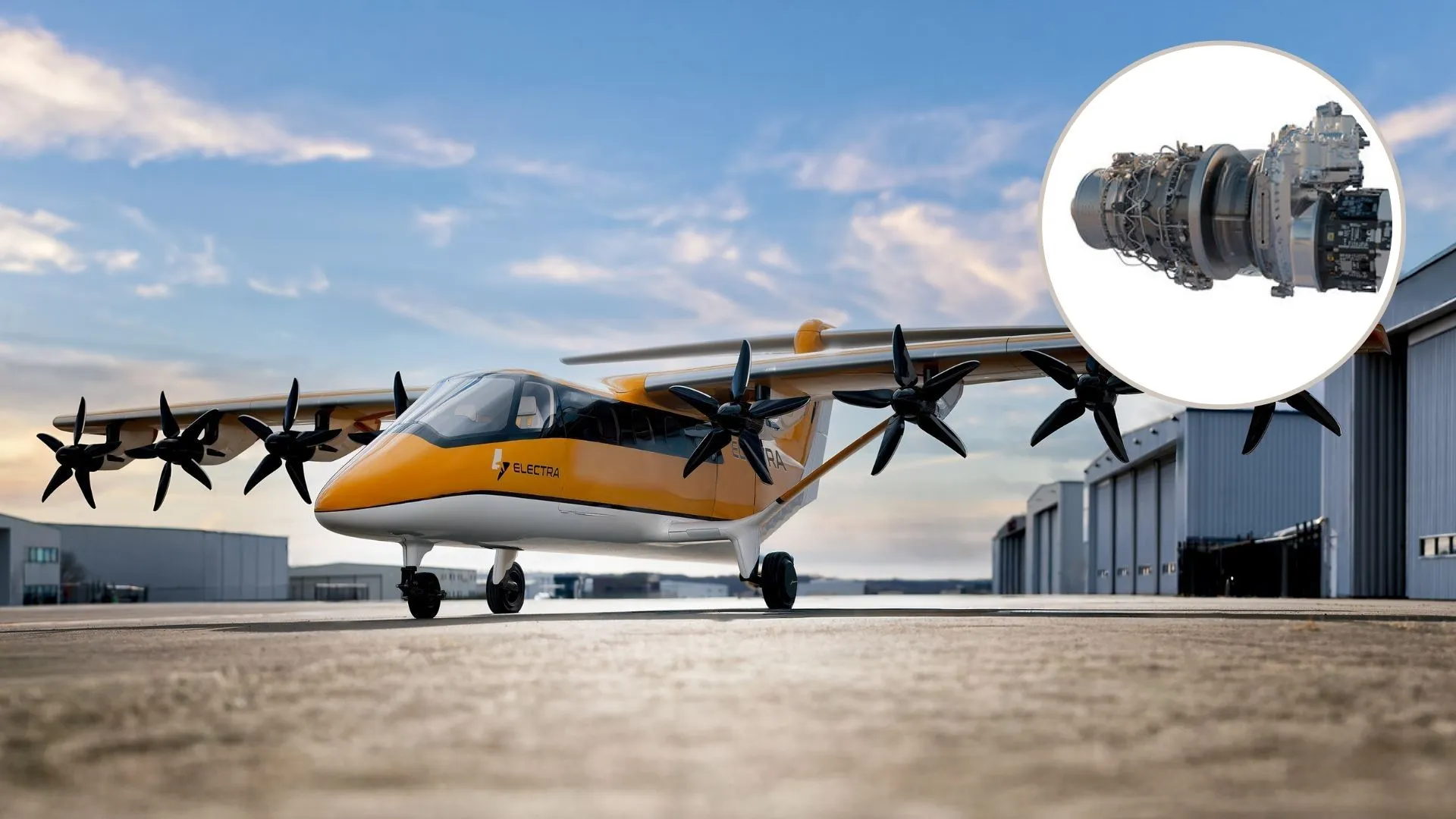
Hybrid-electric aircraft developer Electra has signed a long-term production agreement with Safran Helicopter Engines to supply TG600 turbogenerators for its EL9 Ultra Short aircraft, with an initial order of 250 units. The EL9 features a 600 kW hybrid-electric propulsion system, requires only 150 feet of runway, targets commercial service by 2030, and is already under FAA Part 23 certification review.
Highlights
- Electra signed a lifecycle production agreement with Safran Helicopter Engines for an initial order of 250 TG600 turbogenerators to power the EL9 hybrid-electric aircraft.
- The EL9's 600 kW hybrid-electric propulsion system with blown-lift technology enables takeoffs and landings in approximately 150 feet of runway.
- Safran completed the first bench test of a flight-ready TG600 turbogenerator at its Bordes, France facility in preparation for EL9 flight testing.
- The EL9 is undergoing FAA Part 23 certification, targeting first flight in late 2027 to early 2028 and commercial service by 2030.
- Electra projects U.S. market demand of 12,000 to 16,000 EL9 aircraft within the first decade of its 'Direct Aviation' concept, with Bristow Group already holding a binding pre-delivery payment agreement.
Electra Signs 250-Unit Turbogenerator Supply Agreement with Safran for EL9 Ultra-Short Takeoff Aircraft
Hybrid-electric aircraft developer Electra has named Safran Helicopter Engines as the turbogenerator supplier for its EL9 Ultra Short aircraft, signing a production agreement covering the full program lifecycle. The deal secures a critical propulsion system partner for the Virginia-based aircraft developer as it advances FAA certification and works toward commercial service before 2030.
The initial order under the agreement covers 250 TG600 turbogenerators. Electra expects production volumes to scale up as market demand for the EL9 grows. The EL9 is a hybrid-electric aircraft designed for ultra-short takeoff and landing (uSTOL), requiring a runway of just approximately 150 feet (roughly 46 metres) — short enough to open routes to locations unable to support conventional commercial aircraft.
Hybrid Propulsion System: Technical Overview
Safran's TG600 turbogenerator delivers 600 kW of electrical power to the EL9's hybrid-electric propulsion system. The unit is derived from Safran's Arrano helicopter engine and offers an 18% improvement in fuel efficiency over the previous generation.
The system also integrates two GENeUS electric generators developed by Safran Electrical & Power. Earlier this month, Safran completed the first bench test of a flight-ready turbogenerator at its Bordes facility in France, with plans to use that hardware in the EL9's initial flight test campaign.
Electra CEO Marc Allen described the agreement as a significant milestone for the EL9 program, noting that Safran's technical expertise and long-term commitment in hybrid-electric propulsion would help bring the aircraft into commercial service.
Safran Helicopter Engines CEO Cédric Goubet said the contract formally launches the company's turbogenerator business, adding that combining Safran's engine technology with its electrical systems expertise enables a propulsion solution tailored to the EL9's performance targets.
The Ultra-Short Runway Design Philosophy
Unlike conventional regional aircraft, the EL9 uses a hybrid-electric propulsion system paired with blown-lift technology to achieve its extreme short-field performance. Electra says the aircraft can operate from runways of approximately 150 feet, enabling operations from small airfields and sites much closer to population centres.
The company believes this capability will reshape regional air travel by reducing dependence on major airports for short-haul journeys. Electra calls the concept "Direct Aviation" — allowing passengers to fly from airports near their origin and destination rather than routing through large hub airports.
The EL9 is currently undergoing certification under FAA Part 23 regulations, with first flight targeted for late 2027 to early 2028 and commercial service planned for 2030.
A Growing Production Pipeline
The Safran agreement marks another commercial milestone for the EL9 program. Earlier this year, Bristow Group signed a pre-delivery payment agreement securing initial production delivery positions under binding commercial terms, contingent on certification. Electra has also published market forecasts projecting demand of 12,000 to 16,000 aircraft during the first decade of Direct Aviation adoption in the United States.
If those projections materialise, the EL9 would establish an entirely new category of regional aircraft combining electric and conventional turbine propulsion. Electra and Safran aim to build an aircraft that can connect communities currently lacking viable commercial air service while reducing fuel consumption compared to traditional regional aircraft.
原文來源: 查看原文
FAQ
Newsletter
Subscribe to our Low-Altitude Industry Newsletter
Daily curated news on low-altitude economy and drone industry, delivered to your inbox.
Reviewed and published by the LAETimes editorial desk ·