The Channel Wing Makes a Comeback: HopFlyt Cyclone eVTOL Revives a Forgotten Design
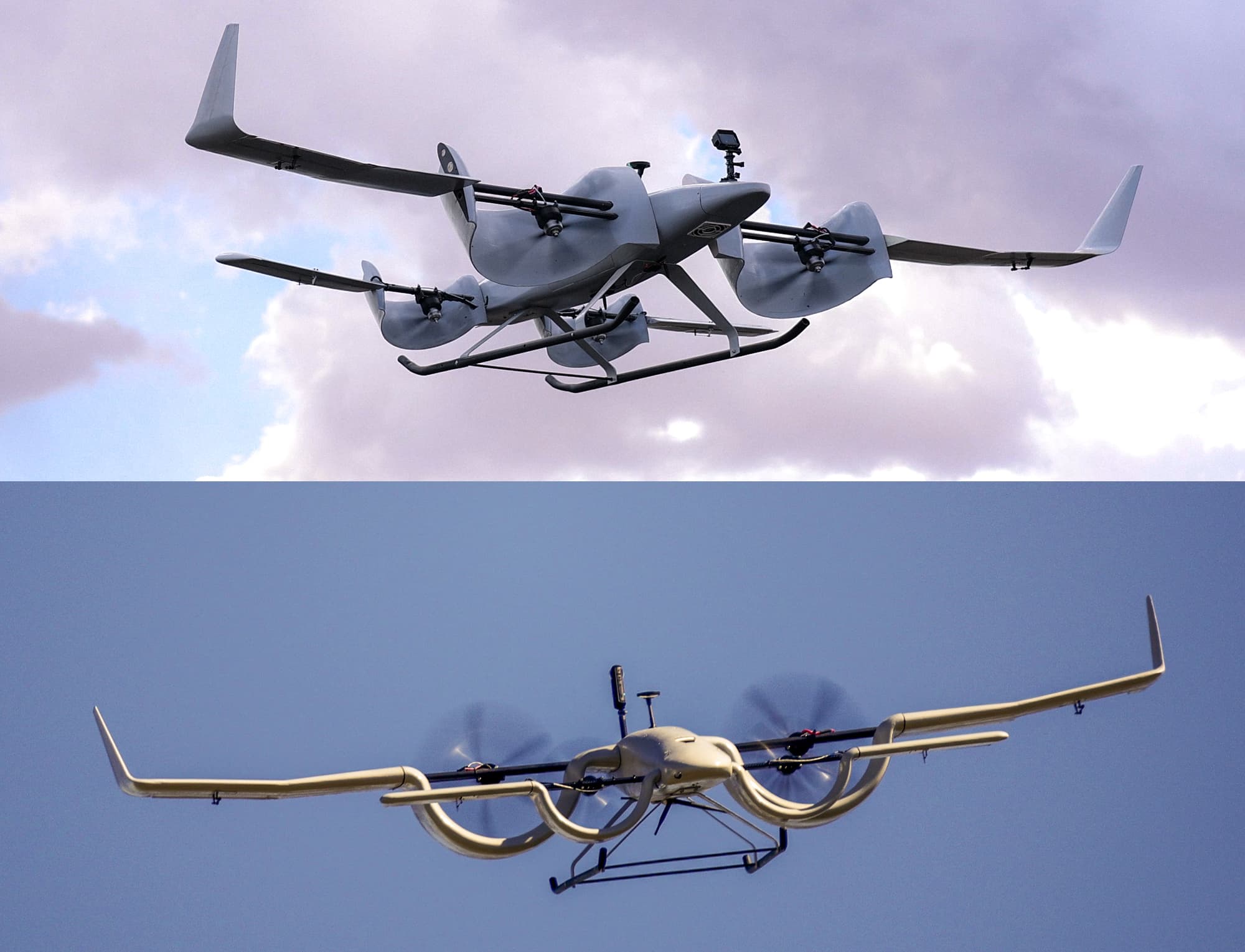
The HopFlyt Cyclone drone resurrects the Channel Wing concept invented by Willard Ray Custer in the 1940s, combining a tandem channel-wing layout with a tilt-wing mechanism. By wrapping semi-circular wing surfaces around propellers to maximize low-pressure lift, HopFlyt claims a roughly 10% reduction in energy consumption during hover and transition flight—potentially easing one of VTOL aviation's most persistent engineering challenges.
Highlights
- HopFlyt's Cyclone drone adopts a tandem channel-wing layout inspired by Willard Ray Custer's 1940s design, doubling the channel-wing surface area compared to Custer's original single-wing prototypes.
- The Cyclone integrates a tilt-wing mechanism that leverages channel-wing lift to smooth the vertical-to-horizontal flight transition, historically the most challenging phase of VTOL operation.
- HopFlyt claims the channel-wing configuration reduces energy consumption by approximately 10% during hover and transitional flight.
- Custer's original Channel Wing prototypes demonstrated exceptional STOL performance but never achieved full vertical takeoff; the Cyclone aims to close that gap using electric propulsion.
- Proof-of-concept flight footage of the HopFlyt Cyclone prototype has been publicly released, marking a potential revival of a concept dormant for over 50 years.
The Channel Wing Makes a Comeback: HopFlyt Cyclone eVTOL Revives a Forgotten Design
To recognize Willard Ray Custer and his "Channel Wing" concept, you'd need to be a fairly seasoned aviation enthusiast. But if you are, the sight of the HopFlyt Cyclone drone's tandem semi-circular wing surfaces will almost certainly bring a smile to your face. If aviation history isn't your strong suit, read on—because this concept, which never quite made it into the mainstream, is genuinely clever.
Custer's Channel Wing Theory
Custer's core idea was elegantly simple, born from a shift in reference frame: he realized that what truly matters for lift is the relative airflow over the wing surface, not the aircraft's overall airspeed. This principle has underpinned a range of "blown-flap STOL" programs—from the DHC-7 turboprop to the An-72 freighter—in which engine exhaust is directed over wing surfaces to generate additional lift.
Where Custer went further was in geometry. Rather than blowing airflow over a flat wing, he curved the wing into a semi-circular channel wrapped beneath the propeller, maximizing the low-pressure area and, by extension, the lift produced. The result was what became known as the Custer Channel Wing.
In theory, an aircraft equipped with channel wings and sufficient engine power could take off vertically on blown-wing lift alone. In practice, Custer's prototypes never achieved true vertical flight—but they demonstrated exceptional short-field takeoff and landing (STOL) performance.
HopFlyt Cyclone: Tandem Channel Wings Plus Tilt-Wing Mechanism
The HopFlyt Cyclone builds on this foundation in several key ways:
- Tandem dual channel wings: A fore-and-aft tandem arrangement gives the Cyclone twice the channel-wing surface area of Custer's original design.
- Tilt-wing mechanism: In tilt-wing mode, the additional low-speed lift generated by the channel wings smooths the critical transition from vertical to horizontal flight.
- ~10% energy savings: HopFlyt claims the extra lift provided by the channel wings reduces energy consumption by approximately 10% during hover and transitional flight phases.
The vertical-to-horizontal transition has long been the most demanding engineering challenge for any VTOL program, making this claimed efficiency gain far from trivial.
Historical Context and Technical Perspective
Blown-lift technology has a broad application history, and earlier research explored channeling airflow through hollow wing structures to simultaneously generate thrust and lift. In terms of development accessibility, however, the electric multirotor quadcopter remains the lowest-barrier entry point into the eVTOL space.
Proof-of-concept flight footage of the HopFlyt Cyclone prototype has been made publicly available. After more than half a century of obscurity, the Channel Wing concept may finally be finding its moment—carried aloft, fittingly, by the electric aviation revolution.
原文來源: 查看原文
FAQ
Reviewed and published by the LAETimes editorial desk ·