FAA Breaks Ground on $8.3M V-PAR Test Facility — But eVTOL Is Already Flying
The FAA and U.S. Department of Transportation held a groundbreaking ceremony on June 25 for the Vertical Take-Off and Landing Procedures and Analysis Range (V-PAR) at the Mike Monroney Aeronautical Center in Oklahoma City. The $8.3 million facility, set to open in summer 2027, will be the FAA's first dedicated test range for studying eVTOL behavior around vertiports — but critics note the agency's research timeline is lagging well behind the commercial sector's rapid advances.
Highlights
- The FAA broke ground on the $8.3 million V-PAR eVTOL test range in Oklahoma City on June 25, 2026, with a projected opening date of summer 2027.
- V-PAR is the FAA's first dedicated facility for studying eVTOL behavior around vertiports, covering downwash, wake turbulence, radio frequency interference, and airspace procedures.
- The project took roughly six years from its autumn 2021 conceptual study to groundbreaking, with Congress allocating an initial $6 million in spring 2024.
- Joby Aviation completed New York City's first eVTOL point-to-point route (JFK to Manhattan) on April 27, 2026 — before the FAA research facility has opened.
- Florida signed legislation in April 2026 targeting a December 2026 commercial vertiport launch, meaning paying eVTOL passengers could fly at least six months before V-PAR becomes operational.
FAA Breaks Ground on $8.3M V-PAR Test Facility — But eVTOL Is Already Flying
The Federal Aviation Administration (FAA) and the U.S. Department of Transportation held an official groundbreaking ceremony on June 25 for the Vertical Take-Off and Landing Procedures and Analysis Range (V-PAR) at the Mike Monroney Aeronautical Center in Oklahoma City. The approximately $8.3 million facility will be the FAA's first dedicated test range for studying the real-world behavior of electric and hybrid-electric vertical take-off and landing (eVTOL) aircraft around vertiports. Construction is expected to be completed in summer 2027.
That completion date, however, may be more noteworthy than the groundbreaking itself. DroneXL has tracked throughout the year the widening gap between commercial eVTOL ambitions and federal research capacity — covering topics from the March eVTOL Integration Pilot Program selections to Joby Aviation's April demonstration flight in New York. V-PAR is, in essence, the FAA building its laboratory after the experiment has already begun.
V-PAR: A Vertiport Laboratory Next to Will Rogers World Airport
According to reporting by Aerospace Testing International, V-PAR is a dedicated outdoor test range on the western side of the Monroney campus, adjacent to Will Rogers World Airport. The FAA and its partners will fly and measure vertical lift aircraft under controlled conditions, leveraging the center's existing radar and training infrastructure.
Per the FAA's announcement, initial construction will include a runway, taxiway, a vertipad with two parking positions, a covered parking shelter, an observation and operations building, electric aviation charging equipment, and associated lighting and utilities. The FAA uses the term "Verticraft" as an umbrella designation for all vertical lift aircraft.
The research agenda addresses questions for which the industry currently lacks publicly available data: wake turbulence and separation, downwash and outwash effects, radio frequency interference, vertiport operations, arrival and departure routes, airspace procedures, human factors, emergency response planning, and throughput simulation. Future expansion may add additional landing spots, expanded charging infrastructure, a secondary vertipad, and a short take-off and landing runway.
Five Years from Concept to Groundbreaking
According to eVTOL Insights, V-PAR planning began with a conceptual study in autumn 2021. Congress allocated an initial $6 million in spring 2024. C.H. Guernsey, supported by vertiport specialist consultancy Heliplanners, completed the design in October 2025; Maguire O'Hara Construction was awarded the construction contract in March 2026.
At the groundbreaking, Deputy Secretary of Transportation Steven Bradbury said the facility would "strengthen our ability to conduct research, train people, and support the future of aviation." FAA Deputy Administrator Chris Rocheleau emphasized that advanced air mobility aircraft must meet the same safety standards as other aircraft in the National Airspace System, and that V-PAR will provide the operational data needed to support their integration.
The Flights V-PAR Is Meant to Study Are Already in the Air
In March, the FAA selected eight eVTOL Integration Pilot Program projects spanning 26 states — including Oklahoma — permitting eVTOL aircraft to fly in controlled airspace prior to full certification. A V-PAR kickoff meeting that same month brought together FAA divisions, manufacturers, academia, and government partners to align the research agenda.
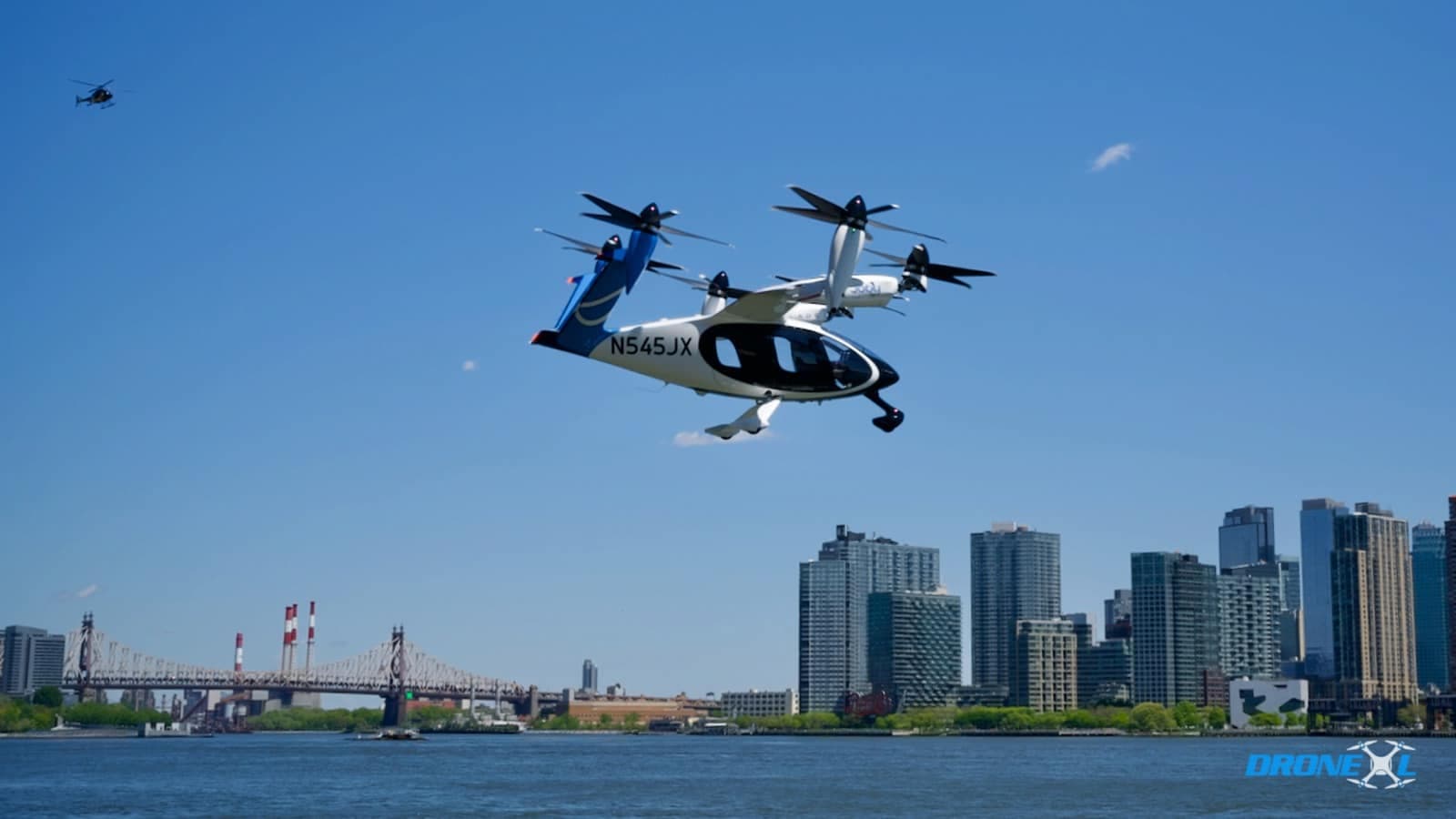
Yet commercial progress has already outpaced the research timeline. Joby Aviation completed New York City's first eVTOL point-to-point route on April 27, flying from John F. Kennedy International Airport (JFK) to Manhattan. Florida signed legislation in April authorizing the use of state funds to build public vertiports and codifying a December 2026 commercial launch target in state transportation policy.
V-PAR also reinforces Oklahoma's position as an advanced aviation hub. The state is home to the Choctaw Nation of Oklahoma FAA drone test site (designated alongside Indiana in January of this year), as well as the nation's largest BVLOS exemption zone, covering 976 square kilometers (377 square miles). Manna Air Delivery has selected Tulsa — roughly 170 kilometers northeast of V-PAR — as its U.S. drone manufacturing base. V-PAR will provide that industry cluster with a permanent federal research foundation.
DroneXL's Take
I want this test range to exist. The downwash and outwash behavior around vertiports is genuinely one of the unresolved questions in this industry. There is almost no reliable public data on what a fully loaded multirotor aircraft does to passengers boarding 20 meters (about 65 feet) away, or what high-power charging pads do to the surrounding radio frequency environment. Those answers will determine whether vertiports can be placed where the business model demands them — in dense urban cores where riders concentrate. The FAA building a facility that can produce this data is unambiguously the right move.
The problem is pace. The conceptual study dates to autumn 2021. Federal funding arrived in spring 2024. The groundbreaking took place in June 2026. The doors open in summer 2027. A landing pad with a canopy and a small operations building, costing $8.3 million, took six years from concept to operation. Within the same window, Florida drafted and signed vertiport funding legislation in a single legislative session, and Joby went from prototype to demonstrating a revenue-route corridor over the East River. I watched that aircraft fly the JFK-to-Manhattan route in April. The industry this research range is meant to educate has left the classroom far behind.
The scheduling risk is concrete. If Florida's December 2026 launch target holds, paying passengers will be boarding eVTOLs at a commercial vertiport at least six months before the FAA's own research test range opens. The downwash and procedural data that should shape vertiport standards will be collected after early operators have already worked out the answers in the field. The agency has precedent here: the Part 108 final rule missed its February 1 deadline and has yet to be formally published. Let's see whether the summer 2027 deadline holds. On the FAA's own campus, adjacent to its own radar and training infrastructure, there is no excuse if it doesn't.
Sources: U.S. Federal Aviation Administration, eVTOL Insights, Aerospace Testing International.
DroneXL uses automated tools to assist with research and data gathering. All reporting and editorial commentary is written by Haye Kesteloo.
原文來源: 查看原文
FAQ
Newsletter
Subscribe to our Low-Altitude Industry Newsletter
Daily curated news on low-altitude economy and drone industry, delivered to your inbox.
Reviewed and published by the LAETimes editorial desk ·