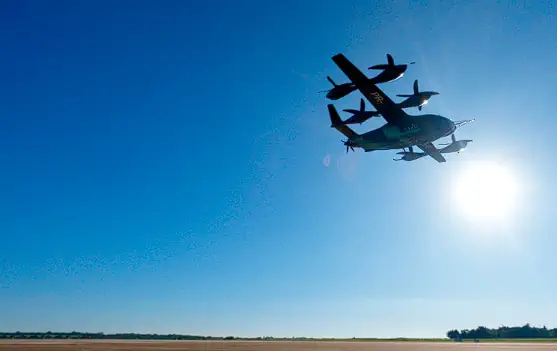
FAA Rejects Flyover Permit, But NASA Finds a Workaround for Independence Day Spectacle
The FAA denied NASA Administrator Jared Isaacman's request to fly a privately owned F-5 Tiger II over the National Mall for the U.S. 250th anniversary celebrations, citing safety concerns. Isaacman then transferred ownership of the jet to NASA, reclassifying it from an experimental aircraft to a government aircraft and bypassing FAA oversight to complete the flyover.
Highlights
- The FAA denied Jared Isaacman's application to fly a privately owned F-5 Tiger II over the National Mall, classifying the jet as an extremely high-risk experimental aircraft with clean airspeeds exceeding 250 knots below 10,000 feet MSL.
- Isaacman transferred ownership of the F-5s from JDI Holdings to NASA, reclassifying them as public-use government aircraft and bypassing FAA civil aviation oversight to complete the Independence Day flyover.
- The FAA cited a 1987 incident in which a U.S. Air Force A-7 Corsair II crashed into an Indianapolis hotel after the pilot ejected, killing 10 people, as a precedent for its safety concerns.
- Transportation Secretary Sean Duffy supported the FAA's safety ruling, and President Donald Trump subsequently became involved in the matter.
- Isaacman, co-founder of Draken International — which operates the world's largest private former-military aircraft fleet — had planned to offer F-5 rides to senior officials including Acting Attorney General Todd Blanche, Treasury Secretary Scott Bessent, and White House Deputy Chief of Staff Dan Scavino.
The U.S. Federal Aviation Administration (FAA) denied NASA Administrator Jared Isaacman's request to fly his personal Cold War-era F-5 Tiger II over the National Mall in Washington, D.C., as part of the nation's 250th anniversary celebrations. The FAA cited safety concerns in rejecting the application — but NASA quickly found a way around the ruling.
Ownership Transfer Clears the Regulatory Path
In an interview with The Wall Street Journal, Isaacman said he transferred ownership of the F-5 jets — which have been used since January for employee incentive flights to reward NASA staff — from his company JDI Holdings to NASA. The move allowed him to sidestep FAA scrutiny and proceed with the flyover.
In a statement, the FAA said: "The FAA conducted a standard safety review of a privately owned experimental aircraft. Once the aircraft transferred to NASA, it became a 'public use' (or government) aircraft. Responsibility for flight operations falls on that specific government agency, not the FAA."
The FAA typically classifies privately held former military jets as experimental aircraft. Isaacman told the Wall Street Journal that he believed flying the F-5 in a flyover should fall under government aviation rules rather than civil aviation regulations.
"This should never have been treated as a civil operation from the start," he said.
Isaacman is a co-founder of Draken International, a company that provides adversarial air training services for military pilots and claims to operate the world's largest private fleet of former military aircraft — including F-16s, Douglas A-4 Skyhawks, Dassault Mirage F1Ms, and MiG-21 Fishbeds — offering contracted military services to clients including NATO members.
How It Unfolded
According to the FAA's announcement, Isaacman retained a senior consultant to file an exemption request with the FAA on behalf of JDI Holdings. As of last Sunday, JDI Holdings held three of the four F-5s that the NASA Administrator had planned to fly over the National Mall.
The application noted that the aerial display had the backing of both NASA and the White House, and that the flights would be piloted by active-duty NASA and U.S. Air Force aviators.
"The applicant argued that the selected route was strategically planned to minimize overflight of densely populated areas, that ejection zones were immediately available, and that a southward emergency divert to an alternate airport was the primary contingency," the FAA announcement stated.
The FAA nonetheless denied the request, determining that allowing fighter jets to fly over a densely populated area would "adversely affect safety."
The FAA's Safety Concerns
The FAA classified the F-5 as an "extremely high-risk aircraft," partly because any single system failure — such as the loss of one of its two hydraulic flight control systems — would render the aircraft uncontrollable. The aircraft's recommended clean airspeed below 10,000 feet MSL exceeds 250 knots, which the FAA said increases collision risk at low altitude: at that speed, pilots have less time to visually avoid obstacles and require larger turning radii.
The FAA also noted that in the event of engine or other system failure, the pilot would be forced to eject, potentially leaving an uncontrolled aircraft to crash into an urban area. The announcement cited a 1987 incident in which a U.S. Air Force A-7 Corsair II, after the pilot ejected, struck a hotel in Indianapolis, killing 10 people.
Isaacman's consultant argued that the FAA had previously approved flight plans with routes similar to the one proposed. The FAA countered that those previously approved routes did not overfly the densely populated areas of greater Washington, D.C., instead following the Potomac River to avoid them.
"The FAA determined that the proposed safety mitigations were insufficient to support flight over a densely populated area for an aircraft holding an experimental certificate and meeting two extremely high-risk factors," the agency stated.
Political Fallout
The Wall Street Journal and The Washington Post reported that Transportation Secretary Sean Duffy had supported the FAA's safety ruling, a development that subsequently drew the attention of President Donald Trump. One source told ABC News that Duffy was not informed in advance and had not weighed in on the review process.
The Wall Street Journal also reported that FAA Administrator Bryan Bedford sent Isaacman a congratulatory message before Saturday's flyover.
Multiple sources told The Washington Post that Isaacman had originally planned to invite several senior federal officials to ride along in the F-5, including Acting Attorney General Todd Blanche, Treasury Secretary Scott Bessent, and White House Deputy Chief of Staff Dan Scavino. Ultimately, only Blanche boarded the aircraft.
原文來源: 查看原文
FAQ
Reviewed and published by the LAETimes editorial desk ·