FBI Deputy Director Warns Battlefield-Style Drone Attacks on U.S. Soil Are 'Matter of Time' — But the Real Threat Isn't the One Washington Is Banning
FBI Deputy Director Chris Raia told Fox News that drone attack methods seen in Ukraine and the Middle East will eventually reach the United States, warning that lone actors using cheap 5G cellular-connected drones pose a greater concern than coordinated terrorist plots. His remarks came amid the FIFA World Cup security operation, during which agents have seized over 300 drones and foiled an alleged explosive-drone plot targeting a UFC event at the White House.
Highlights
- FBI Deputy Director Chris Raia warned on June 25 that lone actors using cheap 5G cellular drones represent a greater domestic threat than coordinated terrorist plots.
- Cellular-controlled drones can be piloted from anywhere with a network signal, bypassing the radio-frequency detection and jamming systems deployed at the FIFA World Cup.
- Federal agents seized over 300 drones and arrested 8 people for unauthorized drone activity during the FIFA World Cup security operation.
- Five men were charged in an alleged plot to use explosive-laden drones to attack UFC Freedom 250 at the White House on June 14; the conspiracy was uncovered via a tip from a suspect's mother and Signal chat logs, not aerial sensors.
- Raia's described threat — cheap, home-built weaponized FPV drones — is distinct from the commercial drones targeted by the FCC's December 2025 Covered List, which includes DJI and other manufacturers.
FBI Deputy Director Warns Battlefield-Style Drone Attacks on U.S. Soil Are 'Matter of Time'
FBI Deputy Director Chris Raia told Fox News Digital that the drone attack tactics seen on battlefields in Ukraine and the Middle East will reach the United States — it is only a matter of time. More significantly, he said he is more worried about a lone actor piloting a cheap cellular-connected drone than about a coordinated, September 11-style terrorist conspiracy. His warning came during one of the largest domestic security operations in recent U.S. history, as federal agents enforce FIFA World Cup airspace restrictions and a foiled White House drone plot continues to work its way through the courts.
Raia's core concern centers on a generational shift in how drones are controlled. Most consumer and commercial drones today rely on short-range radio links, forcing operators to remain within visual range or close by. Next-generation drones operate over 5G and LTE cellular networks, cutting that tether entirely. "That means someone in China can remotely pilot a drone over New Orleans," Raia said. He told Fox News that he is "less worried about a large-scale 9/11-type attack" and "more worried about a single person, a single attacker."
The interview, reported by Morgan Phillips and Michael Ruiz, was published on Fox News Digital on June 25. Notably, the threat Raia describes does not align as neatly with the policies Washington has pursued over the past six months as the headlines might suggest.
Cellular Drones Are the Hardest Threat to Counter
The most important element of Raia's warning is the shift from radio-frequency control to cellular network control. A drone operated via direct radio link forces the operator to remain nearby, giving investigators a chance to triangulate their position. A drone flying over a commercial cellular network can be controlled remotely from anywhere with a signal — and that is precisely the capability the FBI is racing to address.
This matters because virtually every counter-drone system deployed during the World Cup is designed to "read the sky," not monitor a network. Radar and radio-frequency sensors detect aircraft entering restricted airspace, then jam or override their control signals. That architecture assumes drones are broadcasting local radio links that can be detected and disrupted. A cellularly controlled drone does not broadcast in the same way, and its operator is not standing in a nearby park waiting to be triangulated. Raia is describing the scenario that existing hardware is least equipped to handle.
The FBI has been preparing for remote-control systems for months. In December, the bureau opened a National Counter-UAS Training Center at Redstone Arsenal in Alabama and began certifying state and local law enforcement officers to operate counter-drone equipment. The training pipeline exists — whether it solves the cellular problem Raia describes is a separate question.
The White House UFC Plot Was Cracked by Chat Logs, Not Sensors
Raia's most compelling evidence that the threat is real comes from an alleged conspiracy targeting the UFC Freedom 250 event held at the White House on June 14 — a case DroneXL reported on when the arrest announcement was made. Federal prosecutors allege that members of the group discussed using explosive-laden drones to attack buildings near the event, trigger a panic evacuation, and funnel the crowd toward pre-positioned sniper teams.
Five men were charged. According to the U.S. Department of Justice, they are: Tycen C. Proper, 19, of Danville, Ohio; Bryan Omar Roa, 24, and Michael Alan Thomas, 32, of California; Daniel K. Eskridge, 32, of Missouri; and Abraham Hermosillo Alvarez, 31, of Nebraska. As Raia explained, the case began with "a concerned parent" — Proper's mother reported her son to local police, leading investigators to obtain a search warrant and discover encrypted chat logs on his phone.
Court records indicate Proper's phone allegedly contained a primary Signal group chat with approximately 19 participants, as well as several smaller operational chats organized by role and location. That detail tells the whole story: the plot was not broken by an airborne sensor — it was broken by a mother, a search warrant, and agents reading message logs. The drones in this case never flew, and the gap between a Signal conversation and a flight-ready explosive device is the evidentiary gap prosecutors must bridge. Raia was candid about the limits of digital surveillance. "I think I'd be foolish if I thought we've infiltrated every chat room," he said, describing encrypted platforms as a genuine vulnerability the FBI tries to offset through informants, undercover work, and public tips.
World Cup Enforcement Has Seized Over 300 Drones
The World Cup provides the operational backdrop for Raia's warning. According to Raia, federal agents have seized more than 300 drones and arrested eight people for unauthorized drone activity during the tournament. Newly unsealed records show investigators are also examining whether alleged UFC plot members discussed targeting the World Cup match scheduled for July 3 in Kansas City, Missouri — a search warrant cited messages agents believe referenced the event and travel to Missouri.
The enforcement apparatus rests on infrastructure put in place before the tournament began. FEMA's counter-drone grant program disbursed an initial $250 million to 11 host states and the national capital region by the end of 2025. The Safeguarding the Skies Act, incorporated into the FY2026 National Defense Authorization Act, extended counter-drone authority to state and local agencies for the first time. The FAA activated more than 100 flight restrictions covering not only stadiums but also team hotels hundreds of miles from match venues.
The vast majority of those 300-plus seizures almost certainly involved careless or uninformed members of the public, not plotters. NFL data collected over multiple seasons shows more than 2,000 drone incursions per season across league stadiums, nearly all traced back to recreational pilots who never checked a NOTAM. A spectator pulling a Mini drone out of a backpack outside a stadium represents the highest-volume case. The cellularly controlled attack drone Raia is warning about is the rare case that large-scale enforcement operations are least equipped to catch.
The Threat Raia Describes Is Not the Drone Washington Is Banning
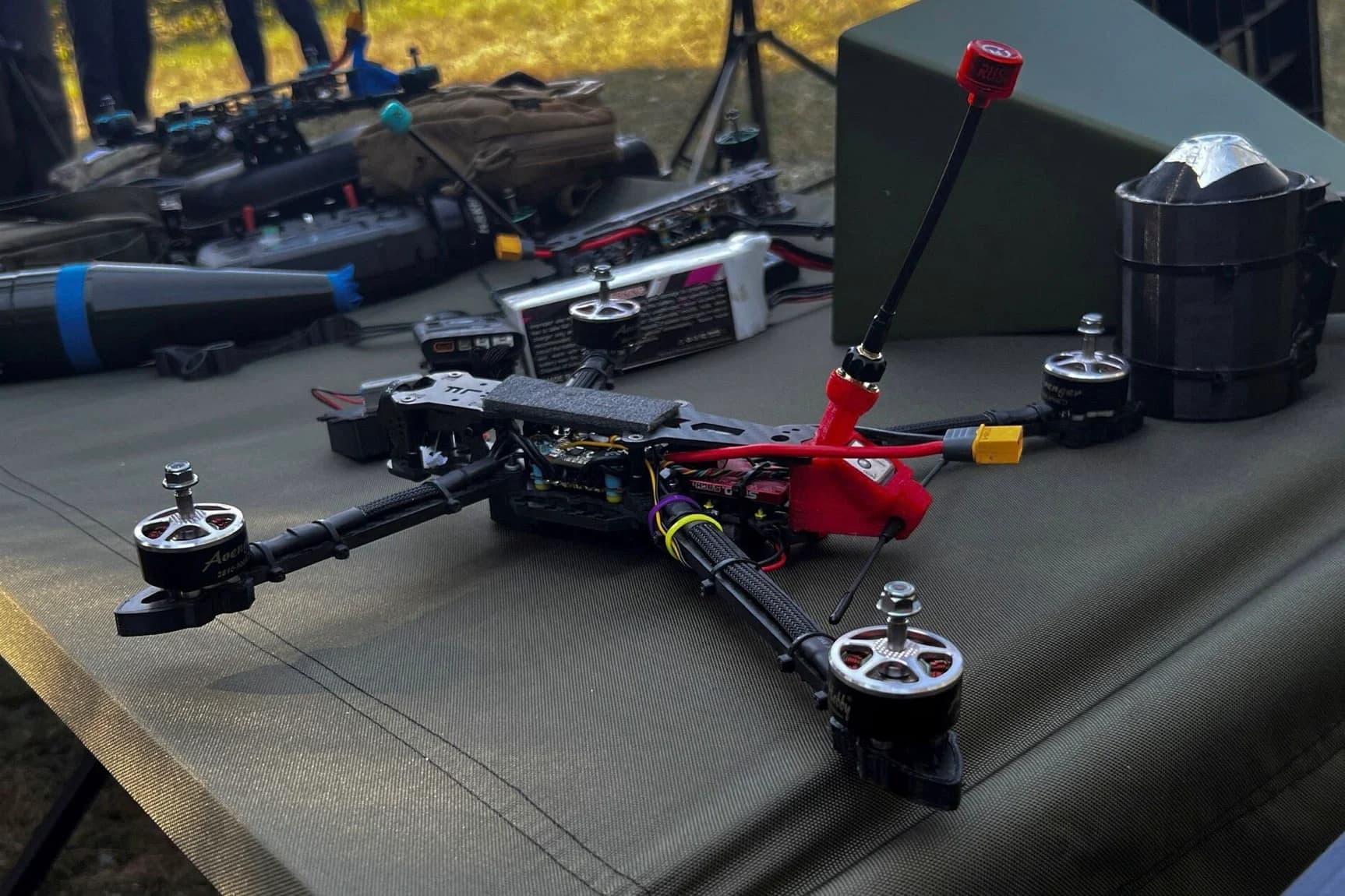
Here is the central contradiction in this story. The threat Raia describes is a cheap, weaponized FPV-style aircraft — the kind Ukraine mass-produces for a few hundred dollars in off-the-shelf components with a soldering iron. That is not a DJI Mavic. It is built, not bought.
Yet the dominant policy response over the past year has been the FCC's December 22, 2025 addition of all foreign-manufactured drones to its "Covered List" — a move aimed squarely at DJI and other commercial manufacturers. The Fox report itself included a subheading warning about a "Chinese drone monopoly," weaving two separate threads together as though they represent the same threat. They do not. Banning the camera drone a real estate agent flies has no effect on stopping an enthusiast from soldering explosives onto an FPV frame, which is what the UFC conspirators allegedly attempted to do. The person willing to build a weaponized drone from parts was never going to apply for FCC authorization in the first place.
The line about someone in China remotely piloting a drone over New Orleans carries strong rhetorical force, conflating a legitimate technical concern about cellular control with the geopolitical framing of the DJI ban. The cellular threat is real and deserves serious attention — but it is not solved by a Covered List. The FCC's own conditional waiver provisions have already begun carving out exceptions for non-Chinese manufacturers, and DJI's lawsuit in the Ninth Circuit Court of Appeals continues to move slowly through the system.
DroneXL Editorial Perspective
I have spent the better part of a year covering the counter-drone infrastructure built around the World Cup, and Raia is right on the things that matter most: the threat is cheap weaponizable aircraft in the hands of lone bad actors, and cellular control makes those actors harder to find. That is a serious, credible concern, and I will not minimize it. The UFC Freedom 250 conspiracy is the first time I have been able to point to a concrete, named, FBI-disrupted plot that placed drones at the center of an attack on a major U.S. event. The threat model is not imaginary — someone actually planned around it.
But notice how the argument is being used. The drone Raia is worried about is a soldered-together FPV kit of the kind Ukraine builds by the thousands. The policy Washington keeps emphasizing bans DJI and other commercial manufacturers — products sold in boxes. Those are two different problems, and conflating them produces bad policy that punishes the wrong people. The DJI ban hits public safety agencies, surveyors, and hobbyists who follow every rule. It does nothing to stop someone willing to build a weapon from parts, because that person was never seeking FCC authorization. We have been making this argument since the Covered List was announced, and Raia's own evidence proves the point: the UFC plot was stopped by a worried mother and agents reading Signal logs — not by a sky-based sensor or a line on a Covered List.
There is one part of Raia's message I agree with entirely, and it is the part receiving the least attention. He asked the public — specifically drone hobbyists who fly "for innocent purposes" — to keep reporting genuinely suspicious activity, because they understand better than anyone what looks out of place in the sky. That instinct is correct. Responsible pilots are this country's best early-warning network. They are also the people that blunt-instrument bans keep treating as the problem. This summer, do not be the person flying FPV somewhere you should not. The skies near every host city are being watched, the penalties are real, and every reckless flight gives the people writing these rules a reason to write the next one.
Sources: Fox News Digital; U.S. Department of Justice.
DroneXL uses automated tools to assist with research and source retrieval. All reporting and editorial perspective by Haye Kesteloo.
原文來源: 查看原文
FAQ
Reviewed and published by the LAETimes editorial desk ·


