FBI Foils Explosive Drone Attack Plot Targeting White House UFC Event as Counter-Drone Deployments Peak Ahead of World Cup
The FBI disrupted a plot to deploy an explosive-laden drone at the UFC Freedom 250 event on the White House South Lawn on June 14, arresting five suspects and identifying at least 23 individuals via encrypted Signal communications. The case emerges as the U.S. government invests hundreds of millions of dollars in counter-drone infrastructure for the 2026 FIFA World Cup and America's 250th anniversary celebrations, sharpening debate over the real-world effectiveness of those security measures.
Highlights
- The FBI arrested five suspects on June 10, 2025 and identified at least 23 individuals via Signal records in a plot to deploy an explosive drone at the UFC Freedom 250 event on the White House South Lawn on June 14.
- The planned attack targeted President Donald Trump, approximately 4,300 ticketed guests, and around 2,300 active-duty military personnel; the drone was designed to herd crowds toward pre-positioned sniper teams.
- FBI Director Kash Patel credited Signal communications records and human investigative work—not RF-detection sensors—for breaking the conspiracy before any drone was launched.
- FEMA's $500 million counter-drone program has begun funding disbursements to World Cup host states and the National Capital Region ahead of the 2026 FIFA World Cup and U.S. Semiquincentennial events.
- The FAA has activated more than 100 World Cup-related TFRs, grounding licensed Part 107 operators immediately upon their June 1 activation while bad actors showed no intent to comply with airspace regulations.
FBI Foils Explosive Drone Attack Plot Targeting White House UFC Event
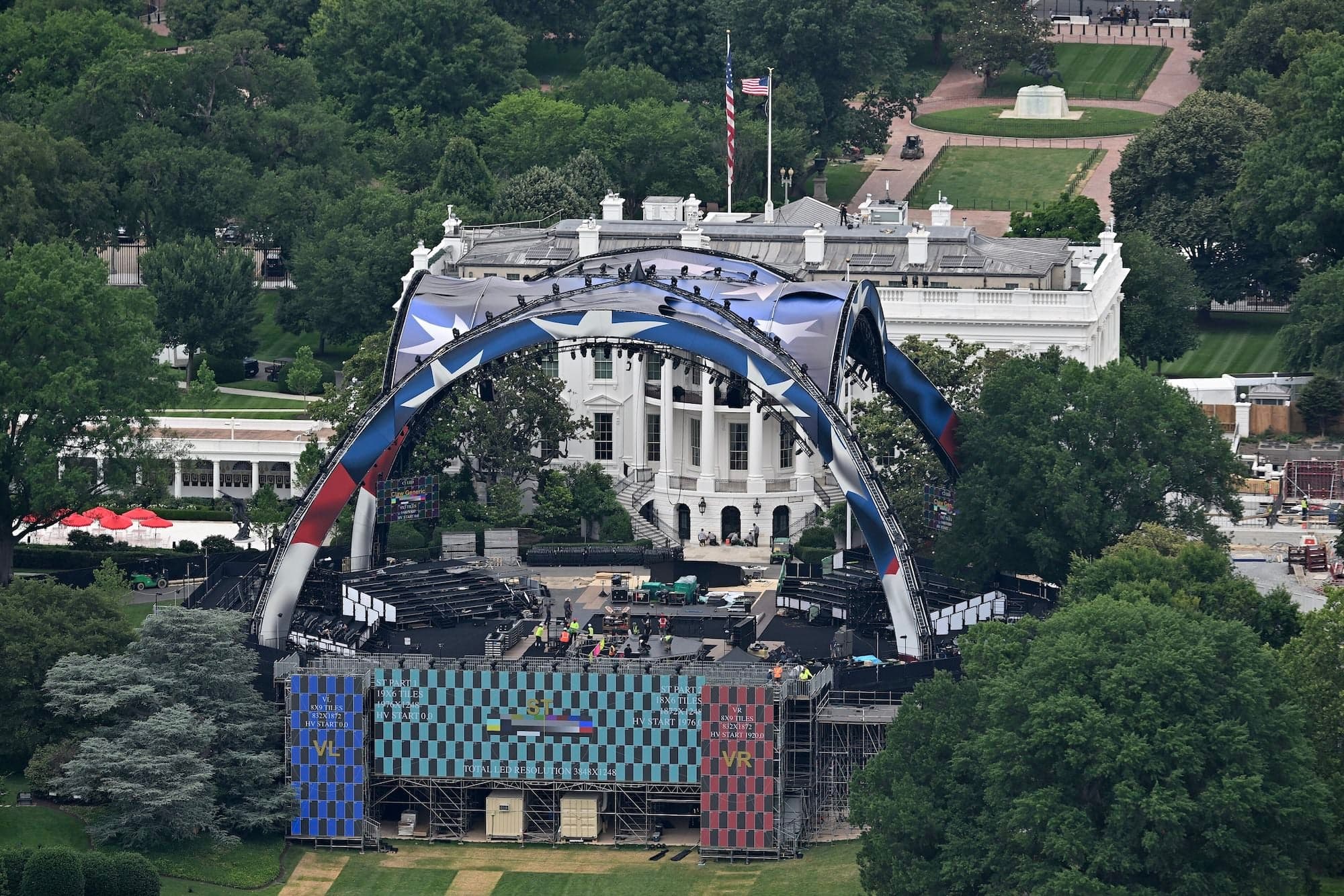
The FBI announced Tuesday that it had dismantled a conspiracy to deploy an explosive-laden drone at the UFC Freedom 250 event on the White House South Lawn, arresting five suspects and identifying at least 23 individuals through encrypted messaging records. Investigators said the attack had been planned for June 14 and targeted President Donald Trump, approximately 4,300 ticketed guests, and around 2,300 active-duty military personnel in attendance.
This marks the closest a weaponized drone plot has come to a major U.S. event in the roughly six months that this publication has tracked counter-drone deployments ahead of the 2026 FIFA World Cup and the U.S. Semiquincentennial celebrations. The drone was not the sole attack vector but was designed as the opening move in a multi-phase operation. According to investigators who spoke with ABC News and other outlets, the drone was intended to strike structures on the event perimeter, driving panicked crowds into the sightlines of pre-positioned sniper teams, while a second assault team would simultaneously breach the White House gates.
The attack did not occur. The seven-fight card proceeded under heavy security without casualties. The significance of the case lies in its timing and in what it reveals about the threat environment the U.S. government has spent a year and hundreds of millions of dollars preparing for.
FBI Traced the Conspiracy Through Signal Communications
ABC News reported that federal agents learned of the threat on June 10—four days before the event—and, working with partner agencies, made their first arrest in Cincinnati, Ohio. An initial review of one suspect's iPhone revealed at least 23 Signal users engaged in what officials described as pre-operational planning. The investigation spanned at least 12 FBI field offices.
Some individuals involved allegedly traveled to Fredericksburg, Virginia on June 12 or 13 for preparatory activities. FBI Director Kash Patel posted a statement on X characterizing the multi-state operation as a successful interdiction and framed the detection and response work at large gatherings as routine rather than exceptional.
According to Fox News Digital—which first reported the case—citing officials, one suspect told investigators the targets were described as so-called "capitalist elites," "billionaires," and politicians who had received donations from the American Israel Public Affairs Committee (AIPAC). The FBI said the investigation remains ongoing, which typically signals additional arrests are forthcoming.
Federal Bulletin Had Already Flagged UFC Event as a Symbolic Target
Earlier this month, the FBI and the Department of Homeland Security (DHS) issued a bulletin warning that UFC events represent high-value symbolic targets, though no specific threat was cited at the time. The appeal of this particular event was self-evident: a sitting president attending his own 80th birthday celebration on the eve of the nation's 250th anniversary, with UFC relocating the card to the White House South Lawn, an estimated 80,000 fans watching a simulcast on the Ellipse, and thousands more gathered on the National Mall.
Washington, D.C. has some of the most restrictive airspace in the United States. The National Capital Region operates under a permanent flight restriction framework that makes lawful drone operations there nearly impossible to authorize. Yet those regulations do not prevent a determined bad actor from launching a small drone. The gap between airspace rules and threat actors willing to ignore them is the fundamental problem with treating regulatory frameworks as a security tool.
The Case Validates the Threat Model Behind Hundreds of Millions in Counter-Drone Spending
The trend of low-cost commercial drones being modified into improvised weapons has moved rapidly from overseas battlefields into domestic threat assessments. DroneXL has tracked this shift closely, including cartel use of FPV attack drones in Mexico and Pentagon officials warning that adversaries can arm off-the-shelf drones for a few hundred dollars. The Oakland County Sheriff testified before Congress last year that this is precisely the threat facing public events, citing a disrupted ISIS drone attack plot against a U.S. Army facility in Michigan.
The legal architecture built to counter this threat is now substantial. The FY2026 National Defense Authorization Act (NDAA) grants state and local law enforcement new authority to detect, track, and jam drones at stadiums and large public gatherings. FEMA's $500 million counter-drone program has already disbursed initial funding to World Cup host states and to the National Capital Region specifically for Semiquincentennial events. The FAA has activated more than 100 World Cup-related Temporary Flight Restrictions (TFRs), covering not just stadiums but team hotels hundreds of miles from match venues.
For legitimate commercial operators, the cost of this infrastructure falls entirely on those who follow the rules. Licensed Part 107 pilots found themselves grounded immediately when World Cup TFRs took effect on June 1, with the FAA scrambling to add a DHS authorization pathway after the fact. The conspirators arrested this week never intended to file a TFR; the legal operators who lost work because of the restrictions always did.
DroneXL Analysis
This publication has reported on counter-drone buildups for the World Cup and Semiquincentennial since FEMA grants were announced in late 2025. The underlying question readers have repeatedly raised is whether the threat is real or security theater dressed up around a convenient series of events. This week is the first time this publication can point to a specific, named, FBI-disrupted conspiracy in which a drone was the intended first strike against one of these events. That changes the honest answer: the threat model underpinning this spending was not invented, and someone actually built an attack plan around it.
That does not, however, validate the specific RF-detection and jamming hardware currently being funded. This case was broken by investigators reading communications records, not by sensors scanning the sky. A real conspiracy justifies taking the risk seriously, but it does not by itself sustain an indefinitely expanding counter-drone apparatus.
It also does not resolve civil liberties concerns—it sharpens them. The drone that conspirators sought to weaponize is the same platform journalists and inspection pilots fly legally every day. The enforcement tools now being extended to local police cannot, at the moment of interdiction, distinguish between the two.
As for how this plot was actually stopped: Director Patel credited Signal records and human investigative work, not counter-drone sensors. The drone never flew, which means traditional signals intelligence and on-the-ground coordination did the work—not the RF-detection and jamming hardware purchased with FEMA funding. When the charging documents are unsealed, watch for the gap between what suspects actually possessed and what they discussed—because the distance between a Signal conversation and an armed drone with a live payload ready for launch is exactly the difference between a foiled conspiracy and one that prosecutors may struggle to prove to a jury.
Sources: Fox News Digital, ABC News, CBS News, The Hill, Washington Times, FBI Director Kash Patel (X).
原文來源: 查看原文
FAQ
Reviewed and published by the LAETimes editorial desk ·