FCC Grants VEX AIR Exemption for Classroom Drones; Approved Vendors Reach 11 as DJI Remains Blocked
The FCC's Public Safety and Homeland Security Bureau on June 4 issued DA 26-548, exempting VEX AIR classroom drones from the Covered List — the first education-market drone to clear national security review. The conditional approval, granted to Innovation First International, runs through December 31, 2026. Approved vendors now total 11, but DJI and Autel Robotics remain excluded. All drone exemptions expire at year-end 2026.
Highlights
- The FCC issued DA 26-548 on June 4, 2026, exempting VEX AIR — a 2.5-metre-altitude indoor classroom drone by Innovation First International — from the Covered List, the first education drone to receive this designation.
- The total number of drone vendors holding DoD Conditional Approvals has grown to 11 since the first four were approved in March 2026, with approvals issued at roughly two-week intervals.
- All 11 drone vendor approvals expire December 31, 2026, one day before Blue UAS and Buy American provisions lapse, and no renewal mechanism has been published.
- DJI and Autel Robotics remain blocked from new FCC equipment authorizations; DJI is contesting its Covered List designation in three separate proceedings, including Ninth Circuit case No. 26-1029 filed February 20, 2026.
- The FCC extended firmware update exemptions for existing DJI hardware through January 2029, acknowledging that denying security patches to deployed fleets poses greater safety risks than the ban itself.
FCC Grants VEX AIR Exemption; Approved Drone Vendors Now Total 11
The Federal Communications Commission's Public Safety and Homeland Security Bureau on June 4 published order DA 26-548, removing the VEX AIR drone system from the agency's Covered List. The exemption follows a Conditional Approval issued by the Department of Defense to Innovation First International, valid through December 31, 2026. The same order also removed five Sagemcom USA routers from the list, with approvals running through December 5, 2027.
VEX AIR Becomes First Education Drone to Pass National Security Review
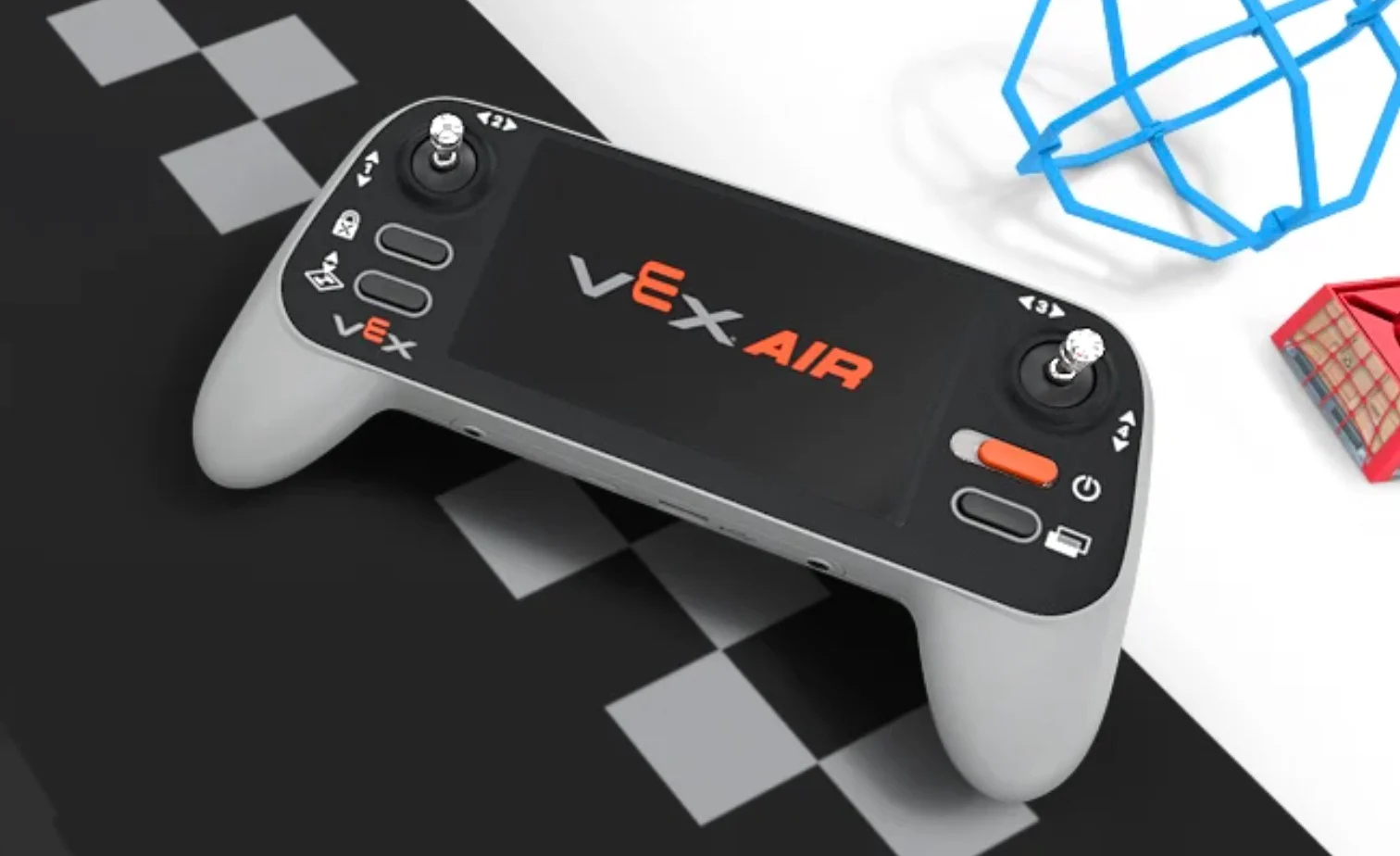
VEX AIR is manufactured under the VEX Robotics brand by Innovation First International, a Texas-based company. The platform is not an enterprise inspection system or a defense asset — it is an indoor instructional drone designed for high school and university STEM education, with a maximum flight altitude of 2.5 metres (approximately 8 feet).
VEX Robotics introduced the VEX AIR at ISTELive 25 in July 2025, marking the brand's first drone product. Designed exclusively for indoor use, it features swappable mission modules, a dual-camera system, and a touchscreen controller with live video feed, primarily intended for classroom competitions in grades 9 through 12.
The fact that a teaching tool that never rises above gym-ceiling height — and never leaves the building — required a cross-agency national security review reflects how broadly the December 2025 drone order was drawn. That order brought all foreign-manufactured drones and critical components under regulatory control regardless of use case or operating environment. In practice, a drone that cannot fly higher than a basketball hoop is subject to the same restriction as a 25 kg (55 lb) Part 107-class industrial platform. The Conditional Approval process has become the only available path to market.
Exemption List Expands to 11 Vendors
Since the first four vendors received exemptions in March 2026, the DoD has issued notices at roughly two-week intervals, growing the approved vendor count to 11. The range of approved product categories has broadened considerably — from initial enterprise inspection and tactical communications systems to confined-space inspection drones, warehouse inventory platforms, cargo aircraft, agricultural sprayers, and now educational drones.
Notably, DJI and Autel Robotics — the two most widely operated drone brands in the U.S. market — remain absent from the exemption list.
On the router side, Sagemcom joins previously approved brands including Netgear, Amazon eero, Adtran, Calix, Nokia, and Alpha Networks. The full list of approved equipment is available on the FCC's supply chain page.
All Drone Exemptions Expire December 31, 2026
Conditional approvals for all 11 drone vendors terminate on December 31, 2026 — one day before the expiration of Blue UAS and Buy American provisions on January 1, 2027. By contrast, router exemptions extend through the end of 2027, giving networking equipment nearly a full additional year compared to any drone approval.
The FCC has not announced a renewal mechanism. Whether the DoD will conduct individual re-reviews, issue batch extensions, or allow the approvals to lapse has not been addressed in any published notice.
The asymmetry is difficult to explain on its face: a Sagemcom router receives approval through December 2027, while an indoor educational drone limited to 2.5-metre altitude receives less than seven months. DA 26-548 offers no explanation for the difference.
DJI and Autel Remain Excluded
No Chinese manufacturer has received a Conditional Approval to date. DJI and Autel Robotics remain barred from obtaining new FCC equipment authorizations, and both companies are pursuing separate legal and administrative challenges to their Covered List designations.
DJI is currently engaged on three fronts:
- FCC Petition for Reconsideration: The DoD has responded with opposition filings citing classified intelligence, including an April submission to Congress.
- U.S. Court of Appeals for the Ninth Circuit: Case No. 26-1029, filed February 20, seeking to vacate the December Covered List designation.
- U.S. Court of Appeals for the D.C. Circuit: An appeal of the Pentagon's Section 1260H listing, with oral arguments held in February.
Autel has filed its own review petition, arguing that the ban rests on secret evidence and on allegations borrowed from the DJI case. Additionally, the Section 1709 joint-venture provision bars Autel from pursuing the kind of domestic manufacturing partnership that would open a Conditional Approval pathway — a statutory barrier that the FCC cannot waive unilaterally.
Meanwhile, existing authorized hardware remains operational. The FCC's Office of Engineering and Technology has extended firmware update exemptions through January 2029, acknowledging that cutting off security patches to deployed fleets would create greater safety risks than the ban itself.
Analysis
When FCC Chairman Brendan Carr outlined the Conditional Approval pathway at CES 2026, the industry's central question was whether the mechanism would work in practice. Five months on, the answer is yes — and with a predictable approval cadence. The vendor count has grown from four enterprise-system providers in March to 11 by June, and the product scope has expanded from tactical data links to warehouse robotics and high-school teaching drones.
The VEX AIR approval is significant precisely because it represents the lowest-threat product in the approved cohort. A classroom drone clearing review suggests the process is now reaching the edge of the consumer market, and it clarifies the nature of the December order: it does not prohibit a category of threat — it prohibits an entire manufacturing geography, including drones incapable of clearing a doorframe.
Two dates now define the near-term outlook. The first is December 31, 2026, when all 11 drone approvals expire with no published renewal procedure. The second is DJI's Ninth Circuit case, No. 26-1029 — if the court narrows or vacates the December designation, the entire Conditional Approval framework built on top of it would need to be reassessed. Whether the DoD regards these exemptions as a transitional bridge to a permanent regime or as a one-year trial has not been addressed in any official notice.
Source: U.S. Federal Communications Commission (FCC)
原文來源: 查看原文
FAQ
Reviewed and published by the LAETimes editorial desk ·