China's H-20 Stealth Bomber: If It Flies, the U.S. Loses a 37-Year Strategic Monopoly
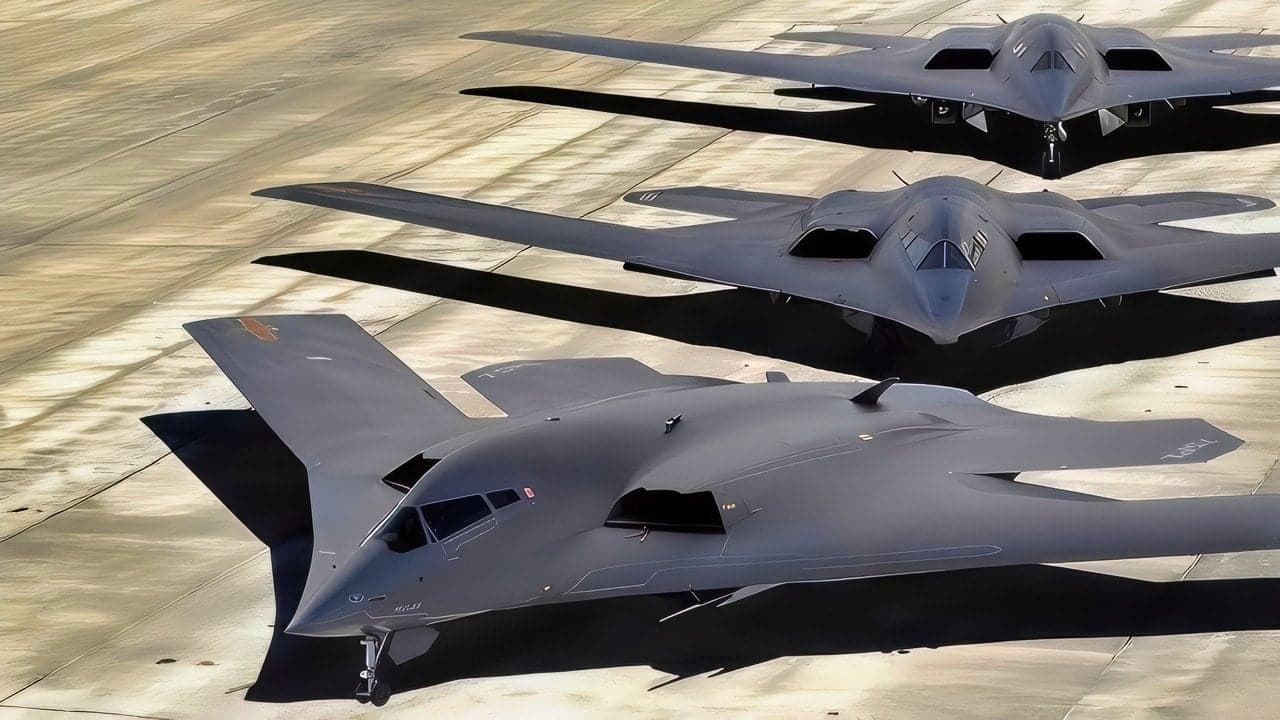
Since the B-2 Spirit's first flight in 1989, the United States has held an uncontested monopoly on stealth bomber capability. China's H-20 program, despite a decade of delays and unconfirmed development setbacks, aims to end that era. Should it become operational, it would threaten U.S. rear bases from Guam to Hawaii and force American planners—for the first time—to solve the counter-stealth problem from the receiving end. Notably, the Pentagon's 2025 China military power report omitted all mention of the H-20.
Highlights
- 美國自1989年B-2幽靈轟炸機首飛以來,獨占全球匿蹤轟炸機作戰能力長達37年,對手從未部署同類威脅。
- 中國H-20自2016年曝光至今多次跳票,五角大廈2025年12月年度中國軍力報告已完全刪除對H-20的所有提及。
- 若H-20成功服役,其估計航程8,500至10,000公里可將關島、夏威夷及澳洲北部納入打擊範圍,終結美軍「安全後方」假設。
- H-20預計具備核常兼備能力,將賦予中國首個擁有可信空中支柱的完整核三位一體,並向美軍引入升級模糊性。
- B-21突襲者(Raider)已於2023年首飛,最低採購量100架、美國戰略司令部司令建議達145架,預計2027年形成初始作戰能力。
The 37-Year Stealth Bomber Monopoly
For the past 37 years, only one country has been capable of sending a stealth bomber over enemy territory. Since the B-2 Spirit's maiden flight in 1989, the United States has held a genuine monopoly on penetrating strategic airpower. Every U.S. war plan, every allied defensive posture, and every adversary's threat calculus has been built on the premise that this capability only flies in one direction.
Iran learned the weight of that monopoly last June, when B-2s dropped bunker-busting munitions on the Fordow nuclear facility without being detected—and then struck again during an operation that continued for over 100 days. No U.S. base, city, or fleet has ever had to prepare for the threat running in reverse.
China's H-20 is the program designed to end that era. The right way to think about it is to ask—concretely and seriously—what breaks on the day it actually flies.
The Monopoly Effect: A Strategic Advantage So Deep It Became Invisible
This monopoly deserves careful consideration, because its effects have become so deeply embedded that Americans have largely stopped noticing them.
The U.S. Air Force originally planned to procure 132 B-2s and ultimately built 21. Yet even that tiny "silver bullet" fleet reshaped the behavior of every adversary on earth. Russia and China spent three decades and tens of billions of dollars building low-frequency radars, infrared search-and-track networks, and layered surface-to-air missile systems for one overriding reason: U.S. stealth bombers exist, and they must be found.
The United States, facing no equivalent threat, never built a comparable counter-stealth architecture. Homeland air defense shrank to a thin network designed to intercept hijacked airliners and occasional cruise missiles, because a stealth threat never came from the other direction.
That asymmetry is the legacy now at risk. The entire U.S. military architecture in the Pacific rests on the assumption that rear areas are safe from air attack, that counter-stealth is the other side's problem, and that the bomber arriving without warning always bears American markings. The H-20 is aimed at every one of those assumptions.
H-20 Development: A Decade of Promises and Missed Deadlines
What China has actually produced so far amounts to a decade-long teaser reel. The program surfaced in 2016 when Air Force Commander Ma Xiaotian announced China was developing a new long-range bomber. Chinese media predicted the H-20 would appear at the 70th anniversary of the People's Liberation Army Air Force in 2019. The parade came and went; nothing appeared. Concept renderings leaked in 2021, along with a brief clip at the end of an official recruitment video.
Reports claimed a first flight was imminent in 2022. It did not happen. In 2024, Air Force Deputy Commander Wang Wei dismissed talk of technical difficulties and promised the bomber was "coming soon." It did not come.
Meanwhile, U.S. intelligence assessments grew increasingly skeptical. The Pentagon's 2024 assessment projected the H-20 might appear "sometime in the next decade," pushing the expected timeline into the 2030s. U.S. intelligence reporting the same year indicated the program had encountered development problems. General Stephen Davis, commander of Air Force Global Strike Command, said flatly this year that China is actively pursuing the capability but has "not yet achieved" it, and remains a regional bomber force flying the H-6—a derivative of a 1950s Soviet design.
The most telling detail appeared in the most recent official document: the Pentagon's December 2025 annual report on Chinese military power omitted all mention of the H-20 after tracking the program for multiple consecutive years. Even a moment that seemed like a revelation fell apart under scrutiny—a large stealth flying wing spotted in satellite imagery was widely misreported as the H-20, but sober analysts assessed it as a different vehicle, likely an unmanned reconnaissance platform. The H-20 itself has never been photographed, never confirmed airborne, never displayed.
The honest baseline, then, is this: the H-20 may be years away, may be struggling, and may eventually emerge in the 2030s at a lower capability than advertised. But it still warrants serious attention—because the important question is what happens if that baseline assessment is wrong.
What Changes on First-Flight Day: Guam, Hawaii, and the End of the "Safe Rear Area"
Start with geography. Estimates circulating for years have placed the H-20's range at 8,500 to 10,000 kilometers; Pentagon reports have described it as a platform designed to strike targets beyond the Second Island Chain.
Applying appropriate caution to those figures while following their logic: a flying-wing bomber with that range, carrying long-range cruise missiles, would threaten not only Guam—already within range of Chinese ballistic missiles—but also Hawaii, Alaska, northern Australian airfields, and the logistics networks stretching toward the U.S. West Coast.
U.S. Pacific force posture treats these locations as sanctuaries. The missile threat to Guam is real and has already driven hardening programs and layered defenses, but every plan west of the International Date Line rests on the assumption that the deep rear can only be reached by ballistic missiles—weapons that are detectable from launch and finite in number. A stealth bomber breaks that assumption in ways no missile can.
It arrives from unpredictable vectors, executes recallable and repeatable missions, hunts mobile targets with human crew judgment, and—critically—produces no launch signature to give defenders warning. Every tanker apron, ammunition pier, and command center currently outside the threat ring will need defending, and the resources to defend them will come from the same budget that funds offensive forces. Imposing costs is the entire point, and an operational H-20 would impose those costs across the entire Pacific.
The Counter-Stealth Burden Shifts to the United States and Its Allies
The larger change is a role reversal three decades in the making. Detecting stealth aircraft is among the hardest problems in air defense, requiring low-band early-warning radars, infrared sensors, sensor-fusion networks, and sustained investment. China and Russia have obsessed over this problem for decades because they had no choice. The United States never did the homework, because no adversary deployed anything requiring detection.
A flying H-20 would hand that problem to Washington and its allies with no preparation time. NORAD modernization, over-the-horizon radar programs, space-based air moving target indicator sensors, E-7 Wedgetail acquisitions in the United States and Australia—all of these programs gain new and urgent justification, and all of them start from behind against an adversary that has been studying counter-stealth from the other side of the table since the 1990s.
The challenge is sharper for Japan and Australia. Both publics have been sold on current defense buildups in terms of the missile threat. A Chinese bomber that can appear near Honshu or approach northern Australia from deep in the Pacific redefines what "air defense" means in both countries, and what conditions they impose on Washington for continued participation in a conflict.
The Nuclear Triad's Airborne Leg: An Escalation Problem
Then there is the warhead question. Chinese state media has explicitly stated the new bomber will carry nuclear weapons alongside conventional munitions, which would give Beijing a genuine nuclear triad with a credible airborne leg for the first time. Bombers hold a unique place in nuclear strategy: they can be recalled, made visible when a government wants to signal, and rendered ambiguous when it does not. The United States has exploited those properties throughout the nuclear age, dispatching B-2s and B-52s near crises as messages. China has never had that option.
A dual-capable stealth bomber also introduces the escalation dilemma that U.S. planners have imposed on others for years. When an H-20 launches weapons, no observer can know whether the payload is conventional or nuclear, and in a Pacific war, every inbound attack warning will carry that question.
Since the first nuclear-armed B-2 entered alert, the United States has comfortably sat on the sending end of that ambiguity. The receiving end is a very different experience, and U.S. and allied command systems have never practiced it.
The B-21 Response: 100 Raiders, Possibly 145, with a Running Production Line
The counterweight is that the United States is not standing still, and the gap in this competition remains enormous. The B-21 Raider completed its first flight in 2023, is currently in production, and is projected to achieve initial operational capability in 2027. The Air Force and Northrop Grumman are finalizing agreements to raise annual production rates, and the minimum procurement quantity on record stands at 100 aircraft.
Pressure is running firmly toward more: the commander of U.S. Strategic Command told Congress the nation needs 145 Raiders, confirmed a second production line is under consideration, and the House Armed Services Committee's defense bill draft directs the Pentagon to explain whether 100 is sufficient. A $4.5 billion expansion is already increasing capacity, and the type will replace both the B-1 and B-2 fleets through the 2030s.
Placing the two programs side by side, the asymmetry is stark. One nation is accelerating production of its second-generation stealth bomber, backed by four decades of operational experience, a global tanker fleet, hardened bases, and recent combat employment against Iran. The other has yet to publicly reveal its first such aircraft. Even if the H-20 flies, it then faces the long climb from prototype to credible combat power: testing, serial production, crew training, doctrine development, aerial refueling capability, and the entire support architecture that separates a penetrating bomber from an airshow exhibit. China will begin that climb from roughly where the United States stood in 1989.
Time Purchased, Not Problems Solved
The temptation in Washington will be to read the H-20's endless delays as evidence the threat has been overhyped, and the current record does support healthy skepticism: a decade of promises, no confirmed first flight, an intelligence community that has stopped writing the aircraft into its annual report, and a B-21 fleet growing on an open production line.
But delays purchase time, not the elimination of the problem.
China's pattern has been to build slowly and then produce at scale; its navy, missile forces, and fifth-generation fighters have all demonstrated this. A country assembling a nuclear triad, an ocean-going fleet, and the world's largest missile arsenal does not abandon a bomber leg because one program is late.
On the day the H-20 flies—whenever that is—the United States and its allies will inherit a threat category they have never faced, a counter-stealth burden they have never shouldered, and an escalation ambiguity they have previously only imposed on others. The advantage held since 1989 has been so complete and so enduring that U.S. defense planning treats it as a law of nature rather than a lead in a competition.
The H-20's troubled history tells us that lead is large. It does not tell us the lead is permanent—and the time to build sensors, defenses, and the mindset for a two-stealth-bomber world is while the other aircraft is still missing its own debut.
原文來源: 查看原文
FAQ
Newsletter
Subscribe to our Low-Altitude Industry Newsletter
Daily curated news on low-altitude economy and drone industry, delivered to your inbox.
Reviewed and published by the LAETimes editorial desk ·