Airbus Retrofits H145M Helicopter with Quantum Systems Interceptor to Counter Tactical Drone Swarms
Airbus Helicopters and Germany's Quantum Systems announced a cooperation agreement at ILA Berlin Air Show to integrate an anti-drone interception system onto the H145M military helicopter. The partnership aims to address growing threats posed by small attack drones to rotary-wing aircraft, marking a significant step in the evolution of armed helicopter self-defense capabilities.
Highlights
- Airbus Helicopters and Quantum Systems signed a cooperation agreement at ILA Berlin Air Show 2025 to integrate a counter-drone interception system onto the H145M military helicopter.
- The H145M was selected as the starting platform due to its open systems architecture, modular design, and service with multiple NATO members and global export customers.
- The agreement is an initial assessment phase only — no production contract, deployment timeline, or technical specifications have been announced.
- Quantum Systems' Vector fixed-wing reconnaissance drone has seen combat use by Ukrainian forces; counter-drone technology represents a newer business focus for the Munich-based firm.
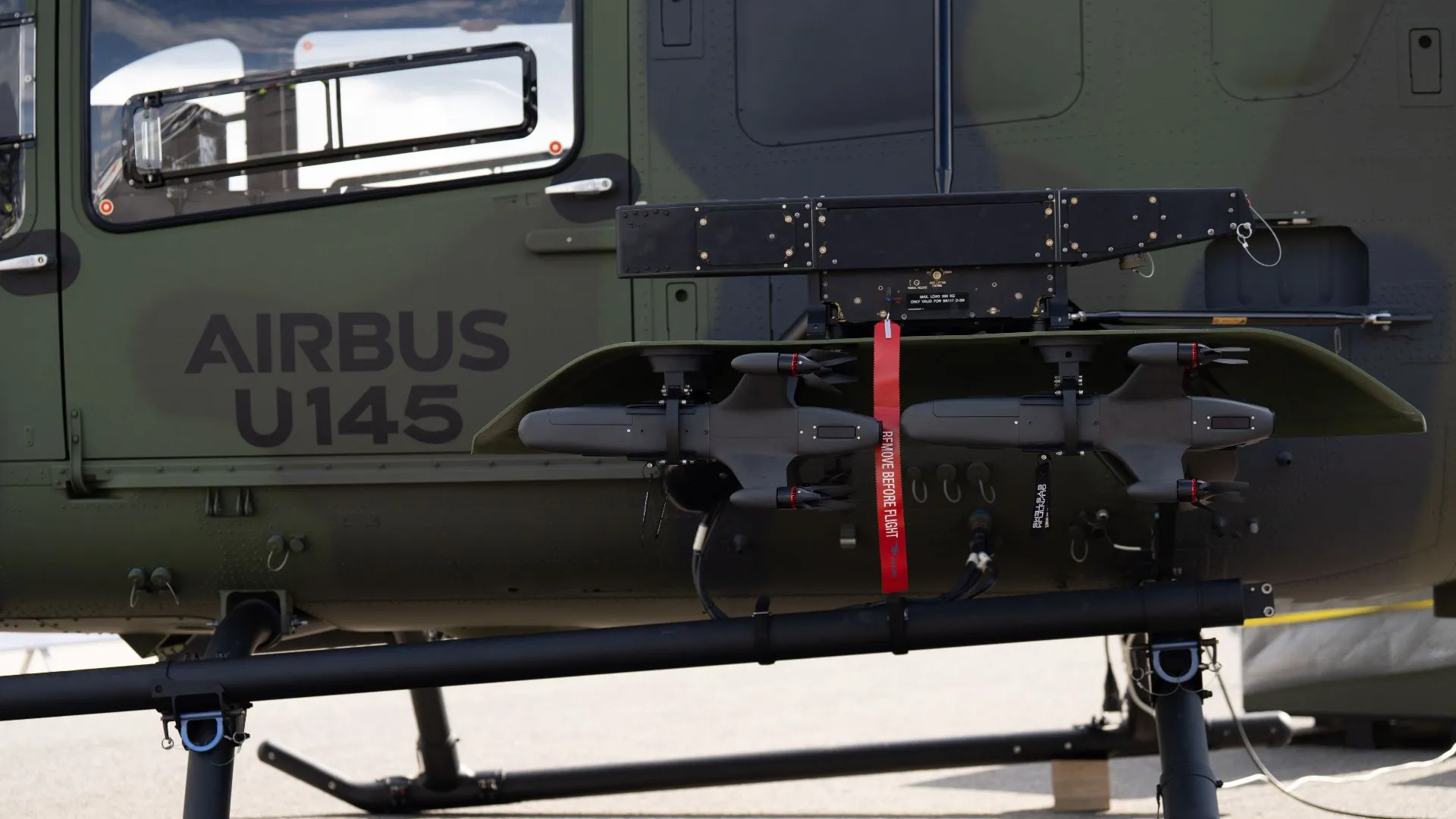
- Airbus also displayed the U145 unmanned variant of the H145 family at ILA Berlin, featuring a Quantum Systems counter-drone capability demonstration.
As small attack drones pose an ever-increasing threat to military helicopters, Airbus Helicopters and German defense technology firm Quantum Systems are betting on an onboard solution. The two companies announced a cooperation agreement at the ILA Berlin Air Show to explore equipping Airbus military helicopters with an anti-drone interception system developed by Quantum Systems.
The program will begin with the H145M, a light multi-role helicopter already in service with armed forces around the world. The agreement does not cover a production contract or deployment schedule — it is an initial step to assess whether the helicopter can carry a dedicated system capable of detecting and defeating enemy drones before they reach their target.
A Growing Drone Threat
The battlefield has changed rapidly in recent years. Small drones have evolved from reconnaissance tools into low-cost weapons capable of threatening troops, vehicles, and aircraft alike.
For helicopters, the danger is especially acute during takeoff, landing, and low-altitude flight — phases that often leave crews with few options to evade an incoming threat. Commercially available drones modified to carry explosives, as well as purpose-built attack systems, have demonstrated the vulnerability of conventional platforms in contested environments. Existing helicopter self-defense systems were largely designed to counter missiles and conventional aircraft, not small drone swarms.
Airbus and Quantum Systems aim to close that capability gap. Stefan Thomé, Executive Vice President of Programs at Airbus Helicopters, said the company is continuously looking for new operational capabilities that deliver real value to its military customers.
He described the agreement as an important step toward expanding military helicopter capabilities in an increasingly complex airspace. "The H145M, with its advanced open systems architecture and outstanding upgrade potential, is the ideal starting platform for this joint initiative," Thomé said.
Why the H145M?
The H145M is already a versatile performer. Operators around the world use the twin-engine helicopter for special operations support, medical evacuation, reconnaissance, and light attack missions.
Its modular design allows crews to add sensors, weapons, and mission equipment without major structural modifications. Airbus considers this flexibility a natural fit for testing anti-drone technology. The helicopter is also in service with multiple NATO member states and export customers worldwide, giving any future capability broad potential application.
A European Defense Experiment
Quantum Systems built its reputation on reconnaissance drones — most notably its Vector fixed-wing platform, which has been evaluated by several European militaries and used in combat by Ukrainian forces. Counter-drone technology is a newer focus area for the Munich-based company.
Martin Karkour, Chief Revenue Officer at Quantum Systems, said the partnership demonstrates how European defense companies can combine their respective expertise to address emerging threats. "Current developments show that air systems need solutions against drone threats," Karkour said.
Airbus also used the ILA Berlin Air Show to showcase the U145 — an unmanned variant of the H145 family — with a display model featuring Quantum Systems' counter-drone capability demonstration.
Many questions remain unanswered: the two companies have not disclosed technical specifications, test schedules, or certification plans. Nevertheless, the initiative reflects a broader shift in military aviation. As low-cost drones reshape modern warfare, aircraft manufacturers are actively working to ensure that crewed platforms can survive in skies increasingly crowded with unmanned threats.
原文來源: 查看原文
FAQ
Reviewed and published by the LAETimes editorial desk ·


