Helsing Unveils CA-1EA Electronic Attack Drone at ILA Berlin, IOC Targeted for 2031
German defense tech company Helsing has unveiled the CA-1EA, an electronic attack variant of its CA-1 Europa autonomous combat drone, at ILA Berlin. Sharing a common airframe with the kinetic attack CA-1KA, the 4-tonne aircraft uses onboard electronic warfare systems to suppress enemy radars and surveillance networks. Initial Operating Capability (IOC) is targeted for 2031.
Highlights
- Helsing unveiled the CA-1EA electronic attack drone at ILA Berlin, targeting IOC in 2031.
- The CA-1EA shares a common 4-tonne airframe, propulsion system, and Centaur AI pilot software with the kinetic attack variant CA-1KA, differing only in payload configuration.
- The CA-1EA is designed to jam and suppress enemy ground-based radars and ISR networks, creating safe corridors for follow-on strike aircraft including the Eurofighter Typhoon.
- The CA-1KA kinetic attack variant is scheduled to achieve IOC in 2029, with the entire CA-1 Europa platform's first flight planned for early 2027.
- Both CA-1 variants are developed and produced by Helsing subsidiary Grob Aircraft in southern Germany, positioned as a fully European-sovereign defense solution.
Helsing Unveils CA-1EA Electronic Attack Drone, IOC Targeted for 2031
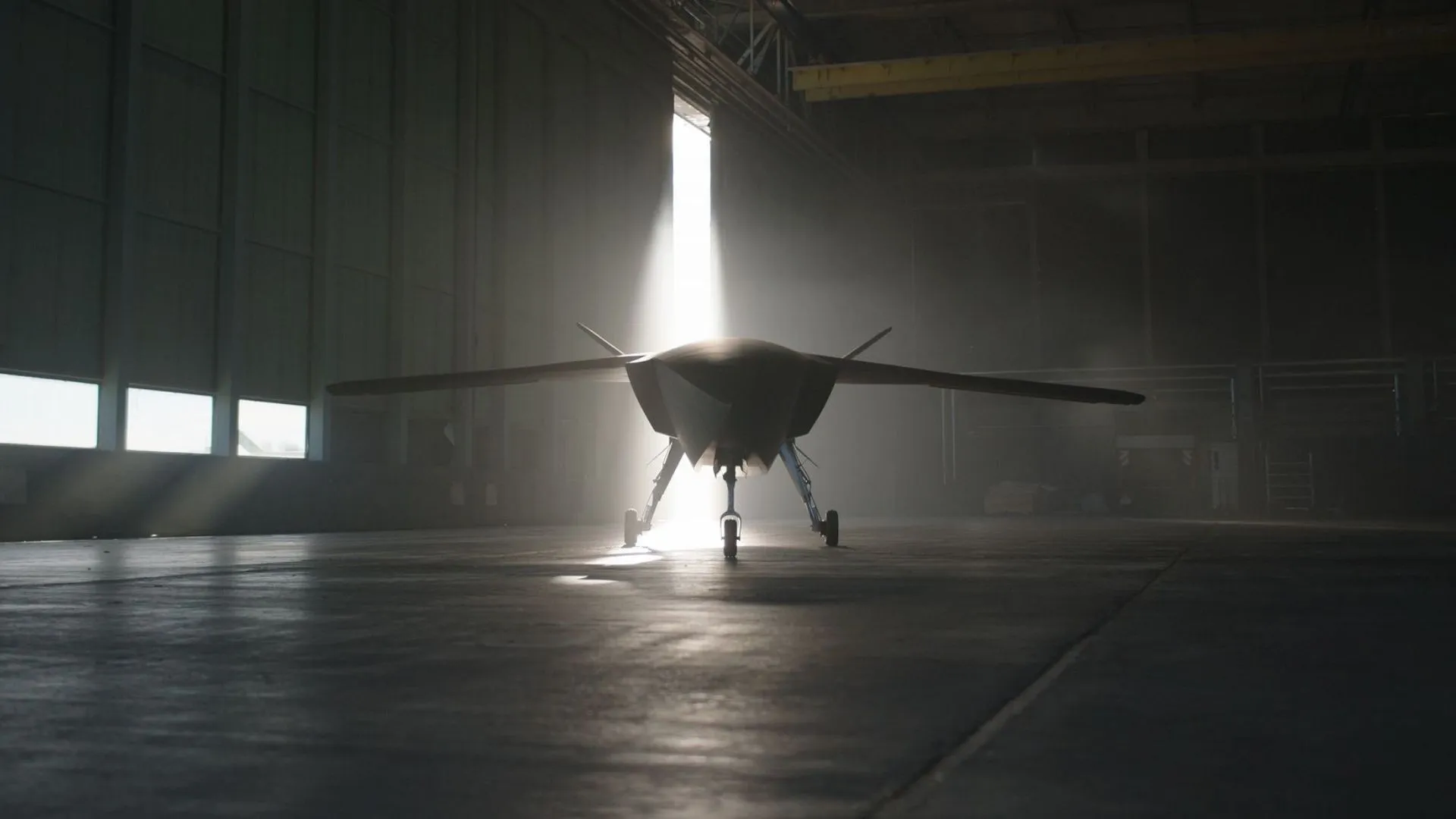
German defense technology company Helsing has officially unveiled the CA-1EA, an electronic attack derivative of its CA-1 Europa autonomous unmanned combat aircraft, at the ILA Berlin aerospace exhibition.
CA-1 Europa Platform Overview
The CA-1 Europa is a 4-tonne, single-engine unmanned combat aircraft featuring a low-observable design, measuring 11 metres in length with a 10-metre wingspan. Its autonomous flight capability is built around Helsing's proprietary Centaur AI pilot system, complemented by advanced mission systems.
The original kinetic strike variant has now been formally designated the CA-1KA (Kinetic Attack) to distinguish it from the new electronic warfare model. Helsing states that the CA-1EA is designed to deliver non-kinetic effects on the battlefield by jamming and degrading enemy sensors and reconnaissance networks.
Helsing noted that modern air forces increasingly require the integration of both kinetic attack and electronic attack capabilities to penetrate advanced air defense systems and counter sophisticated intelligence, surveillance, and reconnaissance (ISR) assets — making autonomous electronic warfare platforms a critical component of future military operations.
CA-1EA Creates Safe Corridors Through Enemy Air Defenses
Modern military operations rely heavily on suppressing enemy radars and surveillance networks before strike aircraft enter contested airspace. Helsing states the CA-1EA is specifically designed for this mission, using onboard electronic warfare capabilities to jam and suppress enemy ground-based radar systems. By disrupting an adversary's ability to detect and track targets, the autonomous aircraft can help create safer flight corridors for other platforms conducting follow-on operations.
The company also indicated that the CA-1EA can operate collaboratively with autonomous systems such as the CA-1 Europa, as well as in mixed formations with manned combat aircraft including the Eurofighter Typhoon, providing electronic protection for heterogeneous air fleets.
Shared Architecture Cuts Costs and Simplifies Logistics
Both the CA-1KA and CA-1EA are built on a common architecture, sharing the same airframe, propulsion system, autonomous flight software stack, and ground control infrastructure. The primary difference between the two variants lies in their payload configuration, which determines whether each aircraft is optimized for kinetic or electronic effects.
By standardizing the core design, Helsing aims to reduce production and through-life costs while streamlining manufacturing processes. The shared systems architecture also simplifies logistics and maintenance requirements, and allows operators to more easily cross-train across mission types within a unified operational framework.
Modular Design Addresses Diverse European Air Force Requirements
Helsing further stated that this modular design gives the CA-1 platform greater evolutionary flexibility to meet the varying operational requirements of European air forces — enabling configuration for different mission profiles without requiring a complete redesign and supporting rapid capability expansion.
Stephanie Lingemann, Helsing's Vice President of Airspace, commented:
"Modern air forces cannot operate without electronic warfare capabilities. Helsing has been developing this capability for years, and the CA-1EA is the result — an unmanned system that can operate in concert with the CA-1KA at tactical ranges, but can also be deployed independently as a standalone electronic attack platform."
Development Timeline and Production Plans
The CA-1 platform remains under development, with the strike-variant CA-1 Europa scheduled for its first flight in early 2027. The platform is being developed and manufactured in southern Germany by Helsing subsidiary Grob Aircraft, positioning it as a fully European-sovereign solution for German and allied air forces.
- CA-1KA (Kinetic Attack): Initial Operating Capability (IOC) targeted for 2029
- CA-1EA (Electronic Attack): Initial Operating Capability (IOC) targeted for 2031
原文來源: 查看原文
FAQ
Reviewed and published by the LAETimes editorial desk ·