HII Delivers First REMUS 130 Underwater Drone to U.S. Ally
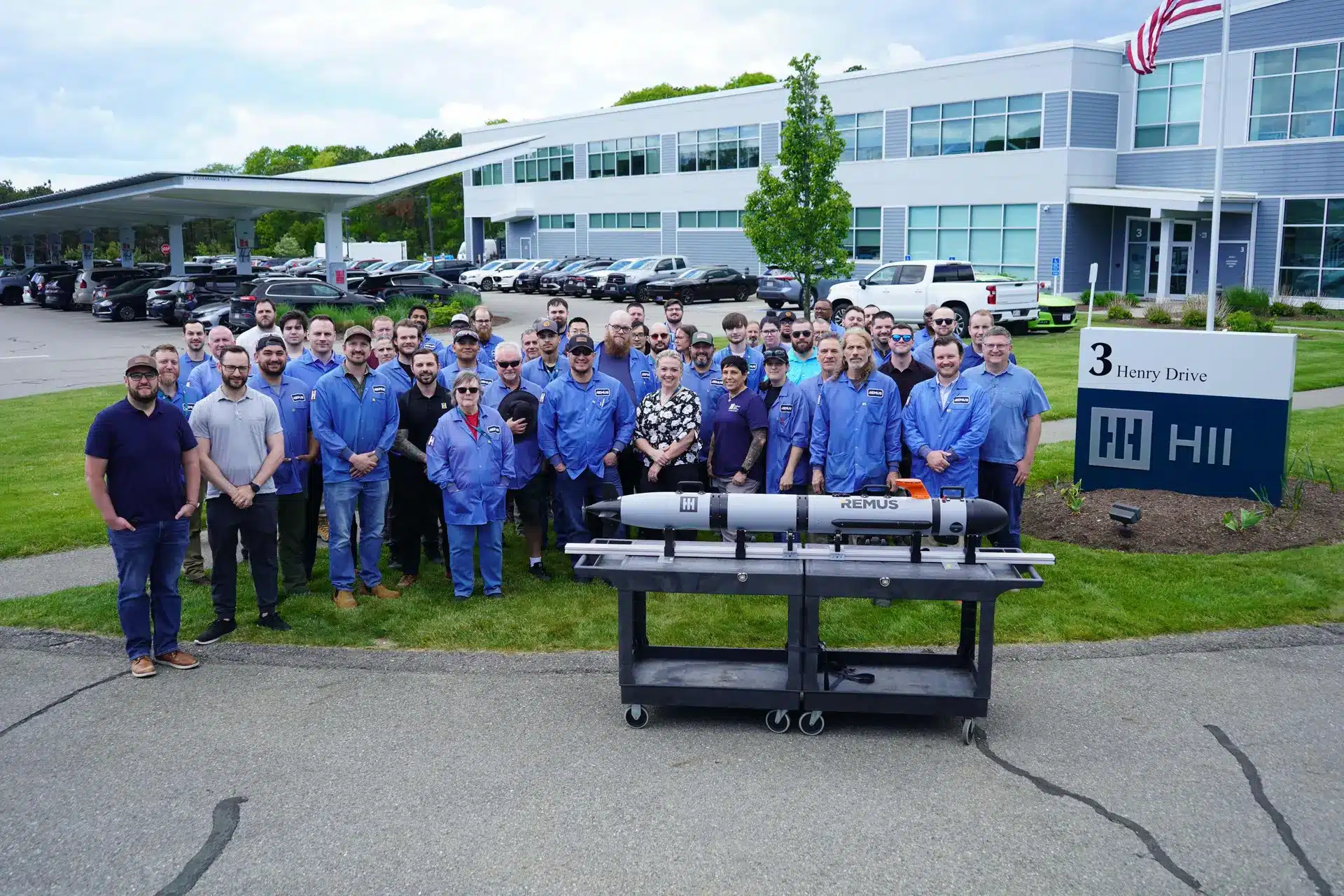
Huntington Ingalls Industries (HII) announced on June 16, 2026, the delivery of the first REMUS 130 unmanned underwater vehicle (UUV) to a U.S. allied nation. The third-generation successor to the REMUS 100 series features a two-person portable design, 100-metre operating depth, 10-hour endurance, and HII's open-architecture Odyssey autonomous control system. The REMUS family is now deployed in more than 30 countries worldwide.
Highlights
- HII delivered the first REMUS 130 UUV to a U.S. allied nation on June 16, 2026, marking a new generation for the REMUS family.
- The REMUS 130 is the third-generation successor to the REMUS 100 series, with a 100-metre depth rating and up to 10 hours of endurance.
- The vehicle features a two-person portable design and field-swappable batteries to maximize operational availability.
- REMUS 130 integrates HII's open-architecture Odyssey ACS, shared with the REMUS 300 and REMUS 620, and deployed in 30+ countries.
- HII has delivered more than 750 REMUS vehicles globally, with 14 NATO member navies among current operators.
HII Delivers First REMUS 130 Underwater Drone to U.S. Ally
American defense shipbuilding and technology giant Huntington Ingalls Industries (HII) formally announced on June 16, 2026, that the first REMUS 130 unmanned underwater vehicle (UUV) has been delivered to a U.S. allied nation — marking a significant milestone for the world's most widely deployed autonomous underwater vehicle (AUV) family as it enters a new generation.
A New Platform Built on 25 Years of Operational Experience
The REMUS series carries more than 25 years of proven operational success, earning the trust of the U.S. Navy, allied navies, government agencies, research institutions, and commercial operators worldwide across a broad range of critical underwater missions. As the third-generation successor to the highly regarded REMUS 100 series, the REMUS 130 builds on the brand's hallmark reliability, ease of operation, and mission effectiveness, while integrating modernized electronics, open-architecture interfaces, and enhanced payload flexibility.
Duane Fotheringham, President of the Unmanned Systems business group within HII's Mission Technologies division, stated: "The delivery of the first REMUS 130 represents an important step in the continued evolution of the REMUS family. For decades, customers have relied on REMUS vehicles for their durability, ease of use, and proven performance. The REMUS 130 builds on that legacy, offering greater flexibility, interoperability, and overall value through a highly modular platform, while fully leveraging the common architecture of the REMUS fleet."
Key Technical Specifications
The REMUS 130 is designed to meet growing demand for affordable, highly adaptable autonomous underwater systems. Key technical highlights include:
- Two-person portable compact design for ease of field deployment
- Maximum operating depth of 100 metres
- Endurance of up to 10 hours
- Field-swappable battery capability, significantly improving operational availability and mission readiness
Shared Technology Foundation with REMUS 300 and REMUS 620
The REMUS 130 shares a common technology foundation with the REMUS 300 and REMUS 620 platforms, integrating HII's in-house developed and field-proven Odyssey Autonomous Control System (ACS), along with advanced navigation, communications, and data-processing capabilities, as well as modular interfaces that support rapid integration of commercial, government, and customer-developed payloads.
The Odyssey ACS features an open-architecture design that transforms underwater vehicles into intelligent robotic systems capable of evolving with mission requirements, while reducing lifecycle costs and technical risk. Odyssey is currently deployed across REMUS platforms in more than 30 countries, supporting advanced capabilities including collaborative autonomy, sensor fusion, and cross-vehicle enhanced perception.
Broad Mission Applicability
The REMUS 130 is designed to support a wide range of mission types, including:
- Oceanographic research and data collection
- Offshore energy facility and infrastructure inspection
- Search and rescue operations
- Mine countermeasures
- Environmental monitoring and seabed mapping
Expanding HII's Global Autonomous Maritime Footprint
This delivery further extends HII's presence in the global autonomous maritime systems market. To date, HII has delivered more than 750 REMUS vehicles worldwide. REMUS systems are currently operated by 14 NATO member nation navies, establishing a strong reputation for reliability, longevity, and mission versatility across defense, commercial, and scientific applications.
This article was originally reported by Naval News and has been compiled and translated by this publication.
原文來源: 查看原文
FAQ
Reviewed and published by the LAETimes editorial desk ·