Spanish Navy Tests Hornet Block 1 Interceptor Missile Aboard Frigate Santa María
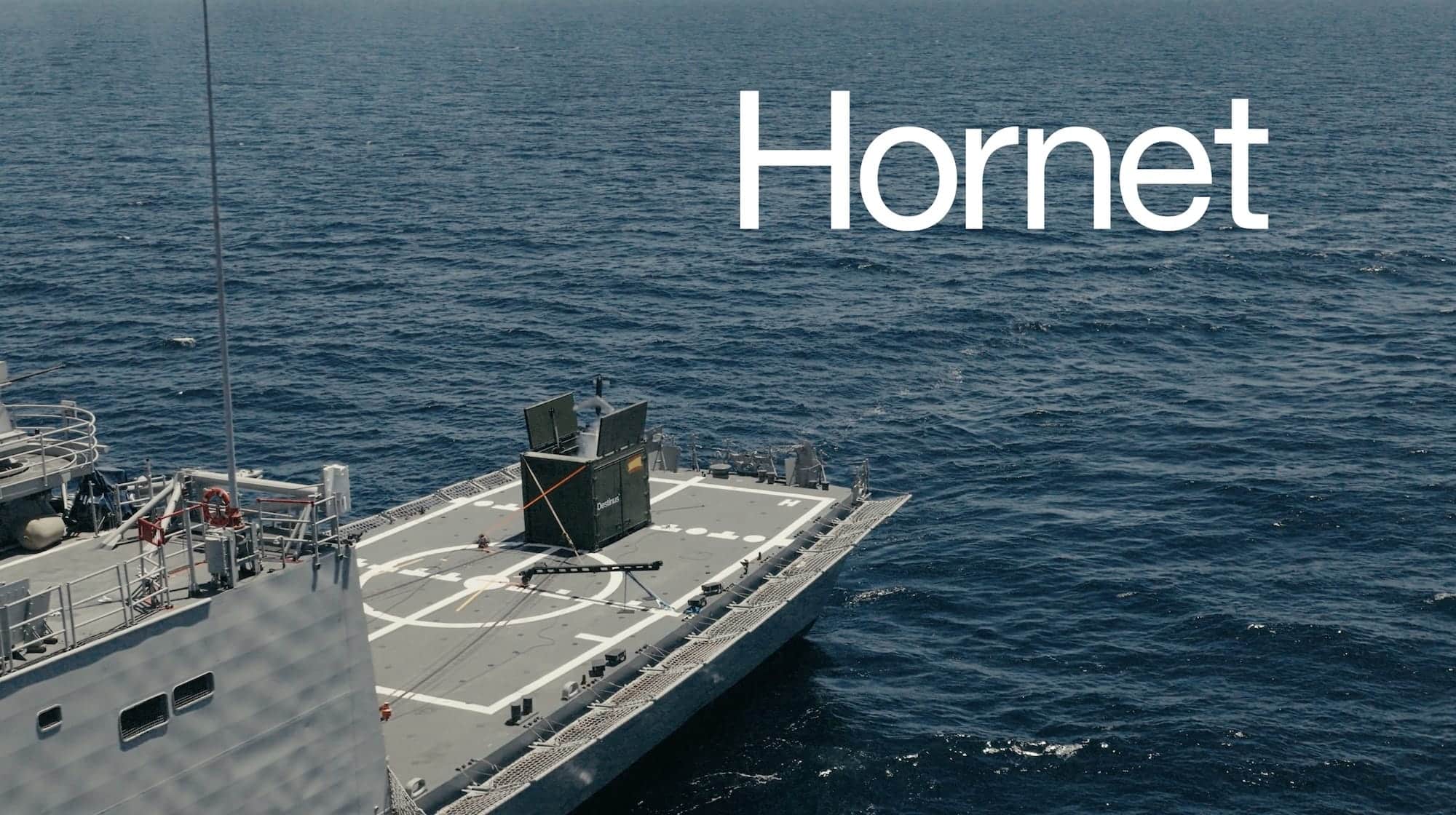
On June 18, 2026, the Spanish Navy and Destinus conducted a Hornet Block 1 interceptor missile launch test aboard frigate F-81 Santa María. The trial evaluated containerized deployment for shipborne air defense against subsonic drones and drone swarms, with a range exceeding 75 km and a 1.5 kg warhead payload.
Highlights
- On June 18, 2026, the Spanish Navy and Destinus fired a Hornet Block 1 interceptor from a containerized launcher aboard frigate F-81 Santa María.
- Hornet Block 1 has a range exceeding 75 km, a 1.5 kg warhead, and EO/IR plus radar terminal guidance that operates in GNSS-denied environments.
- The containerized launch concept enables integration onto existing vessels without structural modifications or a dedicated vertical launch system.
- The successor Hornet Block 2 is in development with a range of over 150 km, a 3 kg warhead, and AI-enabled drone swarm coordination.
- Detailed test results, including engagement parameters and threat simulation scenarios, have not been officially released by the Spanish Navy.
Spanish Navy Tests Hornet Block 1 Interceptor Missile Aboard Frigate Santa María
The Spanish Navy completed a live-fire test of the Hornet Block 1 interceptor missile aboard the Oliver Hazard Perry-class frigate F-81 Santa María on June 18, 2026. The launch was conducted jointly with Destinus and was designed to evaluate the feasibility of deploying the system in a containerized configuration for shipborne air defense operations.
Test Overview
A single Hornet Block 1 interceptor was fired from a containerized launch unit installed aboard the frigate. Santa María was selected as the test platform primarily to validate whether the interceptor could be integrated without requiring significant structural modifications to existing vessels. The test focused on assessing the system's operational capability against subsonic aerial threats in a maritime environment.
Hornet Block 1 System Specifications
Hornet Block 1 is a canister-launched interceptor missile designed to counter subsonic unmanned aerial vehicles (UAVs) and coordinated drone swarms. Key specifications include:
- Range: Over 75 km
- Warhead payload: 1.5 kg
- Guidance: Radar guidance in the mid-course phase; autonomous electro-optical/infrared (EO/IR) and radar seeker in the terminal phase
- Jamming resistance: Capable of operating in GNSS-denied environments
- Target set: Group 3 UAVs and drone swarm attacks
Hornet Block 1 is positioned as a cost-effective counter-drone solution compared to conventional surface-to-air missiles.
Containerized Deployment Concept
The containerized launch concept employed during the test allows interceptors to be housed in standard shipping containers, which can be placed on deck or integrated into existing vessel configurations. This approach is being studied as a means of increasing the number of available interceptors on surface combatants without requiring dedicated vertical launch systems (VLS).
Next Generation: Hornet Block 2
The successor variant, Hornet Block 2, is currently under development. Key specifications and features include:
- Role: Dual-mission — intercept subsonic aerial threats and conduct precision strikes against surface or ground targets
- Range: Over 150 km (more than twice that of Block 1)
- Warhead payload: 3 kg
- Smart capabilities: Integrated AI for drone swarm coordination and dynamic target assignment
- Launch method: Same canister-launched design as Block 1, with all-weather operational capability
Limited Information on Test Results
The Spanish Navy's test was limited to the Block 1 configuration. Detailed information regarding the specific threat simulation scenarios, engagement parameters, and test outcomes has not yet been officially released.
This article was originally published in Naval News.
原文來源: 查看原文
FAQ
Reviewed and published by the LAETimes editorial desk ·


