IISS Report Warns Russian Drones Are 'Highly Likely' Surveilling UK Military Bases
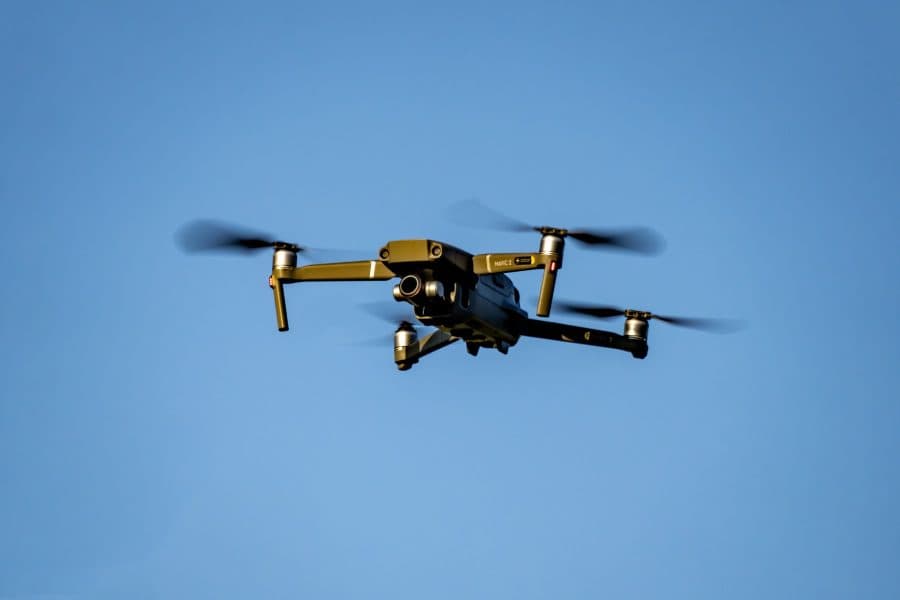
A new report by the International Institute for Strategic Studies (IISS) concludes that Russian drones are 'highly likely' being used to conduct reconnaissance over UK military air bases, as part of a broader Kremlin unconventional campaign across Europe. Between August 2024 and February 2026, drones were observed over 12 NATO member states and Ireland, with surveillance missions suspected to have been launched from vessels linked to Russia's shadow fleet.
Highlights
- The IISS report concludes Russian drones are 'highly likely' conducting reconnaissance over UK military air bases as part of a broader Kremlin unconventional campaign in Europe.
- Drone incursions were recorded over 12 NATO member states and Ireland between August 2024 and February 2026, with missions suspected to originate from Russia's shadow fleet vessels.
- Then-UK Defence Secretary John Healey announced in 2025 that new authorisations would be legislated through the Armed Forces Act to permit shooting down unidentified drones over UK military sites.
- UK air defence and civil aviation radar systems are primarily designed for high-altitude, fast-moving aircraft and lack the capability to reliably detect small, low-flying drones operating without identification signals.
- IISS recommends dedicated Counter-UAS (C-UAS) technology — rather than traditional high-end air defence systems — as the appropriate solution for protecting military bases from low-cost drone threats.
IISS Report Warns Russian Drones Are 'Highly Likely' Surveilling UK Military Bases
The International Institute for Strategic Studies (IISS) has published a new report concluding that Russian drones are 'highly likely' being used to reconnoitre UK military air bases — a development the think tank characterises as part of a wider Kremlin unconventional campaign targeting Europe.
The report, titled Russia's UAV Campaign Over Europe, documents drone activity over the airspace of 12 NATO member states and Ireland between August 2024 and February 2026. The authors state that surveillance operations targeting UK military facilities were 'highly likely' carried out by drones launched from vessels associated with Russia's shadow fleet.
The think tank acknowledges that not every drone sighting was directed by Russia, nor did every incident definitively involve a drone. However, it concludes that the overall pattern cannot be explained away by hobbyist activity or misidentification alone.
Counter-Drone Efforts Accelerating
Frequent drone sightings across Europe, concerns over unidentified drone activity within the United States, and the large-scale battlefield use of drone systems in Ukraine have all significantly elevated attention to protecting military installations from aerial threats.
The report highlights the legal and operational challenges of conducting counter-drone operations over military bases. In peacetime, armed forces typically rely on law enforcement agencies to handle unauthorised activity over domestic territory, making it difficult to take immediate kinetic action against suspected drone operators.
As a result, personnel generally resort to electronic warfare or drone-jamming and deflection measures rather than kinetic intercepts.
In 2025, then-UK Defence Secretary John Healey indicated the government was seeking new legal powers to address the issue.
"We are developing new authorisations — to be legislated through the Armed Forces Act — to give the military the power to shoot down unidentified drones over UK military sites," Healey said.
Gaps in Air Defence Architecture
The IISS report also highlights that the UK's existing air defence systems and civil aviation radar infrastructure were primarily designed to detect fast-moving, high-altitude aircraft — not small drones flying at low altitude.
Drones operating at night without broadcasting identification signals pose a significant detection challenge, the report notes, and civil aviation systems lack effective mechanisms to track aircraft that deliberately maintain electronic silence.
The report recommends that defending against low-cost drone threats should not rely on traditional high-end air defence systems. Instead, it calls for dedicated Counter-UAS (C-UAS) technologies specifically designed to detect, track, and neutralise small drones.
Charlie Edwards, co-author of the IISS report, stated that the authors believe the UK and other European nations facing drone activity threats have the capability to protect themselves from drone surveillance — provided appropriate counter-drone measures are deployed.
Image credit: alexman89 via Pixabay
原文來源: 查看原文
FAQ
Newsletter
Subscribe to our Low-Altitude Industry Newsletter
Daily curated news on low-altitude economy and drone industry, delivered to your inbox.
Reviewed and published by the LAETimes editorial desk ·