Mercedes-Benz Signs MOU at ILA 2026 to Mount Tytan Drone Interceptors on G-Class Vehicles
Mercedes-Benz signed a memorandum of understanding with Munich-based counter-drone startup Tytan Technologies at the ILA 2026 airshow in Berlin, planning to integrate drone detection and interception systems onto military G-Class SUVs and Sprinter vans. Witnessed by Germany's Federal Minister for Economic Affairs, the agreement marks Mercedes as the latest European automaker pivoting toward defense amid slowing core automotive sales. No production orders have been placed and timelines remain unconfirmed.
Highlights
- Mercedes-Benz and Tytan Technologies signed an MOU at ILA 2026 in Berlin to develop counter-drone systems mounted on military G-Class SUVs and Sprinter vans; no production orders or timelines have been confirmed.
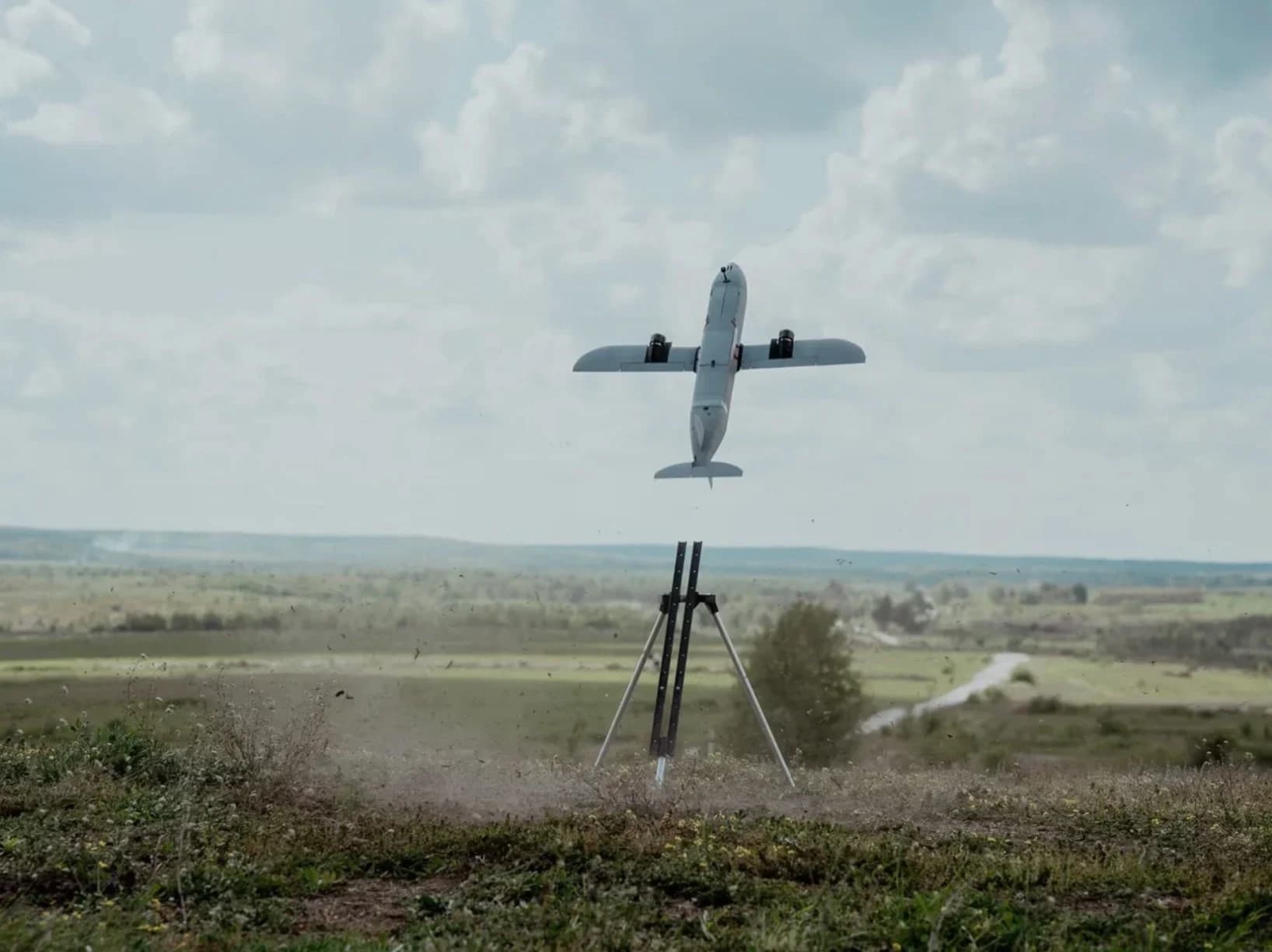
- Tytan's METIS interceptor is a 3D-printed, AI-guided kinetic weapon weighing 6 kg with a top speed of 350 km/h, a 25 km range, and a 5,000 m ceiling, battle-tested in Ukraine.
- Tytan closed a €30 million Series A round in February 2026 co-led by Armira and the NATO Innovation Fund, bringing total fundraising to approximately €46 million.
- The global counter-UAS market was valued at USD 6.44 billion in 2025 and is projected to grow at 25.1% CAGR to reach USD 20.31 billion by 2030, according to MarketsandMarkets.
- Mercedes joins Renault and Volkswagen in pivoting toward defense partnerships, with military vehicles currently accounting for less than 1% of Mercedes-Benz's total sales.
Mercedes-Benz signed a memorandum of understanding (MOU) with Munich-based counter-drone startup Tytan Technologies at the ILA 2026 airshow in Berlin, announcing plans to develop vehicle-mounted systems capable of detecting and destroying small drones. The intended platforms are military-grade G-Class SUVs and Sprinter vans. The agreement was witnessed by Germany's Federal Minister for Economic Affairs and Energy, Katherina Reiche, making the Stuttgart automaker the latest European car manufacturer to pivot toward defense work as its core automotive business faces headwinds. The MOU remains exploratory: no formal production orders have been placed and neither volumes nor timelines have been confirmed.
Mercedes Supplies Base Vehicles; Tytan Handles the Interception Systems
Under the MOU, Mercedes-Benz acts as a base-vehicle supplier rather than a systems integrator, providing ruggedized G-Class SUVs and Sprinter vans as mobile platforms. Tytan Technologies is responsible for installing the radar, sensors, targeting software, and interceptor launch racks required for counter-UAS operations. The two companies jointly displayed a prototype at the show, billing it as the first appearance of a networked vehicle-based system.
Minister Reiche, who attended the signing ceremony, said the collaboration would help "sustainably strengthen Germany's technological sovereignty."
Mercedes board member for production Michael Schiebe stated that the company represents "robust and reliable base vehicles" while Tytan brings "high expertise in drones, sensors, and mission technology," describing defense as a "strategically growing area" for Mercedes. Conversion work—such as fitting flatbed load beds for interceptor launch racks or reconfiguring Sprinters into command-and-control centers—will be handled by specialist upfitters including coachbuilder BINZ and Tytan. Mercedes told Reuters it "deliberately plays the role of base-vehicle supplier, not system integrator." Military vehicles currently account for less than 1% of the brand's total sales.
The agreement includes carve-outs relating to export controls and defense and security law. A Tytan spokesperson told AFP that production volumes and timelines have yet to be determined. The name "Drone Defender," which appeared in some media coverage linked to the project, was absent from both companies' official ILA press releases; the system currently has no formal product designation.
Tytan Technologies' METIS Interceptor Battle-Tested in Ukraine
Tytan Technologies is a Munich-based deep-tech company founded in 2023 by Balazs Nagy and Batuhan Yumurtaci, who grew a student project at the Technical University of Munich into a defense startup. Its core product is METIS, a 3D-printed, AI-guided kinetic interceptor designed to ram enemy drones or detonate a fragmentation warhead in their proximity. The company positions it as a low-cost, expendable countermeasure specifically targeting the mass-produced attack drones proliferating on the Ukrainian battlefield, where the system has already seen operational testing.
Tytan's website lists the flagship interceptor's specifications as: speed 350 km/h (217 mph), range 25 km (16 miles), ceiling 5,000 m (16,400 ft), total weight 6 kg (13 lbs), and payload 1.1 kg (2.4 lbs). Earlier reporting on METIS cited slightly lower figures—speed above 250 km/h (155 mph), range above 15 km (9 miles), launch weight approximately 5 kg (11 lbs), payload approximately 1 kg (2.2 lbs)—suggesting that exact specifications remain unfinalized in public sources and may vary by variant. The company currently markets two interceptors: the TI-1 METIS and the longer-range TI-2 EOS. The interceptors measure approximately 0.9 m (3 ft) in length and carry AI software enabling a single operator to manage multiple drones simultaneously.
Tytan closed a €30 million Series A round in February 2026, co-led by Armira and the NATO Innovation Fund, bringing total fundraising to approximately €46 million. The company holds a development contract awarded by the German Bundeswehr in October 2025 to protect military installations from drone threats. According to reporting from April 2026, the German government funded a procurement order for 1,000 METIS interceptors for Ukraine's National Guard; Tytan has neither confirmed nor denied the order for security reasons. The company opened a production facility in Munich in January 2026, targeting a monthly output of 3,000 interceptors by the end of the year. Ukraine has also begun co-producing interceptors with Tytan on German soil as part of broader European drone industrial capacity-building efforts.
European Automakers Pivot to Defense as Car Sales Stagnate
Mercedes joins a growing roster of European automakers redirecting idle capacity toward defense. The shift is driven by weak electric vehicle demand and market erosion from Chinese competitors, leaving European auto industry sales still below pre-pandemic levels. Mercedes sold more than 2.1 million cars and vans in 2025.
Renault announced a partnership with defense group Turgis Gaillard in January 2026 to produce aerial drones in France, and in March said it was developing a dual-use ground drone. Volkswagen signed a letter of intent with Israeli defense firm Rafael, including the potential sale of its Osnabrück plant to manufacture components for the Iron Dome missile defense system. At the same ILA airshow, defense contractor Rheinmetall signed an MOU with German firm ERC System and the state of North Rhine-Westphalia to produce the Victor U250 hybrid heavy-lift cargo drone.
The counter-drone sector is one of the fastest-growing segments in defense technology. A MarketsandMarkets report dated October 29, 2025 estimated the counter-UAS market at USD 6.44 billion in 2025, projected to grow at a CAGR of 25.1% to reach USD 20.31 billion by 2030, with Europe racing to build domestic capacity.
Frequent Drone Incursions in Germany Provide Context for the Deal
The MOU comes against a backdrop of relentless drone disruption incidents across Germany over the past year. Multiple sightings forced closures at Munich Airport and prompted the Bundestag to grant the Bundeswehr legal authority to intercept and shoot down drones over German territory in February 2026. Federal Criminal Police Office (BKA) President Holger Münch told the newspaper Bild on December 21, 2025 that more than 1,000 suspected drone flight incidents had been recorded throughout the year, most frequently at military installations and airports, as well as at critical infrastructure including defense companies and ports.
The pressure has triggered a series of responses: Germany has expanded Bundeswehr shoot-down authorization, established a dedicated Federal Police counter-drone unit, and deployed personnel to assist Belgium following airport closures. At the European level, the EU is advancing plans for a coordinated "drone shield" of sensors and interceptors along the eastern flank.
DroneXL Analysis
The move can be read as a hedging strategy. Mercedes has supplied military G-Class vehicles for 45 years—including the Bundeswehr's "Wolf" variant—but military vehicles still account for less than 1% of brand sales. What has genuinely shifted is the demand signal around it: the Munich Airport closures and the Bundeswehr shoot-down authorization law passed in February 2026. The structural pattern is now clear: Renault partnering with Turgis Gaillard, Volkswagen signing an LOI with Rafael, and now Mercedes teaming with Tytan—each a legacy automaker with spare capacity seeking government-supported, low-cyclical revenue.
One note of caution is warranted: this is an MOU, not a production contract. Mercedes and Tytan displayed a prototype at ILA, but a Tytan spokesperson told AFP that volumes and timelines are yet to be determined, and the agreement itself carries export-control and defense-law caveats. Whether the MOU converts into actual production vehicles remains an open question. The deeper issue: METIS was born under a low-cost logic, and mounting it on a G-Class is a very different economic proposition—one that prospective buyers will interrogate closely when deciding whether the protection a premium German platform offers is worth the price.
Sources: CNBC, Mercedes-Benz, Tytan Technologies.
原文來源: 查看原文
FAQ
Reviewed and published by the LAETimes editorial desk ·


