ISL Achieves Major Milestone with First Outdoor Free-Flight Test of Electromagnetic Railgun
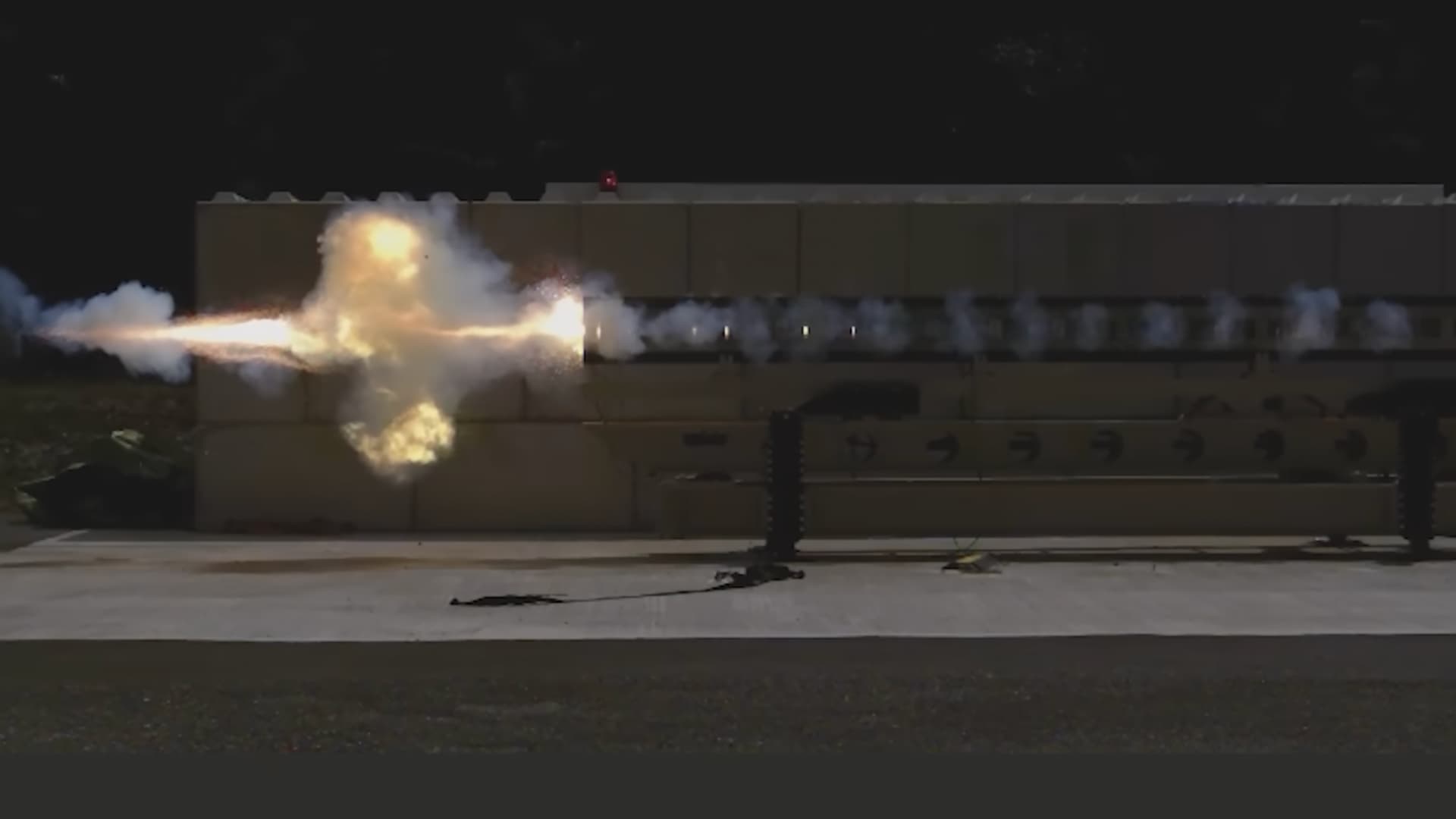
The Franco-German Research Institute of Saint-Louis (ISL) has successfully completed the first outdoor, open-range free-flight firing of its electromagnetic railgun system at the Baldersheim test site. The test, concluding in milliseconds, marks a pivotal transition from laboratory-scale research to open-field conditions. Initiated two years ago, the Railgun Free Flight Facility programme integrates ISL's multidisciplinary expertise, with future work targeting higher energy levels and longer flight distances.
Highlights
- ISL successfully completed the first outdoor open-range free-flight firing of its electromagnetic railgun at the Baldersheim test site, with the entire firing lasting only milliseconds.
- The Railgun Free Flight Facility programme was launched two years ago and integrates multidisciplinary expertise from across ISL, including energetic materials, sensors, drones, robotics, and navigation.
- The new open-range facility transitions ISL's electromagnetic acceleration research from laboratory scale to field conditions closer to real-world applications.
- Future programme objectives include reaching higher energy levels, extending free-flight distances, and developing ammunition specifically designed for electromagnetic launch systems.
- Electromagnetic railguns are regarded by the defence research community as a potential tool against emerging threats such as hypersonic missiles and manoeuvring re-entry vehicles, though operational deployment still requires further research and qualification.
ISL Completes First Outdoor Free-Flight Test of Electromagnetic Railgun
The Franco-German Research Institute of Saint-Louis (ISL) has announced the successful completion of the first outdoor, open-range free-flight firing of its electromagnetic railgun system at its Baldersheim test site — marking a significant milestone in railgun development.
The firing itself lasted only a few milliseconds, yet represented years of research, engineering work, and laboratory validation. The railgun was designed and built entirely in-house by ISL, and the test marks a key advance for the institute's Railgun Free Flight Facility programme, which was formally launched two years ago with the goal of integrating expertise from across all of ISL's research departments.
The new facility extends ISL's electromagnetic acceleration research from laboratory scale to open-field testing, bringing test conditions closer to potential real-world applications while providing researchers with valuable data to further refine the technology and assess future capabilities.
Opening a New Path in Defence Technology
Electromagnetic railguns use electrically generated magnetic forces — rather than conventional chemical propellants — to accelerate projectiles to extremely high velocities. Moving from laboratory testing to open-range free-flight trials is a critical step that allows researchers to evaluate system performance under conditions far closer to actual use.
The technology continues to attract significant interest from the defence research community as a potential tool for addressing emerging threats, including hypersonic missiles and manoeuvring re-entry vehicles. However, translating that potential into operational capability still requires further research, system scaling, and qualification.
ISL's earlier electromagnetic acceleration work was conducted primarily at laboratory scale. The newly established open-range facility is designed to advance the technology into an entirely new phase. By achieving free-flight testing within the institute for the first time, the facility enables researchers to assess performance under more realistic conditions and supports the long-term development of mature systems for future potential applications.
The new open-range capability expands ISL's ability to advance electromagnetic launch research toward practical readiness. Researchers are now able to:
- Incrementally increase energy levels and accumulate data across multiple firings
- Analyse projectile behaviour during free flight over longer distances
- Advance launcher integration research
- Explore ammunition development specifically designed for electromagnetic launch systems
Decades of Research Enter a New Testing Phase
ISL's deep foundation in electromagnetic acceleration research — built over decades — provided the expertise required to reach this milestone. Building on existing laboratory facilities and long-term scientific results, the institute continues to advance European capabilities in this field, developing and testing the key technologies needed to bring electromagnetic launch systems closer to practical use.
Progress on ISL's electromagnetic launcher programme is underpinned by the institute's integrated research approach, which draws on cross-disciplinary expertise spanning energetic materials, guidance systems, sensors, drones, robotics, acoustics, and navigation. Conducting multidisciplinary research and testing within a single institution allows advances in each field to reinforce one another, ensuring that railgun development fully benefits from ISL's complete scientific capability.
Looking Ahead: Advancing the Technology Further
Following the successful first open-range test, ISL's focus will shift to expanding the capabilities of the new facility and pushing the technology further. Future objectives include achieving higher energy levels, extending free-flight distances, deepening system integration research, and continuing the development of dedicated electromagnetic launch ammunition.
While this milestone represents a significant step forward, researchers regard it as one point along a long road toward future potentially deployable systems — not a final destination.
原文來源: 查看原文
FAQ
Newsletter
Subscribe to our Low-Altitude Industry Newsletter
Daily curated news on low-altitude economy and drone industry, delivered to your inbox.
Reviewed and published by the LAETimes editorial desk ·