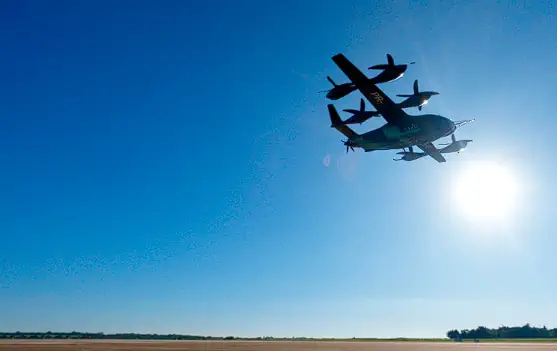
Second JFK 'Drone' Incident Was Actually a Hobbyist RC Plane — FAA Declines to Investigate
A Bell 407 helicopter operating for Blade reported a near-miss with a large RC model aircraft over Floyd Bennett Field near JFK Airport on June 29. The pilot clearly identified the object as a remote-controlled plane at a long-established model aircraft flying site. The FAA acknowledged the report, notified local authorities, and declined to open an investigation — yet several national media outlets bundled the incident with the earlier JetBlue collision claim under the headline 'two drone incidents at JFK in one day.'
Highlights
- On June 29, a Blade Bell 407 helicopter pilot near JFK Airport identified a near-miss object as a 'large RC plane at 500 feet' over Floyd Bennett Field — a legal model aircraft site — not a drone.
- The FAA acknowledged the report, notified local authorities, and explicitly declined to open a federal investigation, distinguishing this event from the earlier JetBlue Flight 948 drone-strike claim.
- JFK air traffic control logged the sighting in the ATIS broadcast as 'UNAUTHORIZED UAS EVENT… RED AND WHITE RC AIRPLANE,' highlighting a terminology inconsistency between 'UAS event' and 'RC airplane.'
- Several national media outlets combined this confirmed RC-plane sighting with the unverified JetBlue collision claim under 'two drone incidents at JFK in one day,' despite the FAA stating the events were unrelated.
- The pattern mirrors recent cases — a United Airlines San Diego drone-strike report and an El Paso balloon shootdown — where initial 'drone' framing was later corrected, but only after alarming headlines had already circulated widely.
Second JFK 'Drone' Incident Was Actually a Hobbyist RC Plane — FAA Declines to Investigate
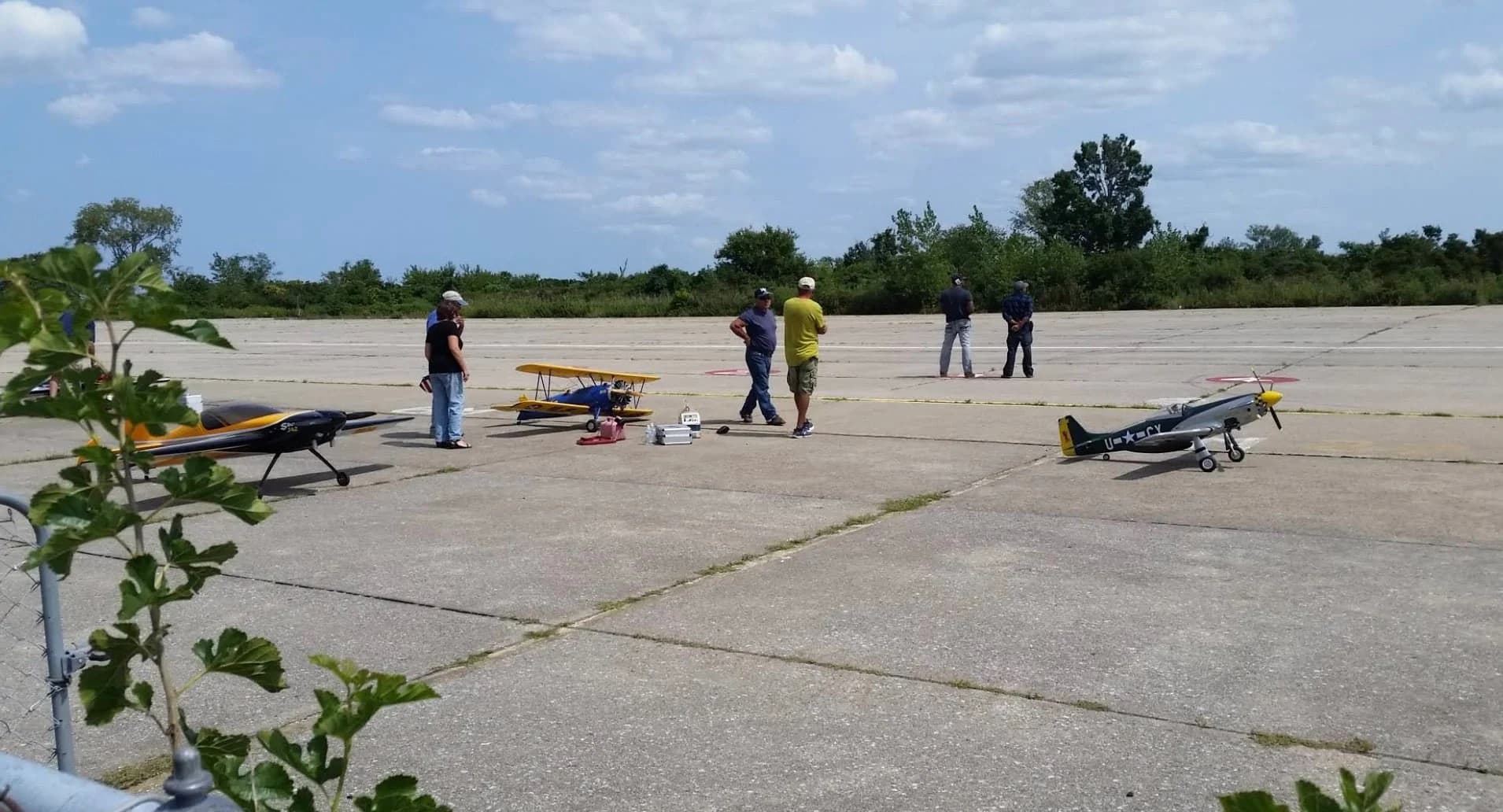
On the afternoon of Monday, June 29, a Bell 407 helicopter carrying passengers for Blade and departing New York's John F. Kennedy International Airport (JFK) reported a near-miss with a remote-controlled aircraft. The object in question was a large hobbyist model plane flying over a National Park Service property that has served as a legal model aircraft flying site for decades. The pilot made the identification unambiguously: when JFK Tower asked whether the object was a drone, he told controllers it was "just an RC plane — the remote-controlled kind — and a large one, at 500 feet." He added that he could see several similar aircraft on the ground at the same location, apparently preparing to launch.
For a reporter who has covered pilot drone-sighting reports for nine years, this is a remarkably rare case in which the pilot, the location, and the FAA all converged on the object's true identity before panic could take hold. The FAA said it was aware of the report, had notified local authorities, and would not be opening an investigation — that final detail speaks volumes about how the agency categorized the event.
Pilot Specifically Identified a Model Plane, Not a Drone
According to air traffic control audio captured by LiveATC, the Bell 407 pilot radioed JFK Tower after passing approximately 300 feet above the northern end of Floyd Bennett Field. "Just over Floyd Bennett, almost hit a huge RC plane," he reported, describing a large aircraft flying at 500 feet. When the controller asked whether the helicopter had actually struck the object, the pilot confirmed he had taken evasive action and made no contact. The controller then advised that the New York Police Department (NYPD) Aviation Unit — which maintains a helicopter pad at Floyd Bennett Field — would be notified.
The geography resolves most of the ambiguity. Floyd Bennett Field is a decommissioned naval air station within Brooklyn's Marine Park and part of the Gateway National Recreation Area, administered by the National Park Service. One section is a designated model aircraft flying area and home to the Floyd Bennett Field RC Airplane Club. A helicopter flying low over a known RC flying site and spotting a large remote-controlled plane is not a mystery — it is the entirely predictable outcome of transiting at 300 feet above a place where people legally fly model aircraft.
JFK Logged the Sighting as an 'Unauthorized UAS Event' in ATIS
JFK air traffic control included the report in the Automatic Terminal Information Service (ATIS) broadcast — the looped recording every arriving pilot listens to before landing. The relevant entry read: "UNAUTHORIZED UAS EVENT AT 2005Z 1 MI CRI AT 005 FEET RED AND WHITE RC AIRPLANE." Converted to local time, the event occurred at approximately 4:05 p.m., about one mile from the Canarsie (CRI) navigation fix used to align aircraft with the landing runway.
The terminology is contradictory: the broadcast categorizes the event as a "UAS EVENT" and immediately describes the object as an "RC AIRPLANE" — two distinct categories whose difference matters considerably. UAS is the regulatory classification the FAA routinely applies when logging any unmanned aerial object. Pilot and aviation enthusiast Chris Jackson, who screenshotted and posted the ATIS entry, said he had never previously seen a sighting written into a JFK broadcast. The listed altitude of "005 FEET" is almost certainly a truncated rendering of 500 feet, consistent with the pilot's verbal report and the 500-foot figure captured by ATIS.guru.
The Incident Occurred Hours After a Separate JetBlue Drone Report the Same Day
This helicopter incident shares a date with a more widely covered story. Earlier Monday morning, the crew of JetBlue Flight 948 — an Airbus A321 arriving from Las Vegas — told controllers they had struck a drone at approximately 3,000 feet during final approach around 7:15 a.m. The aircraft landed minutes later. Both JetBlue and the FAA stated that post-flight inspection found no damage and no physical evidence of a collision. The FAA is investigating that case; its statement describes what the pilots reported, not a confirmed strike.
The FAA has said the two incidents are unrelated, and the agency's handling of each makes the distinction clear: the JetBlue report triggered a formal federal investigation; the helicopter report was referred to local police with no federal investigation opened — because a pilot identifying a hobbyist model plane over a model aircraft field does not constitute an unsolved case. Nevertheless, several national outlets framed both within hours under the headline "two drone incidents at JFK in one day," conflating a confirmed model-aircraft sighting with an unverified collision claim and labeling the combination a drone crisis.
DroneXL Editorial Perspective
Not every object in the sky is a drone, and this incident leaves essentially no room for doubt. A pilot saw the object, identified it as an RC plane, noted additional similar aircraft on the ground at a site known for exactly that activity, and the FAA declined to investigate. This is among the clearest-cut "non-drone" incidents on record. Yet within hours it was pulled into national coverage alongside the JetBlue collision claim, counted as one of "two drone incidents at JFK." One of those two incidents was simply someone flying a model plane near a legal model aircraft site — the aircraft that flew too low over that site was the helicopter.
This pattern is not new. In April, a United Airlines Boeing 737 on approach to San Diego reported a suspected drone strike, only for the story to collapse within hours when inspection found no damage and United dropped the word "strike." In February, a military laser near El Paso, Texas, shot down four Mylar party balloons, closing an airport for eight hours. The pattern reveals less about the danger posed by drones than about a media reflex that defaults to "quadcopter" for any airborne object, with the correction arriving quietly days later — after the alarming headline has already done its work.
That reflex carries real costs. This summer the FBI has already seized more than 300 drones in restricted airspace around World Cup venues; flying in an active TFR can bring civil penalties up to $75,000 and criminal penalties up to $100,000. Every "vague airport-area drone" report that turns out to be a model plane, balloon, or bird feeds political appetite for tighter restrictions on law-abiding pilots who check NOTAMs and follow the rules — rather than targeting the small number of reckless operators who disregard all rules regardless. The genuine problem is real: people do fly drones near approach corridors, putting hundreds of passengers at risk, and they deserve every consequence that follows. But Floyd Bennett Field on Monday afternoon was not that situation. The honest headline would have been: a helicopter flew low over a model aircraft field and saw model aircraft.
Sources: CNN, WABC-TV Eyewitness News, FOX 4 (FAA statement), LiveATC, ATIS.guru. DroneXL uses automated tools to assist with research and source retrieval; all reporting and editorial perspective by Haye Kesteloo.
原文來源: 查看原文
FAQ
Newsletter
Subscribe to our Low-Altitude Industry Newsletter
Daily curated news on low-altitude economy and drone industry, delivered to your inbox.
Reviewed and published by the LAETimes editorial desk ·