Belgium Unveils Low-Cost Laser-Guided Rocket LGR275 Proxy with Proximity Fuze for Drone Interception
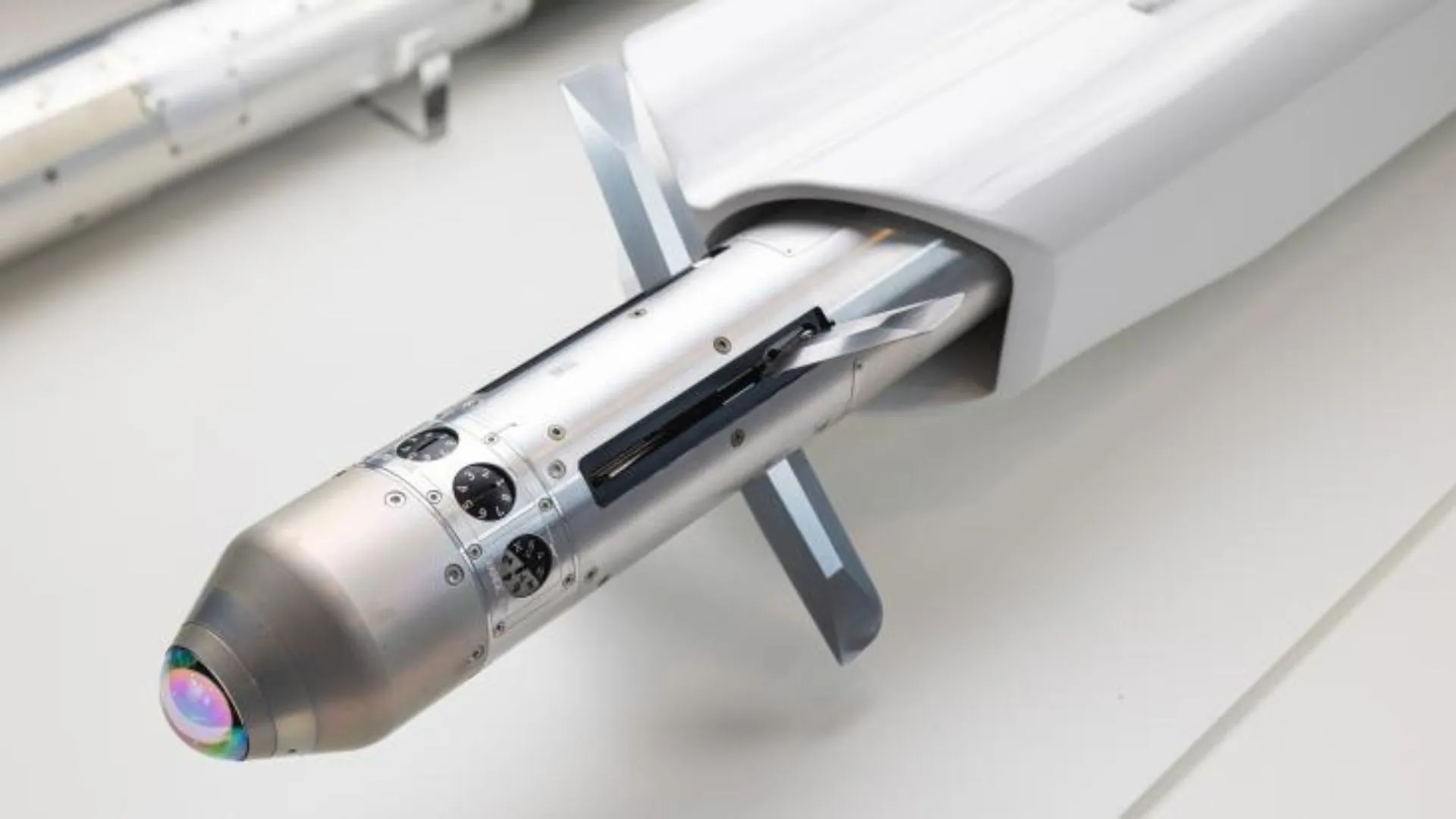
Thales has introduced the LGR275 Proxy, a 70mm laser-guided rocket designed to intercept small unmanned aerial systems at low cost. Equipped with a proximity fuze sensor and a military-grade warhead, it supports both ground-to-air and air-to-air missions. Thales Belgium plans to triple production capacity between 2026 and 2028 and integrate the rocket into the SkyDefender multi-layer IAMD architecture to counter the growing drone threat more economically.
Highlights
- Thales has unveiled the LGR275 Proxy, a 70mm laser-guided rocket with a proximity fuze sensor specifically designed to intercept Class 1 and Class 2 drones at lower cost than conventional missiles.
- The proximity fuze sensor detonates the warhead at the optimal engagement moment, improving kill probability against fast-moving drones without requiring a direct hit.
- Thales Belgium plans to triple production capacity for its guided rocket family between 2026 and 2028 to meet growing international demand.
- The LGR275 Proxy supports both ground-to-air and air-to-air missions, providing commanders with flexible deployment options across layered defense networks.
- The rocket will be integrated into Thales's SkyDefender multi-layer IAMD architecture, adding a cost-effective intercept tier to counter evolving aerial threats sustainably.
Countering small drones has become not only a military challenge but also a financial one. Armed forces around the world are increasingly forced to deploy costly interceptors against inexpensive, easy-to-field unmanned systems. Thales says its latest guided rocket was developed specifically to redress that imbalance.
Thales has unveiled the LGR275 Proxy, a 70mm laser-guided rocket designed to intercept small unmanned aerial systems (UAS). Unlike conventional air-defense interceptors, the weapon is intended to engage drones without placing an excessive burden on defense budgets.
Built to Hunt Drones
At the heart of the LGR275 Proxy is a proximity fuze sensor that significantly enhances engagement effectiveness against airborne targets, adding a new capability layer to Thales's existing 70mm guided rocket family.
Rather than relying solely on a direct hit, the sensor detonates the warhead at the optimal moment, increasing the probability of kill against fast-moving drones. Thales has paired it with a military-grade warhead tailored specifically to defeat small aerial threats.
The result is a weapon that balances performance with cost-effectiveness. Modern militaries are frequently compelled to expend expensive missiles against low-cost drones—an asymmetric exchange that can rapidly deplete stockpiles and strain defense budgets over extended operations. Thales says the LGR275 Proxy offers a more economically viable intercept option designed to address precisely that problem.
The rocket supports both ground-to-air and air-to-air missions, giving commanders greater operational flexibility. Forces can integrate it into layered defense networks to engage threats before resorting to higher-tier interceptors.
Class 1 and Class 2 drones have become among the most persistent threats on today's battlefield. They conduct reconnaissance, direct artillery fire, and carry explosive payloads. Their low cost and wide availability make them difficult to counter effectively through conventional means alone.
Major Production Capacity Expansion Planned
Thales Belgium plans to substantially scale up production of its guided rocket family over the coming years. The company expects capacity to triple between 2026 and 2028, with plans to reinforce its industrial base to support international customers seeking rapid delivery and reliable supply chains.
The expansion reflects sustained global demand for counter-drone capabilities. Recent conflicts have demonstrated that drone attacks can quickly overwhelm traditional defenses and exhaust interceptor stockpiles.
For defense manufacturers, production capacity has become nearly as important as technical performance. Armed forces are increasingly gravitating toward suppliers capable of delivering at scale while maintaining consistent quality and shorter lead times.
Integration into a Broader Air Defense Shield
The LGR275 Proxy will also strengthen Thales's SkyDefender multi-layer Integrated Air and Missile Defense (IAMD) architecture. By adding a lower-cost intercept layer, Thales aims to provide customers with more sustainable protection against evolving airborne threats. The layered approach allows operators to match the appropriate weapon to each target type rather than relying on a single interceptor.
Alain Quevrin, Country Director of Thales Belgium and Luxembourg, said the company developed the new rocket to help nations strengthen their readiness in the face of an expanding drone threat.
He noted that Thales Belgium remains a leading producer of NATO-standard rockets and emphasized that the planned capacity increase will help meet the operational requirements of armed forces navigating an increasingly complex security environment.
原文來源: 查看原文
FAQ
Reviewed and published by the LAETimes editorial desk ·