Luke Maximo Bell Breaks Guinness Drone Endurance Record with 4-Hour 21-Minute Flight, Surpassing SiFly by Over an Hour
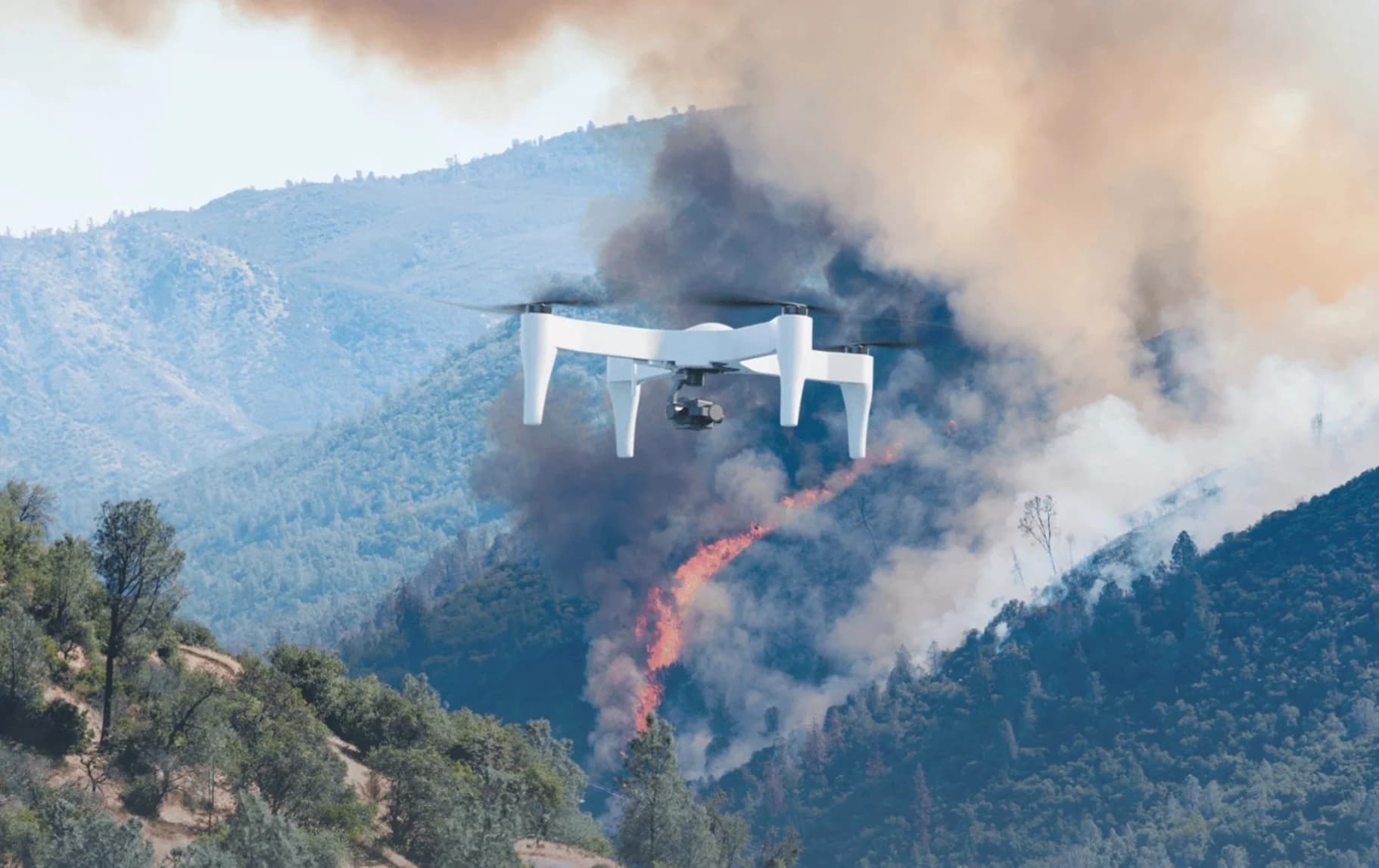
South African independent maker Luke Maximo Bell flew a self-built quadcopter for 4 hours, 21 minutes, and 39 seconds on a single charge, officially breaking the Guinness World Record for longest flight by a small electric multirotor drone. The achievement, witnessed by independent observers at a farm outside Cape Town, surpasses SiFly's Q12 record of 3 hours 11 minutes set in July 2025 by more than one hour.
Highlights
- Luke Maximo Bell flew a self-built quadcopter for 4 hours, 21 minutes, and 39 seconds on a single charge, breaking the Guinness World Record for longest flight by a small electric multirotor drone.
- The record surpasses SiFly's Q12 Guinness-certified mark of 3 hours 11 minutes (set July 2025) by more than one hour, with 8% battery remaining at landing.
- Bell's drone used T-Motor MN105 motors (90 KV) with 40-inch T-Motor G40 propellers and a semi-solid NMC battery pack rated at approximately 380 Wh/kg and 87 Ah.
- A mid-project swap to the Cube Orange Plus flight controller running ArduPilot — supplied by Cube Pilot and Cape Town distributor Flying Robot — eliminated persistent IMU vibration and clipping issues.
- Bell also holds the Guinness record for fastest battery-powered quadcopter flight at 657.59 km/h (408 mph) with his Peregreen series drone, set in January 2026.
Luke Maximo Bell Breaks Guinness Drone Endurance World Record with 4:21:39 Flight
South African independent maker Luke Maximo Bell has officially broken the Guinness World Record for "longest flight by a small electric multirotor drone," piloting a self-rebuilt quadcopter to a flight time of 4 hours, 21 minutes, and 39 seconds on a single charge. The attempt took place at a farm outside Cape Town, South Africa, with independent witnesses present throughout. The result surpasses the previous Guinness-certified record of 3 hours 11 minutes set by the SiFly Q12 in July 2025 by more than a full hour.
DroneXL first reported on Bell's endurance project in February 2026, when an earlier version of the same airframe flew 3 hours, 31 minutes, and 6 seconds without a Guinness witness present. In the months that followed, Bell rebuilt the motor mounts, landing legs, and flight controller, and conducted efficiency tests to identify the drone's optimal cruise speed before scheduling the official record attempt.
Bell is better known in the drone community for a very different discipline: his Peregreen series drone holds the Guinness record for fastest flight by a battery-powered quadcopter, clocking 657.59 km/h (408 mph) — a record set in January 2026. The engineering logic behind the endurance airframe is almost entirely opposite, trading outright speed for maximum time aloft.
Bell documented the full rebuild process in a video on his YouTube channel, covering failed test flights, a mid-project flight controller swap, and power-log analysis that shaped the final flight plan.
Redesigned Motor Mounts and Landing Legs Resolve Early Failures
The original endurance drone suffered two recurring mechanical issues: a two-piece clamp-style motor mount that added unnecessary weight, and 3D-printed landing legs that cracked on hard landings. Bell addressed both before attempting the record again.
The new motor mounts use a single-piece C-clamp design that grips the carbon fiber arm and bolts from below, replacing the original split dual-bolt arrangement. Bell credited a viewer suggestion from an earlier video for the idea, noting a weight saving of approximately 6.5 grams per mount — roughly 26 grams across the full airframe. He also switched to continuous 1.8-meter carbon tube arms rather than the original mid-section spliced design, eliminating a prior structural weak point.
For the landing legs, Bell used a dual-nozzle setup on a Bambu Lab H2C printer to co-print nylon and TPU filament into a single integrated part, embedding a flexible TPU joint at the midpoint of each leg. This joint allows the leg to flex and absorb impact on hard landings rather than snap. The rest of the airframe was printed across the H2C and a second Bambu Lab H2D printer, supported by four AMS HT filament dryers — an upgrade from the earlier single AMS 2 Pro — enabling nylon, PET, and PA6-CF materials to dry at their respective optimal temperatures. Bambu Lab sponsors Bell's build projects.
Cube Orange Plus Flight Controller Solves Vibration Problem
During early GPS hover tests, Bell's original flight controller struggled with vibration generated by the drone's 40-inch propellers, prompting a mid-project swap that ultimately made reliable autonomous flight possible.
Bell initially suspected propeller imbalance as the root cause and fabricated 3D-printed nylon prop alignment fixtures to correct it. Flight logs, however, showed that vibration and IMU clipping persisted. Cube Pilot and Cape Town distributor Flying Robot provided a Cube Orange Plus flight controller, whose IMU is housed in a vibration-damping enclosure specifically designed to filter mechanical noise. Bell printed a TPU mount for the new controller and added a front cross-brace to stiffen the arms. On the next test flight, vibration and clipping disappeared, and GPS lock acquired 31 satellites almost immediately.
The drone runs ArduPilot firmware. Bell noted that during tuning ahead of the record flight, a single notch filter value adjustment transformed the aircraft from unstable to fully flyable — a change made in-flight via laptop over Wi-Fi through a RadioMaster TX16S Mark III transmitter, which he was using for the first time.
Efficiency Tests Reveal Lower-Than-Expected Optimal Cruise Speed
Power logs from a series of autonomous test circuits showed the drone's most efficient cruise speed to be approximately 5.5 m/s (roughly 12 mph / 19 km/h) — well below what Bell had expected before testing.
He derived the figure by flying programmed loops at varying target speeds and comparing per-lap power consumption from the flight logs. The same data revealed a counterintuitive finding: the drone consumed more power on straight segments — averaging around 500 W — than on turns, which averaged around 450 W. Bell responded by shortening the loop and increasing the number of turns rather than flying long oval patterns.
For the official record attempt, Bell installed an external static RTK base station for the first time on this airframe, providing centimeter-level positioning accuracy via laptop. The propulsion system remained unchanged from the original build: T-Motor G40 propellers (101 cm / 40 inches) paired with T-Motor MN105 motors (90 KV).
Record Flight Exceeds Previous Guinness Mark by More Than One Hour
Launching with a fresh battery pack in calm, windless conditions and with an independent witness present, Bell's drone continued flying for more than one hour beyond the previous Guinness record of 3 hours 11 minutes before landing.
The battery used was a new pack Bell described as a semi-solid NMC design, with an energy density of approximately 380 Wh/kg, up from the roughly 320 Wh/kg cells used previously. Each pack holds approximately 87 Ah and weighs close to 5 kg; Bell flew with a single pack this time rather than the dual-parallel configuration used in the original build. After four hours of flight, 8% charge remained. Bell noted that the pack delivered slightly over 100% of its rated capacity, which he attributed to the exceptionally low discharge rate of approximately 0.2C.
Bell described the drone's GPS hover accuracy as "almost DJI-level" — a comparison that carries particular weight in the current U.S. endurance drone landscape, where operators are pushing non-Chinese platforms to compete on actual capability rather than regulatory compliance alone.
DroneXL's Take
A hobbyist working alone on a farm, with a laptop, an open-source flight controller, and off-the-shelf T-Motor components, has just beaten the endurance record held by a Pentagon-vetted startup. That gap is the real story here — not just the stopwatch number.
The SiFly Q12 carries genuine institutional credentials. It is one of only four non-Chinese drones to pass the U.S. Department of Defense vetting process and holds FCC exemption list status — a regulatory standing that requires significant compliance work to obtain, and that currently keeps DJI and Autel entirely locked out. DroneXL has been tracking this exemption mechanism since first reporting on it in March of this year; the list still stands at four drones, all non-Chinese, and none cheap.
We have argued before that the DJI ban harms American drone operators — not because DJI is beyond criticism, but because a policy built on corporate nationality rather than demonstrated capability is structurally rewarding paperwork over flight performance. Bell's flight makes that argument without mentioning DJI once. He built a drone in his home workshop, using parts anyone can order from T-Motor, and outflew a Pentagon-vetted platform's endurance benchmark.
SiFly told media in August 2025 that it would achieve a four-hour flight time within one year of its own record. That anniversary is approaching. If an independent maker working alone on a South African farm has already logged 4 hours 21 minutes, the claim that SiFly's own certified hardware has not yet matched that on its production platform becomes increasingly difficult to sustain. The question worth watching: can the Q12 itself close the gap before the one-year mark arrives — or will "four hours" quietly become a selling point reserved for some future variant rather than a guarantee on the airframe agencies are actually procuring today.
Longer-time drone enthusiasts may recall the Impossible US-1 pursuing maximum endurance from a very different angle — an aircraft that was essentially a flying battery.
Source: Luke Maximo Bell (YouTube).
原文來源: 查看原文
FAQ
Reviewed and published by the LAETimes editorial desk ·