Ukrainian M113 Armored Vehicles Fitted with Anti-Drone Cages and Rubber-Fabric Mats
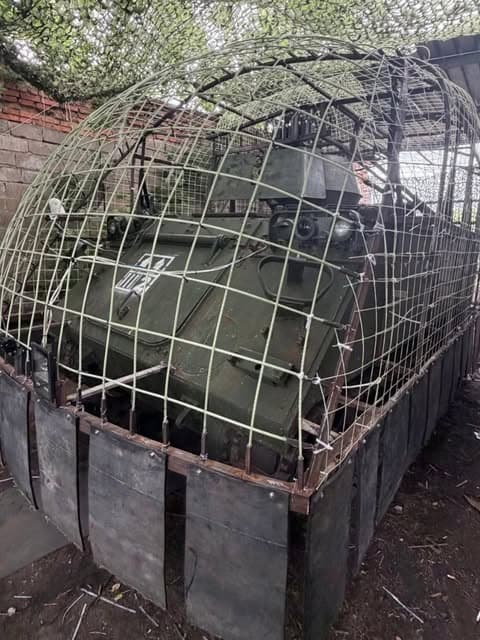
Ukrainian forces have been retrofitting M113 armored personnel carriers with anti-drone protective cages and rubber-fabric mats to counter the growing threat of FPV kamikaze drone attacks on the battlefield. The field modifications reflect how drone warfare has become a defining feature of modern ground combat.
Highlights
- Ukrainian frontline units have fitted M113 APCs with anti-drone cages designed to intercept or prematurely detonate incoming FPV kamikaze drones before hull impact.
- Rubber-fabric mats have been added to M113 vehicles as a secondary blast-absorption layer to reduce damage to crew and equipment from drone strikes.
- The M113 is a U.S.-made APC that has been in service for decades but remains widely used by Ukrainian forces, receiving improvised counter-drone upgrades to extend battlefield survivability.
- The field modifications reflect a broader trend in modern ground warfare, where low-cost FPV drones have become a primary threat requiring dedicated counter-drone (C-UAS) solutions at the unit level.
Ukrainian M113 Armored Vehicles Fitted with Anti-Drone Cages and Rubber-Fabric Mats
New photographs have emerged showing Ukrainian forces retrofitting M113 armored personnel carriers (APCs) with anti-drone cages and rubber-fabric mats as field-expedient countermeasures against drone attacks.
The modifications are designed to defend against the increasingly prevalent threat of FPV (first-person view) kamikaze drones making direct impact strikes on vehicles. The protective cage is intended to detonate or deflect an incoming drone before it contacts the hull, while the rubber-fabric mats provide an additional layer of blast absorption to reduce damage to the vehicle and its crew.
The M113 is a decades-old U.S.-made APC that remains widely deployed on the Ukrainian front. Despite its age, the platform continues to see active service, and frontline units have been improvising counter-drone adaptations on aging equipment to improve survivability in the modern battlefield environment.
These field modifications underscore the degree to which drones have become an unavoidable threat in contemporary ground warfare, prompting militaries to rapidly develop and deploy counter-drone (C-UAS) protective solutions at the unit level.
Source: Drone Wars (X / Twitter)
原文來源: 查看原文
FAQ
Reviewed and published by the LAETimes editorial desk ·