Ukrainian Startup MaXon Systems Builds $3,500 Autonomous Interceptor Drone That Downed a Shahed Without a Pilot
Ukrainian defense-tech startup MaXon Systems has developed a fixed-wing autonomous interceptor drone costing just $3,500 that can launch, fly, and strike targets with only two button presses. The system scored its first confirmed combat kill on June 8 in Kharkiv Oblast, achieving 90–95% autonomy.
Highlights
- MaXon Systems' autonomous fixed-wing interceptor costs $3,500 per unit versus $40,000–$80,000 for each Shahed target.
- The system scored its first confirmed combat kill on June 8 in Kharkiv Oblast with 90–95% autonomy.
- Full-chain automation covers launch, flight, and terminal guidance — operators press only two buttons with no manual piloting.
- Navigation uses beacons and onboard sensors instead of GPS, enabling operation in heavy electronic warfare environments.
- MaXon completed a pre-seed round and plans to raise over $1 million in seed funding to scale serial production.
$3,500 vs. Tens of Thousands: Ukraine's Autonomous Interceptor Drone Enters the Battlefield
Ukrainian Defense Minister Mykhailo Fedorov recently announced that an interceptor capable of automating up to 95% of the Shahed drone interception process has entered active combat. The developer, price tag, and combat record are now public — Kyiv-based defense-tech startup MaXon Systems has built a fixed-wing autonomous interceptor drone that requires an operator to press just two buttons to complete the entire sequence from launch to flight to ramming a Russian attack drone. Unit cost: approximately $3,500.
The first confirmed combat intercept was carried out on June 8 by Ukraine's 12th Independent Special Operations Center in Kharkiv Oblast.
Extreme Cost Asymmetry
MaXon Systems CEO Oleksiy Solntsev detailed the technical specifics in an interview with Ukrainian outlet Defender Media. The most critical figure is the price gap: a purpose-built autonomous interceptor drone costs just $3,500, while its target — the Iranian-designed Shahed drone produced under Russian license — is estimated to cost between $40,000 and $80,000. This cost asymmetry is the fundamental driver behind Ukraine's continued development of interceptor drones. What sets MaXon apart is that it removes the pilot from the equation entirely.
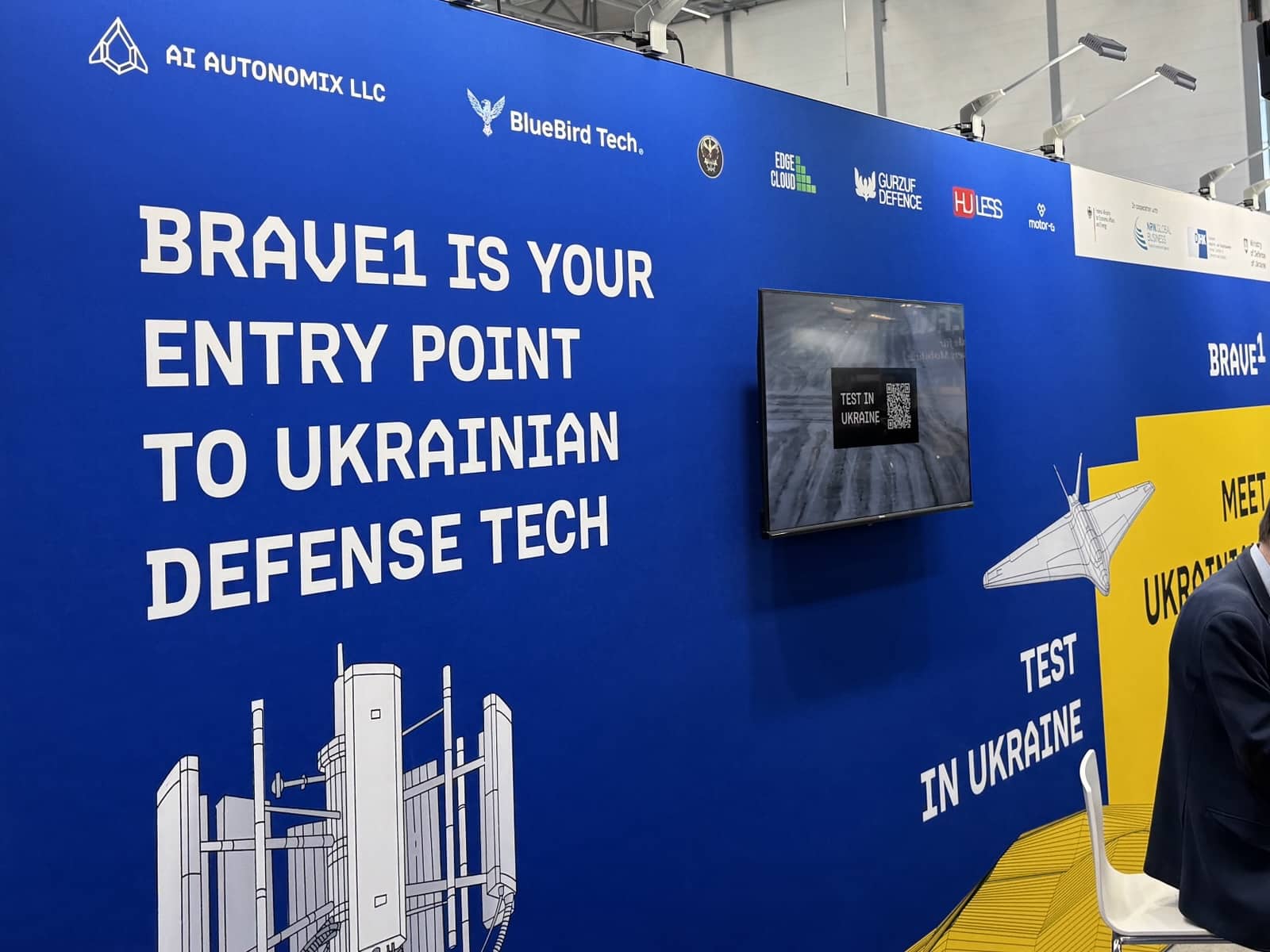
The system went from development to combat deployment in under a year through Ukraine's Brave1 defense accelerator platform, which matches startups with military units and provides grant funding and fast-track testing. Brave1 released combat footage on the same day as Fedorov's announcement.
From Aerostat Concept to Ground Launch — Accelerating to the Front Lines
MaXon is no newcomer. A year ago, Solntsev was developing an entirely different interception concept: launching interceptor drones from tethered aerostats. The company abandoned that approach to get to the battlefield faster. The current ground-launched fixed-wing interceptor was built from scratch, incorporating lessons learned from field testing.
Two problems drove the design toward full autonomy. First, weather — conventional interceptor drones perform well under clear conditions with skilled pilots, but performance drops sharply when any variable deteriorates. Second, swarm saturation attacks — Russia launches Shaheds in clusters from multiple directions simultaneously, and human FPV pilots can only engage one target at a time. Removing the pilot eliminates both bottlenecks.
Full-Chain Automation: Beyond Just Terminal Guidance
The technical claim that separates MaXon from competitors is "full-chain automation" — covering three phases: launch, flight transition, and terminal guidance. Many Ukrainian developers have already achieved "last-mile" automation, where AI locks onto the target and guides the drone to impact during the terminal homing phase. But MaXon automates everything before that as well — and Solntsev argues this is the harder engineering problem.
The operational workflow is reduced to two actions: press the first button and the interceptor auto-launches and climbs to a preset altitude to loiter. The operator then monitors a console displaying radar feed, selects an incoming Shahed on screen, and presses "engage." The drone flies to the target on autopilot. The operator can choose approach speed and method, but the flight itself requires no manual control. During the final approach phase, an AI terminal guidance system provided by an unnamed Dutch partner handles detection, tracking, and impact.
The navigation system relies on beacons and onboard sensors rather than satellite signals — critical in an electronic warfare-dense environment where GPS is routinely jammed. MaXon developed its own autopilot integrating beacon data with onboard sensors, ensuring full autonomous flight capability and situational awareness even when satellite navigation fails. Brave1-confirmed testing in Kharkiv recorded a 90–95% autonomous intercept rate, with pilots making only minor manual corrections. Solntsev says the system has multiple confirmed Shahed kills.
Specifications: 1 kg Warhead, Two Targets Per Sortie
The drone is a small fixed-wing platform carrying a 1 kg (2.2 lb) warhead. Loiter time reaches up to 70 minutes, with pursuit speeds of 200–250 km/h (124–155 mph) and a short-burst top speed of 300 km/h (186 mph). Operational radius is 30 km (18.6 miles), corresponding to the air defense sector it covers. Solntsev says the interceptor has enough energy margin to pursue one target, disengage, and pursue a second target within the same sortie.
These speed figures indicate the system primarily targets the propeller-driven Geran-2 Shahed, which cruises at approximately 185 km/h. However, it cannot catch the jet-powered Geran-3 and Geran-4 variants that Russia has deployed to defeat Ukraine's low-cost interceptors, which fly at 400–500 km/h. MaXon acknowledges this gap and says it is developing upgrades for faster jet-powered variants, though the current design cannot meet those performance requirements.
Pre-Seed Round Completed, Moving Toward Serial Production
The company is transitioning from combat validation to early serial production and preparing to deliver its first orders. MaXon recently closed a pre-seed funding round with investors including U.S.-based Green Flag Ventures, Sweden's Hede Capital, Finland's Big Defence, and previous backers Defence Builder Fund, Freedom Fund, and angel investors. Solntsev did not disclose the pre-seed total but said the company plans to raise over $1 million in a seed round for team expansion and production scale-up. The formal codification process with Ukrainian defense authorities — a prerequisite for military procurement — is also underway.
The longer-term roadmap points toward a structural shift in interception operations. Solntsev describes a development direction he calls "multi-target remote control": a single operator controlling multiple launch stations distributed across different locations, with the operator positioned tens or even hundreds of kilometers from the launch points. He compares it to a Patriot missile battery, where a single command center directs multiple remote launchers. This model upgrades the current "one crew per sector" approach to "centralized command, distributed firepower."
Industry Perspective: Autonomy Is the Only Way Forward
Ukraine currently deploys at least five different interceptor drone models. Merops, an autonomous interceptor drone developed by a company founded by former Google CEO Eric Schmidt, has recorded a 95% hit rate in Ukrainian operations (with pilots only needing to guide it to visual range). MaXon's claim is bolder: full-flight autonomy, not just terminal engagement.
The speed gap is worth watching. MaXon's interceptor tops out at 300 km/h — sufficient against propeller-driven Gerans but inadequate against jet-powered variants. Additionally, the terminal guidance AI comes from an unnamed Dutch partner, meaning a foreign dependency exists at the most sensitive link in the kill chain. As Gulf states and U.S. commanders rush to acquire Ukrainian counter-drone technology, the presence of foreign components will complicate export considerations.
Source: Defence Blog, based on Defender Media's interview with MaXon Systems CEO Oleksiy Solntsev and Defense Minister Mykhailo Fedorov's announcement on June 8.
原文來源: 查看原文
FAQ
Reviewed and published by the LAETimes editorial desk ·