MIT Develops 6-Milliwatt Ultra-Low-Power Chip That Enables Real-Time 3D Mapping on Micro-Drones
Researchers at MIT have developed a system-on-chip called Gleanmer that consumes just 6 milliwatts of power, enabling micro-drones and robots to build detailed 3D maps of their surroundings in real time. The chip replaces traditional voxel-based mapping with Gaussian ellipsoids, dramatically cutting memory and energy demands. Potential applications include autonomous navigation in industrial ventilation ducts, warehouses, and tunnels, as well as lightweight AR headsets.
Highlights
- MIT開發的Gleanmer系統單晶片(SoC)僅需6毫瓦功耗,即可讓微型無人機即時建構精細3D環境地圖。
- Gleanmer的能耗僅為目前同類最佳建圖晶片的約2.5%,大幅降低電池供電裝置的電力負擔。
- 該系統採用高斯橢球體(Gaussians)取代傳統體素(voxels),並搭配GMMap演算法,以單次掃描即時建圖,原始影像可即刻捨棄。
- Gleanmer可讓機器人以通常所需能源的約20%計算出無碰撞路徑,並能直接從iPhone攝影機即時串流資料重建場景。
- 本研究成果已於IEEE VLSI Symposium正式發表,資深作者為MIT電機工程與電腦科學教授Vivienne Sze。
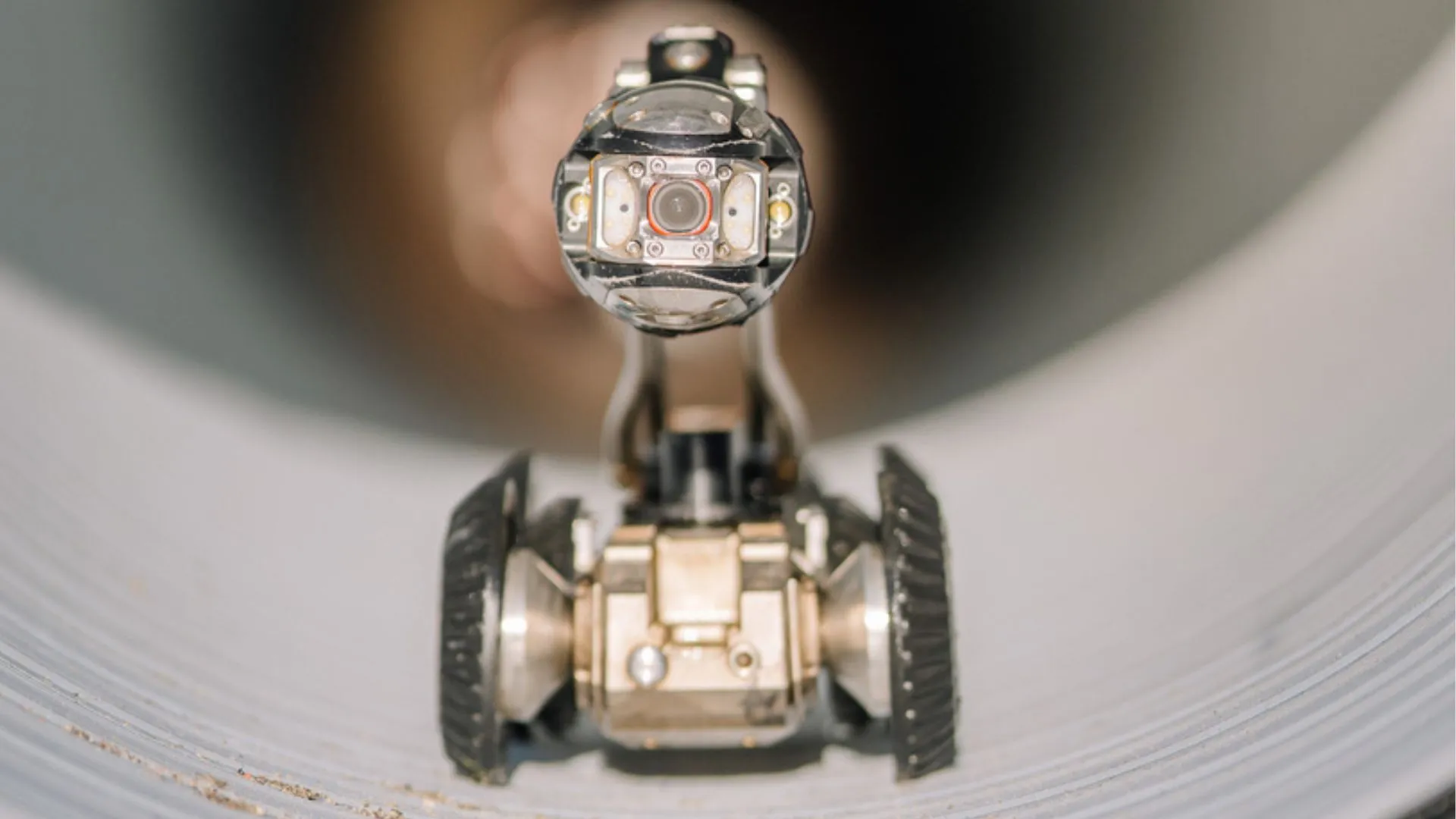
Researchers at the Massachusetts Institute of Technology (MIT) have developed an ultra-low-power chip that consumes just 6 milliwatts of electricity, enabling micro-drones and robots to build detailed 3D maps of their surroundings in real time. The system-on-chip (SoC), named Gleanmer, could allow battery-powered autonomous machines to navigate cluttered environments with ease — including industrial ventilation systems, warehouses, tunnels, and other confined spaces where precise obstacle avoidance is critical.
The technology also holds promise for lightweight augmented reality (AR) headsets, enabling real-time indoor mapping without significantly draining battery life. The chip combines dedicated hardware with a compact mapping algorithm to dramatically reduce the memory and power required for robots to construct 3D environmental models.
Breaking Through Traditional Mapping Bottlenecks
Building detailed 3D maps typically requires a robot to process large volumes of image data and store complex environmental models — a memory and power burden that small, battery-powered devices often cannot bear.
Rather than using the conventional approach of representing environments with millions of tiny cubes (voxels), the MIT team adopted flexible ellipsoidal shapes called Gaussians. These shapes represent curved objects and open spaces more efficiently than voxels while requiring far less memory.
The researchers paired the chip with a mapping algorithm called GMMap, which constructs 3D maps from depth images in a single pass. This allows the system to discard raw image data almost immediately after capture, eliminating the need for repeated storage and processing.
"At any point in time, we only need to store a small number of pixels in memory, which dramatically reduces the memory footprint required by the algorithm," said Peter Zhi Xuan Li, co-first author of the study.
The system also addresses another common challenge in mapping: as a robot moves, it often observes the same object from multiple angles, generating overlapping model representations that inflate map size. The MIT team developed a method to merge overlapping Gaussians directly, without referencing the original image data.
Small Chip, Big Impact
This design allows researchers to keep most active data in fast on-chip memory rather than relying on power-hungry external storage. "By using a dedicated memory that only stores objects observed over the past few frames, data can be accessed much more efficiently," said co-first author Zih-Sing Fu.
In tests conducted across a variety of pre-recorded environments, Gleanmer generated detailed 3D maps in real time at approximately 6 milliwatts — roughly 2.5% of the energy consumed by the best comparable mapping chips currently available, according to the researchers.
The chip is also capable of reconstructing obstacles and free space directly from live iPhone camera streams. By reusing the compact Gaussian representation during path planning, the system enables robots to calculate collision-free routes using approximately 20% of the energy that would normally be required.
"This paper demonstrates a key example of how algorithm and hardware co-design can truly and substantially improve energy efficiency," said Vivienne Sze, MIT professor of Electrical Engineering and Computer Science and senior author of the study.
The research team believes future versions could achieve further efficiency gains by moving computation closer to onboard sensors. Beyond robotics, the team is also exploring whether Gaussian representations could help computer systems process technical drawings and complex circuit diagrams more efficiently.
The research was officially presented at the IEEE Very Large-Scale Integrated Circuits (VLSI) Symposium.
原文來源: 查看原文
FAQ
Newsletter
Subscribe to our Low-Altitude Industry Newsletter
Daily curated news on low-altitude economy and drone industry, delivered to your inbox.
Reviewed and published by the LAETimes editorial desk ·


