Boeing MQ-28 Ghost Bat to Get 25% Larger Wingspan and 2,000-lb Payload Boost
Boeing has announced a major upgrade package for its MQ-28 Ghost Bat unmanned combat aircraft, featuring a 25% increase in wingspan and a 2,000-lb (approx. 907 kg) boost in payload capacity. The enhancements aim to improve mission flexibility, endurance, and combat effectiveness, reinforcing Boeing's competitive position in the global unmanned combat air vehicle (UCAV) market.
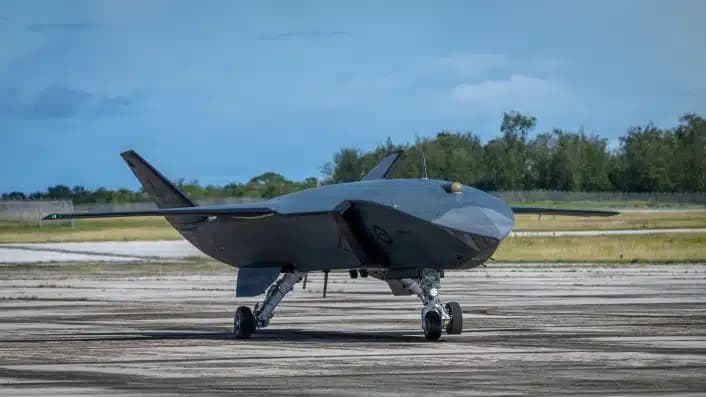
Highlights
- Boeing announced a 25% wingspan increase for the MQ-28 Ghost Bat UCAV, improving aerodynamic efficiency and extending range and loiter time.
- The upgrade adds 2,000 lb (approx. 907 kg) of additional payload capacity, enabling the Ghost Bat to carry more diverse mission systems including sensors, electronic warfare suites, and weapons.
- The MQ-28 Ghost Bat was developed for the Royal Australian Air Force and is the core platform for Boeing's Loyal Wingman Manned-Unmanned Teaming (MUT) concept.
- Boeing has not disclosed a production timeline for the upgraded variant; the announcement signals the company's ongoing investment in UCAV capability development.
- The global UCAV market is highly competitive, with development programs active in the US, UK, Europe, and China, making the MQ-28 upgrades strategically significant for Boeing.
Boeing has announced a significant upgrade package for its MQ-28 Ghost Bat unmanned combat aircraft, with key improvements including a 25% expansion of the wingspan and a 2,000-lb (approximately 907 kg) increase in payload capacity. The upgrades are designed to substantially enhance the platform's mission flexibility and overall combat effectiveness.
Key Upgrade Highlights
According to Boeing's latest design proposals, the MQ-28 Ghost Bat upgrade encompasses several critical areas:
- 25% Larger Wingspan: The expanded wingspan improves aerodynamic efficiency and enables greater fuel carriage, thereby extending range and loiter time.
- 2,000-lb Payload Increase: The enhanced payload capacity allows the aircraft to carry a more diverse range of mission systems, including reconnaissance sensors, electronic warfare suites, or weapons systems.
- Expanded Mission Flexibility: The upgraded configuration will enable the MQ-28 to more effectively operate alongside crewed fighters in the Loyal Wingman role, adapting to a broader spectrum of operational scenarios.
Background and Strategic Significance
The MQ-28 Ghost Bat was developed by Boeing for the Royal Australian Air Force (RAAF) and serves as the centerpiece of Boeing's Loyal Wingman concept. The aircraft is designed to operate in coordination with crewed platforms such as the F/A-18 Super Hornet and F-35 Lightning II, leveraging AI-assisted decision-making to perform forward reconnaissance, electronic suppression, and armed strike missions.
The simultaneous improvement of wingspan and payload is widely regarded by industry observers as a clear signal that Boeing is responding to the demands of modern warfare. As air forces worldwide accelerate their adoption of Manned-Unmanned Teaming (MUT) concepts, the MQ-28 upgrade is expected to further strengthen Boeing's competitive standing in the global UCAV market.
Competitive Landscape
The global unmanned combat aircraft market is intensely competitive, with active development programs underway in the United States, United Kingdom, Europe, and China. Boeing's latest upgrades to the MQ-28 demonstrate a sustained commitment to capability iteration and reflect a broader industry trend in which military customers are demanding ever-higher performance from unmanned platforms.
Boeing has not yet disclosed a specific timeline or production schedule for these upgrades. Further developments are expected to be closely watched by the defense industry.
Source: Global Defense Corp
原文來源: 查看原文
FAQ
Newsletter
Subscribe to our Low-Altitude Industry Newsletter
Daily curated news on low-altitude economy and drone industry, delivered to your inbox.
Reviewed and published by the LAETimes editorial desk ·


