Four NATO Allies Announce Joint Acquisition of Up to Five MQ-4C Triton HALE Drones
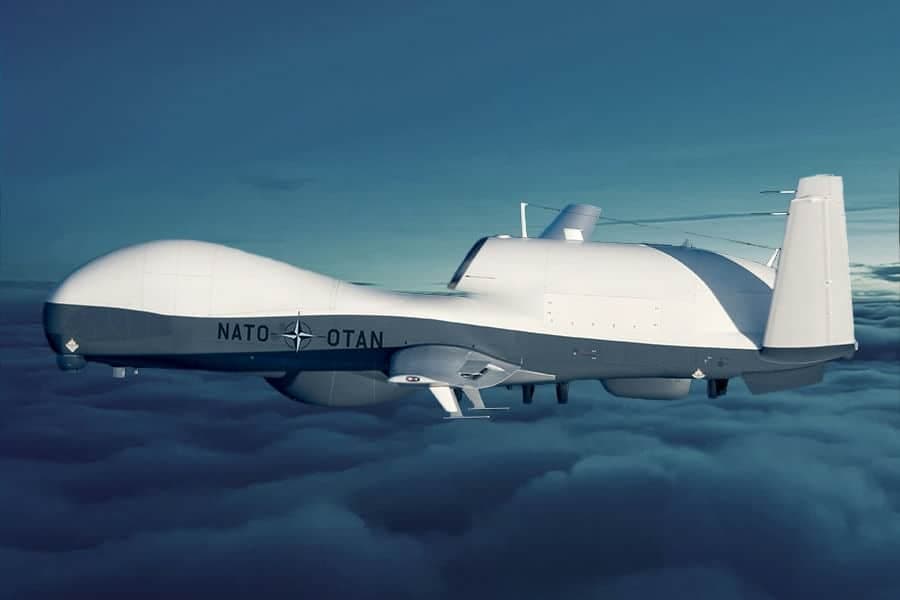
Denmark, Finland, Germany, and Norway announced at the NATO Summit in Ankara, Turkey on July 7, 2026, a joint plan to procure up to five Northrop Grumman MQ-4C Triton high-altitude long-endurance (HALE) drones. The aircraft will bolster NATO's organic intelligence, surveillance, and reconnaissance (ISR) capabilities and complement the existing Alliance Ground Surveillance fleet based at NAS Sigonella, Sicily.
Highlights
- Denmark, Finland, Germany, and Norway announced at the July 7, 2026 NATO Summit in Ankara a joint procurement of up to five MQ-4C Triton HALE drones.
- The Triton aircraft will supplement NATO's Alliance Ground Surveillance fleet currently operating from NAS Sigonella, Sicily, Italy.
- The MQ-4C Triton can fly above 50,000 feet for more than 24 hours, covering up to 4 million square nautical miles per sortie.
- Northrop Grumman will build the airframes, while Airbus Defence and Space and European partners will deliver ground systems, C2, and mission support under a trans-Atlantic industrial consortium.
- The U.S. Navy deployed the Triton to Europe for the first time on March 30, 2024, and Australia has separately initiated procurement of four Triton aircraft.
Four NATO Allies Announce Joint Acquisition of Up to Five MQ-4C Triton HALE Drones
Denmark, Finland, Germany, and Norway jointly announced at the NATO Summit Defence Industry Forum in Ankara, Turkey on July 7, 2026, plans to procure up to five Northrop Grumman MQ-4C Triton high-altitude long-endurance (HALE) unmanned aerial systems to strengthen NATO's organic intelligence, surveillance, and reconnaissance (ISR) force.
Supplementing NATO's Existing Surveillance Fleet
The newly acquired aircraft will complement NATO's Alliance Ground Surveillance (AGS) fleet, which currently operates out of Naval Air Station Sigonella in Sicily, Italy.
Designed primarily for maritime surveillance, the Triton can operate continuously for more than 24 hours at altitudes exceeding 15 kilometres. Equipped with long-range sensors, the platform is expected to significantly enhance allied early threat detection, protect sea lines of communication, and support operations in demanding environments such as the Arctic and high-latitude northern regions.
Trans-Atlantic Industrial Consortium to Deliver the Capability
A trans-Atlantic industrial consortium is being formed to deliver the programme. Northrop Grumman will manufacture the Triton airframes, while Airbus Defence and Space and other European firms will provide ground systems, data management services, command and control (C2), infrastructure, and mission support. The arrangement is intended to leverage a decade of accumulated collaboration and trans-Atlantic partnerships to build a modern, highly capable NATO ISR force.
MQ-4C Triton: Key Capabilities
The MQ-4C Triton is a HALE UAS derived from the RQ-4 Global Hawk platform, purpose-built for persistent maritime ISR and targeting (ISR&T). The aircraft has been hardened for harsh ocean environments, featuring a reinforced airframe, de-icing systems, and lightning protection. It can descend to lower altitudes in adverse weather to more precisely identify surface targets. As a critical node in modern distributed maritime operations, Triton provides real-time ocean surveillance, intelligence collection, and search-and-rescue support across vast sea areas.
Core Capabilities at a Glance
- Persistent Endurance: Single missions exceed 24 hours of continuous flight, covering up to 4 million square nautical miles per sortie.
- Operational Altitude: Can reach altitudes above 50,000 feet (15,240 metres), keeping the aircraft above commercial air traffic and most local weather systems.
- Advanced Multi-Function Sensor Suite: Equipped with the AN/ZPY-3 Multi-Function Active Sensor (MFAS) radar, providing 360-degree maritime surface search and tracking, complemented by electro-optical/infrared (EO/IR) high-definition video.
- SIGINT and Communications Relay: Carries robust signals intelligence (SIGINT) tools capable of intercepting and analysing electronic emissions, as well as secure network relay functionality to connect fleet units across extended distances.
U.S. Navy and Allied Service Status
In U.S. Navy service, the Triton operates alongside the P-8 Poseidon maritime patrol aircraft in a complementary pairing. Patrol Squadron (Unmanned) 19 (VUP-19) achieved initial operational capability (IOC) during its deployment to Andersen Air Force Base, Guam in September 2023. On March 30, 2024, the U.S. Navy deployed the MQ-4C Triton to Europe for the first time, with the aircraft taking up station at NAS Sigonella, Sicily. Australia has also initiated a procurement programme for four Triton aircraft.
Naval News visited VUP-19 at its homeport of Naval Station Mayport in January 2023 and conducted an exclusive interview with the squadron's commanding officer.
原文來源: 查看原文
FAQ
Newsletter
Subscribe to our Low-Altitude Industry Newsletter
Daily curated news on low-altitude economy and drone industry, delivered to your inbox.
Reviewed and published by the LAETimes editorial desk ·