Four NATO Members Announce Joint Acquisition of MQ-4C Triton Drones to Bolster Alliance ISR Capabilities
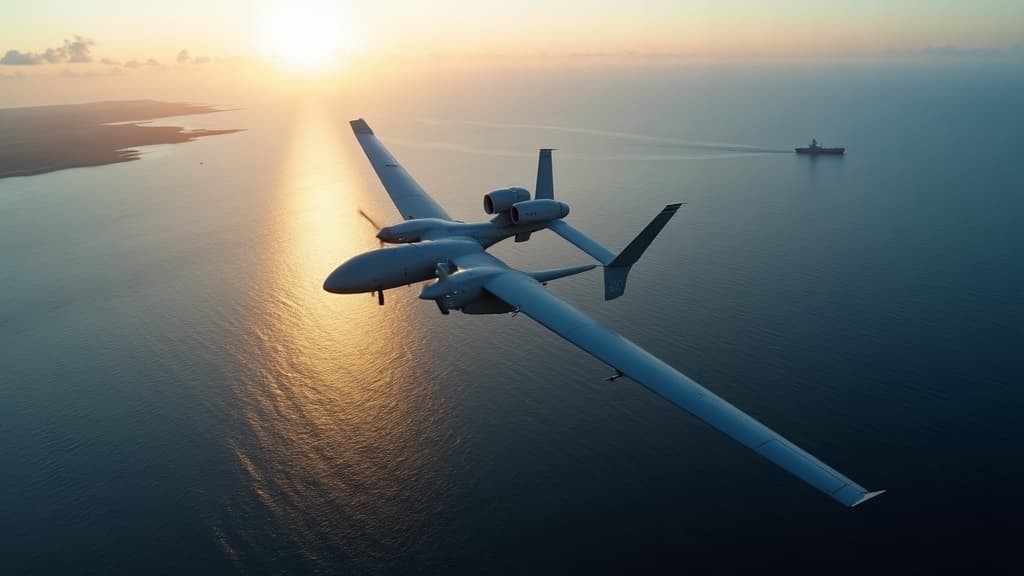
Denmark, Finland, Germany, and Norway have jointly announced plans to acquire up to five Northrop Grumman MQ-4C Triton unmanned aerial vehicles, aiming to strengthen NATO's collective intelligence, surveillance, and reconnaissance (ISR) capabilities, particularly for wide-area maritime surveillance over the North Atlantic and Baltic Sea regions.
Highlights
- Denmark, Finland, Germany, and Norway jointly announced plans to acquire up to five Northrop Grumman MQ-4C Triton UAVs to strengthen NATO's ISR capabilities.
- The MQ-4C Triton is a HALE UAV capable of over 24 hours of continuous flight, designed for wide-area maritime surveillance and BVLOS intelligence missions.
- The procurement targets strategic monitoring gaps in the North Atlantic and Baltic Sea regions, with a multi-nation cost-sharing model to reduce individual financial burdens.
- Finland's participation highlights its active integration into the NATO alliance framework following its recent accession.
- The U.S. Navy and the Royal Australian Air Force are current MQ-4C Triton operators; the four NATO nations' entry will further expand the aircraft's international user base.
Four NATO member states — Denmark, Finland, Germany, and Norway — have formally disclosed plans to jointly procure up to five Northrop Grumman MQ-4C Triton unmanned aerial vehicles (UAVs), with the aim of comprehensively enhancing the alliance's combined intelligence, surveillance, and reconnaissance (ISR) capabilities.
About the MQ-4C Triton
The MQ-4C Triton is a high-altitude, long-endurance (HALE) unmanned reconnaissance aircraft developed by U.S. defense major Northrop Grumman, designed primarily for broad-area maritime surveillance missions. The aircraft is capable of sustained flight above 24 hours at high altitude and is equipped with an advanced sensor suite that enables beyond visual line of sight (BVLOS) wide-area intelligence-gathering. It has become one of the key tools for NATO allies seeking to enhance maritime domain awareness.
Background to the Joint Procurement
As geopolitical tensions continue to rise, NATO has been actively working to strengthen the alliance's overall defense and intelligence-collection capabilities. The joint procurement announcement by Denmark, Finland, Germany, and Norway is regarded as a significant milestone in deepening cooperation among NATO members on ISR asset development. Finland, which formally joined NATO in recent years, underscores its commitment to integration within the alliance framework by participating in this collaborative acquisition.
Strengthening NATO's ISR Forces
One of the primary objectives of this procurement program is to address gaps in NATO's ISR forces regarding wide-area maritime surveillance, particularly for strategic monitoring requirements in the North Atlantic and Baltic Sea regions. The multi-nation cost-sharing model also helps reduce the financial burden on individual member states while improving overall alliance interoperability.
The U.S. Navy is currently the primary operator of the MQ-4C Triton, and the Royal Australian Air Force has also acquired the type for maritime patrol missions. The entry of these four NATO nations will further expand Triton's international user base and strengthen intelligence-sharing mechanisms among alliance members.
Source: Naval Technology
原文來源: 查看原文
FAQ
Newsletter
Subscribe to our Low-Altitude Industry Newsletter
Daily curated news on low-altitude economy and drone industry, delivered to your inbox.
Reviewed and published by the LAETimes editorial desk ·