Pentagon Seeks Low-Cost MQ-9 Reaper Replacement Through 'Massed Modular Aircraft' Program
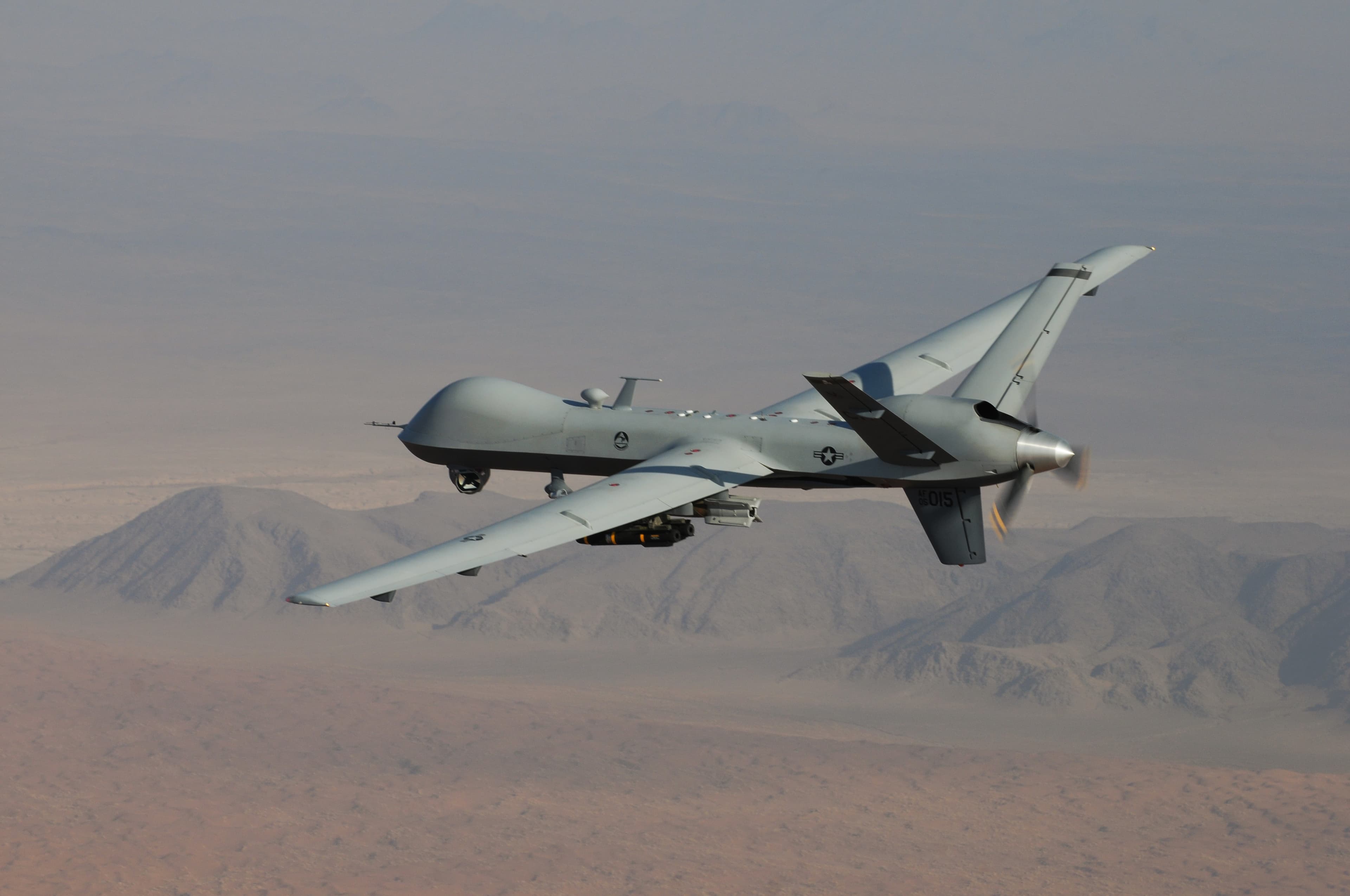
The U.S. Defense Innovation Unit (DIU) is advancing the Massed Modular Aircraft (MMA) program, aiming to develop an affordable, long-range, heavy-payload drone capable of mass deployment to replace the MQ-9 Reaper — which costs approximately $30 million per unit — and overwhelm enemy air defenses by absorbing attrition at scale.
Highlights
- The U.S. DIU launched the Massed Modular Aircraft (MMA) program to develop a low-cost, expendable drone alternative to the $30 million MQ-9 Reaper after multiple Reapers were shot down during operations involving Iran.
- MMA specifications require a minimum payload of 2,800 lbs, an unrefueled combat range of at least 2,300 nautical miles, and a one-way ferry range of at least 8,000 nautical miles.
- A single operator must be able to control multiple MMA aircraft simultaneously, reflecting a shift toward autonomous, high-volume drone operations.
- DIU requires a full-scale MMA prototype to complete flight testing within 21 months of contract award, with Initial Operating Capability set for Fiscal Year 2031.
- The program draws on lessons from Ukraine and Iran, where defenders exhausted interceptor missiles before attackers ran out of drones, validating a mass-attrition drone strategy.
Pentagon Seeks Low-Cost MQ-9 Reaper Replacement Through 'Massed Modular Aircraft' Program
The U.S. Department of Defense is actively exploring low-cost, long-range unmanned aircraft options that could eventually replace the MQ-9 Reaper currently in service.
According to a Congressional Research Service report published on May 13, the initiative was partly triggered by the shootdown of multiple MQ-9s during operations involving Iran. The U.S. Air Force currently operates approximately 135 Reaper drones, each priced at around $30 million. The loss rate seen against Iran — whose air defense systems are considered less sophisticated than those of China or Russia — has already raised serious sustainability concerns.
The 'Exquisite' Drone Model Is No Longer Viable
In its solicitation for a next-generation unmanned aircraft, the Defense Innovation Unit (DIU) warned: "The Joint Force relies on low-quantity, high-value 'exquisite' (greater than $30 million) manned and unmanned aircraft that are not sustainable against adversaries building layered defenses using increasingly low-cost air defense capabilities."
The Pentagon wants the new system to "perform the missions currently performed by the MQ-9A." Rather than building a better Reaper, however, DIU is pursuing an expendable alternative.
MMA: Winning Through Numbers
The Massed Modular Aircraft (MMA) program aims to develop a drone that can be deployed in large numbers, retaining the ability to overwhelm enemy defenses even after absorbing significant losses.
The MMA's specifications are particularly noteworthy. While drone swarms may represent the future of unmanned warfare, they typically consist of small, low-cost platforms with limited range and payload. DIU's solicitation, however, envisions a drone that combines long range and heavy payload while remaining cheap enough for mass production:
- Payload capacity: At least 2,800 lbs (approx. 1,270 kg), slightly below the MQ-9's 3,800 lbs (approx. 1,724 kg)
- Unrefueled combat range: At least 2,300 nautical miles
- One-way ferry range: At least 8,000 nautical miles
- Airspeed: At least 200 mph (approx. 322 km/h)
- Runway requirement: Capable of operating from 6,000-foot runways or austere/expeditionary airstrips
- Power and cooling: 25 kW of electrical power and 5 kW of cooling capacity to support multiple internal or external mission payloads
- Autonomous operations: Support for a single operator controlling multiple aircraft simultaneously
The solicitation does not specify the MMA's exact dimensions, though the stated requirements suggest a platform broadly comparable in size to the MQ-9. No target unit cost is listed, but it is expected to be substantially below the Reaper's $30 million price tag.
Aggressive Timeline: Initial Operating Capability by FY2031
The MMA program is operating on an ambitious schedule. DIU requires a full-scale prototype to complete flight testing within 21 months of contract award, with a target of achieving Initial Operating Capability (IOC) in Fiscal Year 2031. IOC is defined as the delivery of 20 mission-ready aircraft to an operational unit, ready for immediate deployment.
Lessons Learned from Ukraine and Iran
The Pentagon's requirements continue to reflect lessons drawn from the conflicts in Ukraine and involving Iran — engagements in which defending forces frequently exhausted their interceptor missiles before the attacking side ran out of drones.
DIU stated: "Keeping MMA continuously active — conducting weapons delivery, intelligence gathering, electronic warfare, or communications relay — will force adversaries to remain on the defensive. This relentless pressure will attrite the enemy, forcing them to expend expensive air defense missiles and resources faster than they can be replenished."
If successful, the MMA program could fundamentally reshape U.S. military thinking on unmanned aircraft operations — and have far-reaching implications for drone deployment models worldwide.
原文來源: 查看原文
FAQ
Reviewed and published by the LAETimes editorial desk ·