NASA Uses Scaled Aircraft to Accelerate Aerospace Innovation Research
NASA's Dale Reed Scaled Flight Research Laboratory at Armstrong Flight Research Center uses small remotely piloted and autonomous aircraft as low-cost test platforms to validate innovative aerospace concepts. Current projects include the FireSense wildfire monitoring program, the EPIC supersonic parachute research initiative, and Automatic Ground Collision Avoidance System testing — with findings applicable to military flight safety and future Mars exploration missions.
Highlights
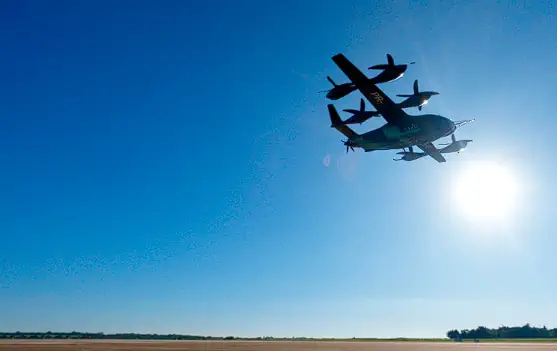
- NASA's Dale Reed Scaled Flight Research Laboratory at Armstrong Flight Research Center uses small remotely piloted and autonomous aircraft — including the Alta-X, DROID, Multi-Use Cub, and HQ-90 — as low-cost aerospace test platforms.
- The FireSense program deployed an Alta-X drone at Geneva State Forest, Alabama, to collect localized meteorological data aimed at improving wildfire management decisions.
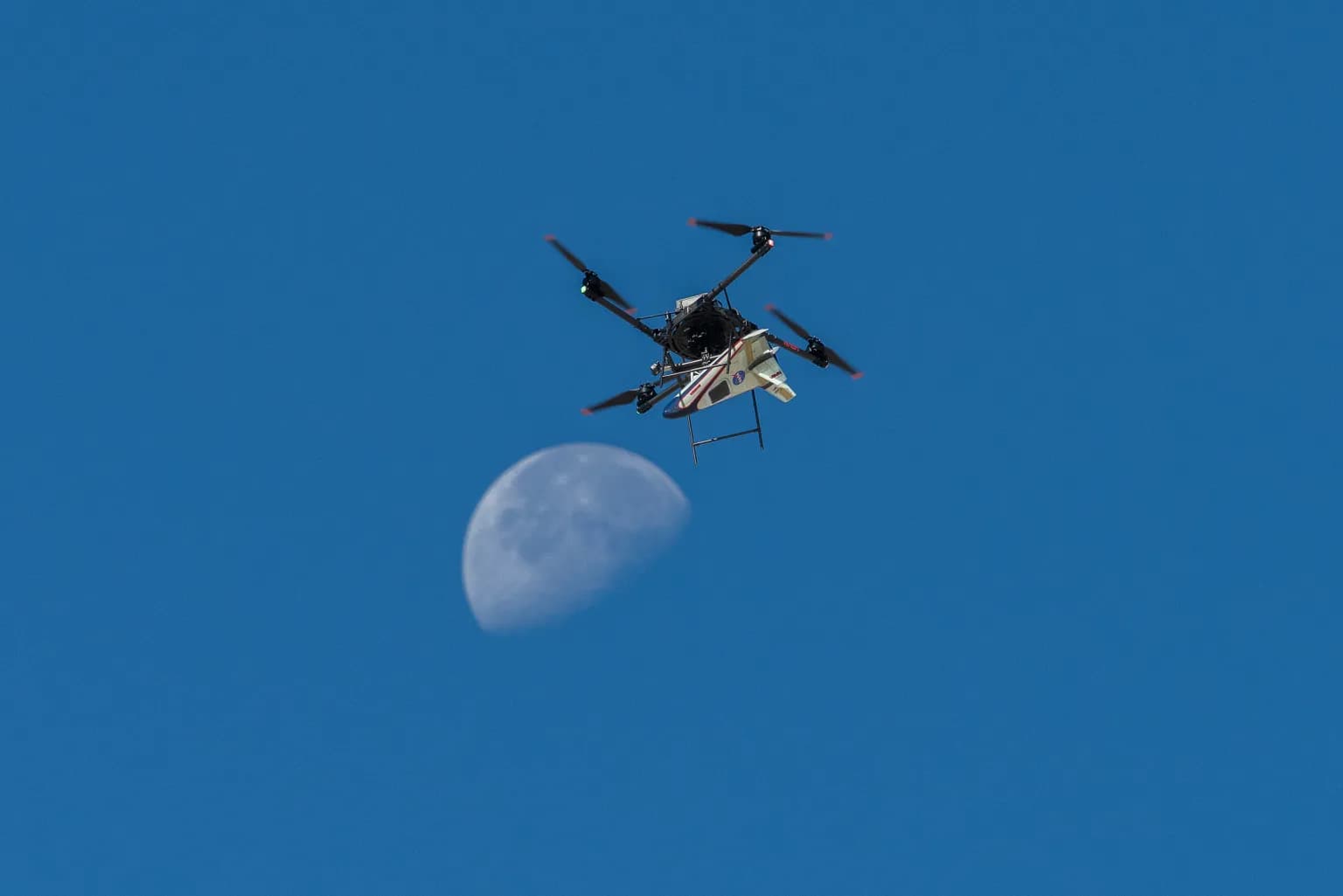
- The EPIC project uses an Alta-X to air-drop a capsule with flexible sensors to study supersonic parachute dynamics, with findings intended to improve the safety of Mars payload delivery systems.
- The Automatic Ground Collision Avoidance System (AutoGCAS), tested on the DROID platform, has already contributed to saving U.S. military jet pilots' lives and is now being licensed for commercial aviation applications.
- The original Prandtl-D flying wing glider, designed and tested at Armstrong, is now preserved at the Smithsonian National Air and Space Museum, while next-generation designs continue to be developed in the laboratory.
Validating new aerospace concepts in flight remains one of NASA's most effective methods for advancing knowledge and reducing research risk.
Located in Edwards, California, the Dale Reed Scaled Flight Research Laboratory at NASA's Armstrong Flight Research Center uses small remotely piloted and autonomous aircraft as low-cost platforms to mature innovative concepts, accelerate learning, and facilitate a smooth transition to full-scale flight — all in direct support of NASA's core mission.
A Diverse Fleet of Flight Platforms
When a project requires an airborne platform, NASA has several remotely piloted aircraft available:
- Alta-X quadrotor drone
- Dryden Remotely Operated Integrated Drone (DROID): 10-foot wingspan
- Multi-Use Cub: a fixed-wing aircraft with a 14-foot wingspan and expandable payload capacity
- HQ-90 quadrotor drone: an additional option for electric vertical take-off and landing (eVTOL) testing
Once all aircraft and experiments receive operational approval, laboratory pilots support ground operations and flight activities throughout each mission.
Deep Flight Expertise
Every laboratory team member is an experienced, certified scaled aircraft pilot, capable of flying unique or modified commercial aircraft at various locations as mission requirements dictate.
NASA's FireSense program conducted flight operations at Geneva State Forest, located approximately 100 miles south of Montgomery, Alabama. After ground teams integrated sensors onto the Alta-X drone and completed system checks, two team members transported the aircraft and sensor package to the forest, prepared the vehicle, and executed the mission. The flights demonstrated how remotely piloted aircraft can collect localized meteorological data that affects smoke dispersion and fire behavior — information that can help authorities improve wildfire decision-making and more effectively deploy firefighting personnel and resources.
Another mission conducted near Armstrong was the Enhanced Parachute Integrated Canopy (EPIC) project. EPIC drops a capsule containing a parachute and flexible sensors from an Alta-X in flight. Laboratory personnel not only handled flight operations but also collaborated with the EPIC team to design and integrate the drop mechanism and safety systems.
This test series demonstrated that flexible sensors can help researchers study supersonic parachutes. The findings are expected to fill gaps in computer models, making supersonic parachutes safer and more reliable for delivering scientific instruments and payloads to Mars.
Advancing Challenging Research
With its rapid design and testing capability, the Dale Reed Scaled Flight Research Laboratory helps small aircraft carry big ideas — concepts that could lead to breakthroughs across NASA's aeronautics, science, and exploration missions.
For decades, NASA and its partners have been advancing Automatic Collision Avoidance Technology. Research demonstrated that an autopilot system can detect and recover from an impending ground collision — a capability that has since helped save the lives of U.S. high-performance military jet pilots. Armstrong played a central role in this research and developed a simplified variant, the Automatic Ground Collision Avoidance System (AutoGCAS), which was installed on the DROID for testing. The system is designed to assist general aviation pilots as well as remotely piloted and autonomous aircraft. It has performed well and has driven further research toward a version that provides alerts and guidance cues. NASA Armstrong's Technology Transfer Office is actively pursuing licensing agreements to help U.S. companies commercialize the technology.
The Prandtl-D (Preliminary Research Aerodynamic Design to Lower Drag) flying wing glider was also designed, built, and flight-tested at NASA Armstrong. Researchers found that its twisted-wing design reduces drag and generates thrust at the wingtips — advancing concepts that could improve the fuel efficiency of future aircraft. The original Prandtl-D is now housed at the Smithsonian National Air and Space Museum in Washington, D.C., while the Prandtl-D3 is on display at the California Science Center in Los Angeles. Researchers continue to develop next-generation designs in the laboratory.
The laboratory is equipped with a broad range of capabilities to help translate promising concepts into flyable test structures, including rapid prototyping using both traditional and advanced 3D manufacturing techniques, as well as composite and conventional fabrication methods. A team of engineers and technicians also provides custom part design and specialized manufacturing services to meet unique research requirements.
The laboratory additionally supports electrical and mechanical design, hardware and software integration, and the safety and flight readiness processes essential to mission success. Armstrong's Experimental Fabrication Branch and technical facilities such as the Environmental Laboratory further enhance these capabilities, collectively supporting the development, testing, and validation work that advances NASA's aeronautics and exploration objectives.
原文來源: 查看原文
FAQ
Reviewed and published by the LAETimes editorial desk ·