Inside NASA Armstrong: A Day-in-the-Life of the CATNLF Laminar Flow Wing Flight Test
NASA's Armstrong Flight Research Center is conducting the Crossflow Attenuated Natural Laminar Flow (CATNLF) project, mounting a scaled wing model under an F-15 research aircraft to test a new wing concept designed to maximize laminar airflow, reduce drag, and ultimately cut fuel consumption on future commercial airliners. This article provides a complete timeline of a single test flight day, from 5:00 a.m. aircraft prep to 10:00 a.m. data download, showcasing the rigorous teamwork behind aerospace flight testing.
Highlights
- NASA Armstrong Flight Research Center, based in Edwards, California, has conducted flight testing for nearly 80 years and is currently running the CATNLF laminar flow wing project.
- The CATNLF project mounts a scaled wing model on the underside of a NASA F-15 research aircraft to test a wing design that maximizes laminar airflow and reduces drag.
- The ultimate goal of CATNLF is to reduce fuel consumption on future commercial airliners by validating more aerodynamically efficient wing surface designs through scaled flight testing.
- A standard CATNLF test flight day runs from 5:00 a.m. aircraft preparation to 10:00 a.m. data download, involving pilots, engineers, maintenance technicians, researchers, and control room operators.
- The pilot follows a step-by-step 'test card' and maintains simultaneous radio communication with both Edwards Air Force Base air traffic control and the NASA Armstrong control room during each sortie.
Flight testing is a team sport. For nearly 80 years, NASA's Armstrong Flight Research Center in Edwards, California, has pushed the boundaries of aerodynamics through flight testing, driving aviation technology forward.
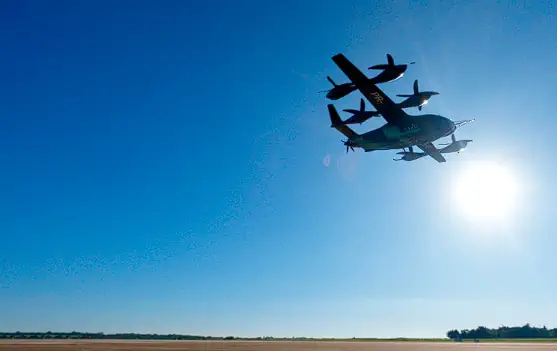
Earlier this year, NASA's Crossflow Attenuated Natural Laminar Flow (CATNLF) project put a new wing concept to the test. The goal: maximize laminar flow—the smooth, uninterrupted movement of air along a wing's surface—in order to reduce fuel costs for future commercial airliners. During testing, researchers mounted a scaled CATNLF wing model beneath the fuselage of a NASA F-15 research aircraft.
Here is a complete timeline of a CATNLF flight test day.
5:00 a.m. — Aircraft Preparation
Ground crews begin preparing the aircraft for the day's mission. If the sortie requires a chase plane—a second aircraft used to monitor the test flight—that crew begins its own preparation simultaneously.
6:00 a.m. — Mission Briefing
Pilots, engineers, maintenance technicians, project managers, researchers, photographers, and videographers gather together to review the day's flight objectives, weather reports, and final details.
6:30 a.m. — Control Room Check-In; Flight Crew Suiting Up
Researchers head to the control room to run through the day's system checks, confirming that all communications equipment, displays, and instrumentation are functioning properly.
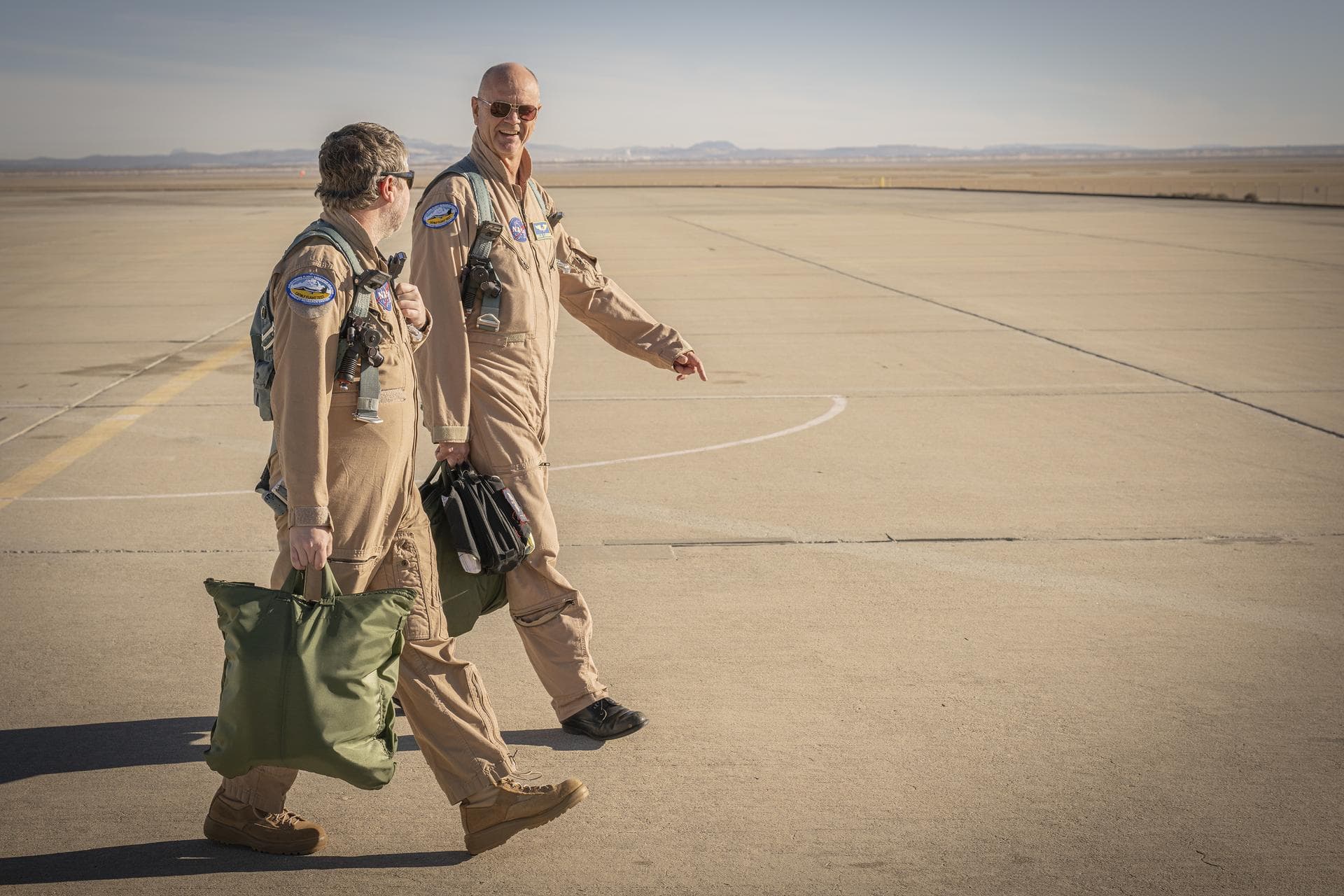
Pilots suit up in life-support equipment, including custom-fitted pressure suits, harnesses, helmets, and visors. Any photographers, videographers, or flight test engineers flying in the rear seat go through the same process.
6:45 a.m. — Pre-Flight Walk-Around; Control Room Ready
The pilot and crew chief conduct the aircraft's pre-flight electrical inspection together. The pilot and crew chief co-sign the aircraft's flight readiness documentation, confirming the aircraft is cleared for flight.
Meanwhile, the control room team prepares to monitor the upcoming sortie, working through the test card—the step-by-step execution plan for the flight.
7:00 a.m. — Crew Boarding
The pilot and rear-seat occupant board the aircraft, strap in, and secure all test equipment. The pilot completes the pre-flight ground checks.
7:15 a.m. — Taxi
The pilot contacts the control tower and taxis the aircraft to the runway. The NASA Armstrong control room continuously monitors the aircraft via radio.
7:30 a.m. — Takeoff
The pilot accelerates down the runway and rotates at the appropriate speed. Once airborne, the pilot maintains communication with both Edwards Air Force Base air traffic controllers and the NASA Armstrong control room while en route to the designated test area.
7:30–8:30 a.m. — Flight Testing
Upon arriving at the test area, the control room team coordinates with the pilot on altitude, airspeed, and maneuvers. The test conductor issues instructions one by one, and the pilot executes each test point in sequence. Both the pilot and the control room continuously monitor hardware, instrumentation, aircraft systems, and software performance. Once all test points are complete, the pilot returns to base.
8:45 a.m. — Landing and Aircraft Tow-Back
After landing, the pilot taxis to the NASA Armstrong ramp, where the crew chief is waiting. Once the pilot exits the aircraft, it is immediately towed into the hangar for maintenance.
9:30 a.m. — Post-Flight Debrief
The pilot, project team, and mission control personnel reconvene in the briefing room to consolidate lessons learned from the flight and document any items requiring follow-up.
10:00 a.m. — Data Download; Second Flight Preparation
Teams download flight data for analysis. If a second sortie is scheduled for the day, preparations begin immediately.
About the CATNLF Project: The CATNLF project aims to validate a novel wing surface design through scaled-model flight testing. By improving laminar flow efficiency over the wing—thereby reducing aerodynamic drag and improving flight efficiency—the project ultimately targets a reduction in fuel consumption for future commercial aircraft.
Contact: Teresa Whiting, teresa.whiting@nasa.gov
Organization: NASA Armstrong Flight Research Center
原文來源: 查看原文
FAQ
Reviewed and published by the LAETimes editorial desk ·