UK NPSA Launches CORE 2026 Challenge to Strengthen C-UAS Capabilities for Walking Security Forces
The UK's National Protective Security Authority (NPSA), in partnership with the US Department of Homeland Security and the Royal Canadian Mounted Police, has issued a call for technology providers to participate in the CORE 2026 event, focused on counter-UAS capabilities. Scheduled for 19–23 October 2026 in the UK, the exercise will evaluate whether emerging technologies can transform walking security personnel into distributed drone detection networks without relying on fixed infrastructure.
Highlights
- The UK NPSA, US DHS, and RCMP have jointly issued a call for C-UAS technology providers to participate in CORE 2026, scheduled for 19–23 October 2026 in the UK.
- CORE 2026 will assess whether emerging technologies can convert walking security personnel into a distributed drone detection and response network without relying on fixed infrastructure.
- Technologies of interest include portable/wearable sensors, mesh networking, AI-assisted decision support, AR operator interfaces, and systems with built-in cybersecurity and privacy protections.
- The initiative specifically targets operationally challenging environments such as temporary event venues, public spaces, and mobile patrol scenarios where permanent C-UAS installations are not feasible.
- CORE serves as a government-industry collaboration platform designed to evaluate counter-drone technologies under realistic operational conditions ahead of potential future deployment.
The UK's National Protective Security Authority (NPSA), in collaboration with the US Department of Homeland Security (DHS) and the Royal Canadian Mounted Police (RCMP), has officially issued a call for technology providers to participate in the 2026 Capability Optimisation Research Environment (CORE) event, with this edition focusing on counter-unmanned aircraft systems (C-UAS).
CORE 2026 is scheduled to take place in the United Kingdom from 19 to 23 October 2026. The event will provide a government-led testing and experimentation environment in which participants can evaluate and refine counter-drone technologies alongside UK and international partner agencies.
This year's research challenge will explore whether emerging technologies can transform on-duty walking security personnel into a distributed network capable of detecting, tracking, identifying, and responding to drone activity — without primarily relying on fixed infrastructure or large, static C-UAS systems.
Focus on Distributed C-UAS Operations
According to the NPSA, the exercise will examine how frontline security teams can leverage portable technologies, wearable devices, and rapidly deployable sensors to enhance situational awareness and response to drone threats.
The initiative targets environments where the installation of permanent C-UAS infrastructure is impractical, including temporary event venues, public spaces, high-footfall locations, dispersed facilities, and mobile operational scenarios that depend on patrol or guard forces.
Organisers are not seeking a single type of technology, but are instead soliciting a broad range of solutions capable of improving drone detection, localisation, communications, and decision-making.
Wide Range of Technologies Sought
The technology areas of interest for CORE 2026 include:
- Portable, wearable, or rapidly deployable sensors
- Integration with existing device sensors, including cameras, microphones, GNSS, Bluetooth, Wi-Fi, and inertial measurement units (IMUs)
- Mesh networking and peer-to-peer situational awareness
- Distributed drone detection and collaborative geolocation
- Augmented reality (AR), haptic feedback, audio cues, and other operator interfaces
- AI-assisted alerting, incident classification, and decision support
- Integration with command-and-control (C2) systems
- Privacy-preserving and cybersecure portable technologies
- Rapid-deployment systems suited for temporary or lightweight infrastructure environments
The core concept envisions distributed guard forces operating collaboratively through networked devices and ad hoc sensor nodes, expanding coverage, improving localisation accuracy, accelerating reporting, and enhancing operational decision-making.
As a collaborative research and experimentation environment, CORE enables government agencies and industry to evaluate emerging C-UAS technologies under operationally realistic conditions, preparing them for potential future deployment.
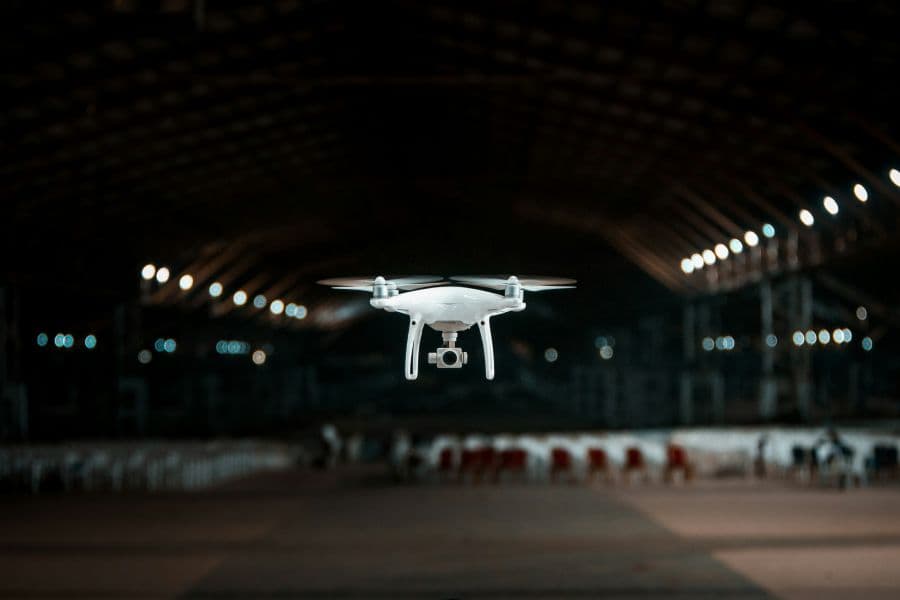
Image credit: Adedotun Adegborioye via Unsplash
原文來源: 查看原文
FAQ
Newsletter
Subscribe to our Low-Altitude Industry Newsletter
Daily curated news on low-altitude economy and drone industry, delivered to your inbox.
Reviewed and published by the LAETimes editorial desk ·