DJI Osmo Pocket 3 Drops to $378 — Still the Best Pocket Gimbal Camera at This Price
With the launch of the DJI Osmo Pocket 4, the Osmo Pocket 3 has dropped from $499 to $378 on Amazon — a $121 reduction. The newer model doesn't make the Pocket 3 obsolete; it simply makes it cheaper. With a 1-inch CMOS sensor, 4K 120fps, three-axis mechanical stabilization, and ActiveTrack 6.0, the Pocket 3 remains unmatched at its new price point.
Highlights
- The DJI Osmo Pocket 3 dropped from $499 to $378 on Amazon — a $121 discount — following the launch of the Osmo Pocket 4.
- The Pocket 3 retains its 1-inch CMOS sensor, 4K 120fps recording, and three-axis mechanical gimbal stabilization after the price cut.
- No competing pocket gimbal camera at $378 combines a 1-inch sensor, 4K 120fps, and mechanical stabilization in a single body.
- The Osmo Pocket 3 holds a 4.5-star average rating from over 3,300 Amazon reviews, ranking second in the camcorder category.
- ActiveTrack 6.0 and DJI OsmoAudio support for up to two wireless mic transmitters remain fully functional on the Pocket 3 at the new price.
The DJI Osmo Pocket 3 dropped to $378 on Amazon this week, down $121 from its original $499 retail price. The timing is notable: the Osmo Pocket 4 was just announced — and what many haven't yet realized is that the new model doesn't make the Pocket 3 obsolete. It simply makes it cheaper, with performance entirely unchanged.
Here's the straightforward analysis: when camera manufacturers release new versions, older models typically get discounted to clear inventory. But the Osmo Pocket 3 was already the benchmark for vlogging cameras before the Pocket 4 existed. At $378, it remains that benchmark. The only thing that changed is the price.
What the Pocket 4 Actually Means for the Pocket 3
The original Osmo Pocket was a revelation when it launched — a tiny gimbal-stabilized camera capable of 4K60 in a pocketable form factor. The second generation maintained the same frame rates but delivered a meaningful step up in image quality.
Image credit: DJI
The third generation was where everything changed. The Osmo became more than a gadget — it became a genuine imaging tool with a distinct character, a camera capable of holding its own in professional productions under demanding conditions. That's the product that just dropped in price.
The Osmo Pocket 4 is a refinement: improved low-light performance, faster processing, some software enhancements. It's the camera DJI built for creators willing to pay a premium for the latest specs.
The Pocket 3 is the camera DJI built for creators who want the same capability for less money. When a new model launches, the old one usually gets worse — but the Pocket 3 only got cheaper.
That's proof the Pocket 3 is a real camera. Calling it "last year's product" only holds if it's actually worse than it was last month — and it isn't. The only thing that changed is the price tag on Amazon.
Why the 1-Inch Sensor Sets It Apart
Fitting a 1-inch CMOS sensor into a body weighing just 179 grams and standing under 15 cm tall is the real engineering achievement here. Larger sensor pixels capture more light, which means usable footage in low-light conditions instead of grainy, noise-ridden images.
Restaurants, indoor events, golden hour shoots, nighttime vlogs — in the scenarios that break small sensors, the Osmo Pocket 3 holds detail and color.
Image credit: DJI
DJI didn't put a 1-inch sensor in a pocket gimbal without reason — it's not easy. It did so because no competitor at this price point offers the same value proposition. You get 4K 120fps — full-resolution slow motion at four times normal speed, with no quality compromise. D-Log M 10-bit color recording captures over one billion colors for post-production grading, rather than the compressed approximations typical of compact cameras.
Those are specs on paper. In practice, they're the reason creators can shoot once and repurpose footage across platforms without apologizing for technical limitations.
The Gimbal Is Why People Actually Use It
The three-axis mechanical stabilization system handles the kind of movement that defines the vlogging aesthetic: walking, running, dancing, spontaneous handheld motion. The gimbal absorbs that movement while the lens stays locked on the horizon or the subject. Software can only approximate stabilization — mechanical gimbals actually deliver it.
ActiveTrack 6.0 automatically keeps a face or selected subject centered in the frame. Set the camera on a tripod, select your subject, and the gimbal tracks movement across its pan range automatically — no camera operator needed, no extra set of hands, the camera does the work.
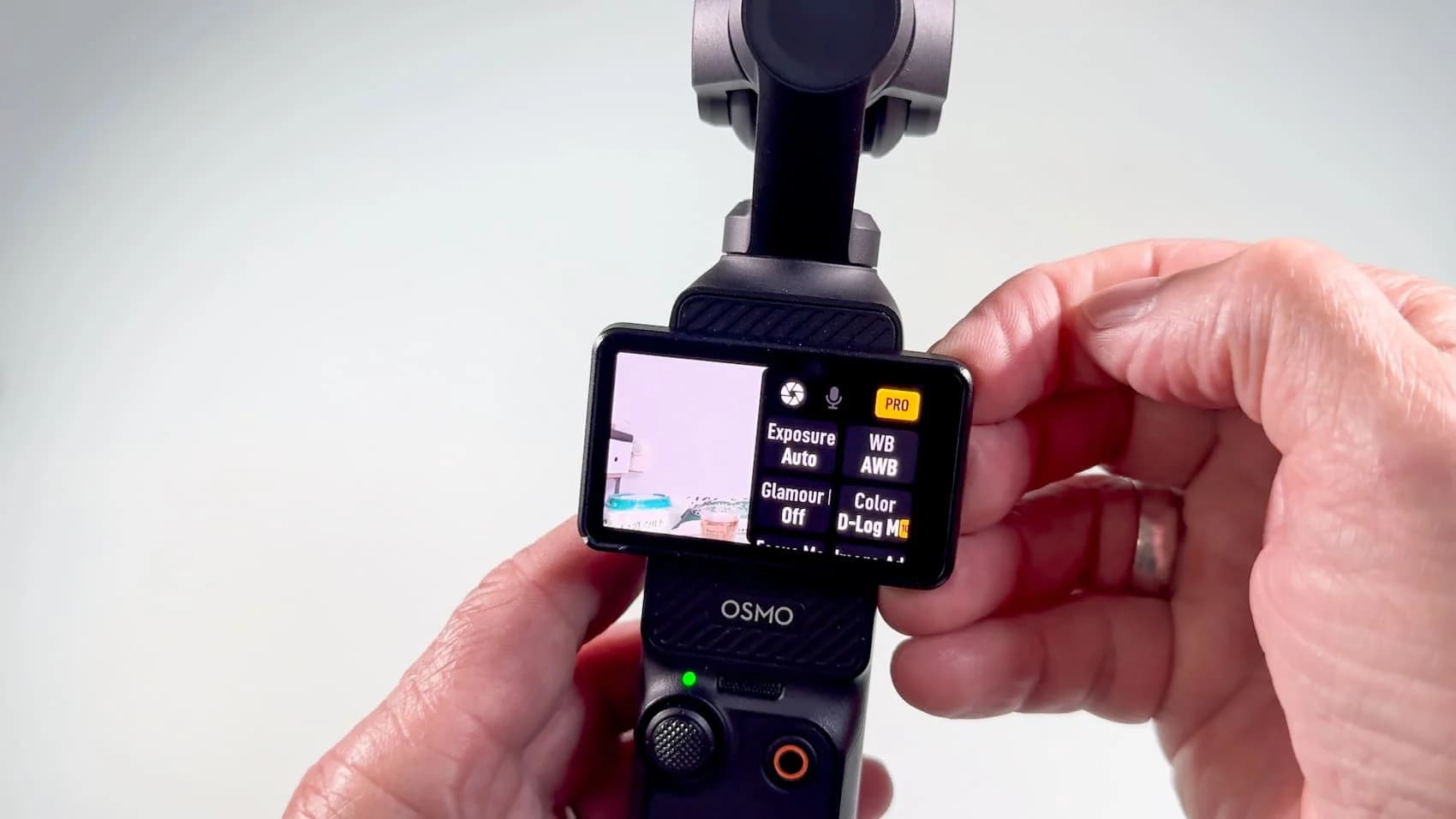
The rotating touchscreen flips to face the creator for selfie-style vlogging and provides a live framing reference. When the screen rotates, face tracking activates automatically, and the control interface lets you switch modes, adjust zoom, and change settings without interrupting a take.
DJI OsmoAudio connects directly to up to two DJI Mic 2 or Mic Mini transmitters without a receiver, keeping the audio chain clean and reducing gear count for run-and-gun creators.
Why This Price Point Matters
The Osmo Pocket 3 has held the number-two rank in Amazon's camcorder category since launch, maintaining a 4.5-star average across more than 3,300 reviews. That consistency reflects a product that delivers on its promise across a wide user base — from beginners to professionals.
Image credit: Amazon
At $499, the Pocket 3 was the premium choice for creators who knew what they needed. At $378, it's the obvious choice for anyone who shoots video regularly or wants to start. At this price, no competing pocket gimbal camera combines a 1-inch sensor, 4K 120fps, and mechanical stabilization in the same body.
You can spend more and get the Pocket 4. You can spend less and get a phone gimbal or an action camera. But at $378, the Pocket 3 occupies a category of its own.
DroneXL's Take
The best time to buy the Osmo Pocket 3 was when it launched and you knew you needed it. The second best time is now.
The Pocket 4 represents the future, and that future made the Pocket 3 cheaper without making it worse. The camera still has the same gimbal, the same sensor, the same image output — everything that made it work for creators from day one. The only thing that changed is the price tag.
If this will be your first portable gimbal camera, you're entering the market with a genuine advantage. The Osmo Pocket 3 performs well even at night.
At $378, you're not buying last year's model because you can't afford the new one — you're buying a camera that still outperforms every competitor at this price. That's the difference between a product cycle and a genuine deal.
This is the kind of opportunity that turns a camera you've been considering into one you actually own. For creators, that's the only thing that matters.
Image credit: Amazon, DJI
原文來源: 查看原文
FAQ
Newsletter
Subscribe to our Low-Altitude Industry Newsletter
Daily curated news on low-altitude economy and drone industry, delivered to your inbox.
Reviewed and published by the LAETimes editorial desk ·


