Denmark Announces P-8A Poseidon Purchase and Joins NATO's MQ-4C Triton Joint Procurement Programme
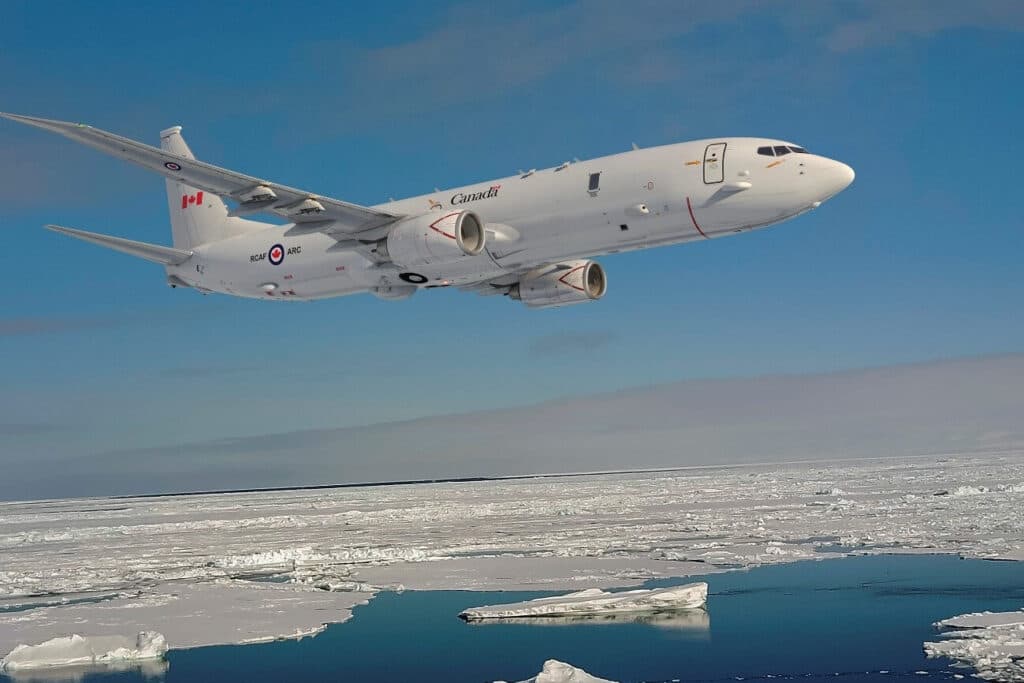
On 7 July 2026, Denmark announced plans to acquire two Boeing P-8A Poseidon maritime patrol aircraft to strengthen sovereignty enforcement and ISR capabilities in the Arctic and North Atlantic. On the same day, Denmark joined Finland, Germany, and Norway in a NATO-framework joint procurement of up to five Northrop Grumman MQ-4C Triton high-altitude long-endurance drones. The two platforms are designed to operate as complementary partners.
Highlights
- Denmark announced on 7 July 2026 the procurement of two Boeing P-8A Poseidon maritime patrol aircraft under its 2024–2033 Defence Agreement, with the U.S. sale package valued at up to USD 1.8 billion.
- Denmark joined Finland, Germany, and Norway at the NATO Ankara Summit to jointly procure up to five Northrop Grumman MQ-4C Triton HALE drones for NATO ISR operations.
- The MQ-4C Triton can fly continuously for 24 hours above 15 km altitude and will complement NATO's existing RQ-4D Phoenix AGS fleet based at Sigonella, Sicily.
- Norway, operating five P-8As at Evenes Air Station, is Denmark's primary candidate for joint basing and operational cooperation.
- A transatlantic consortium led by Northrop Grumman, with Airbus Defence and Space as a key partner, will deliver the Triton capability to the four NATO nations.
Denmark announced on 7 July 2026 that it plans to acquire two Boeing P-8A Poseidon maritime patrol aircraft, a decision aimed at strengthening the country's "surveillance and sovereignty enforcement" capabilities in the Arctic and North Atlantic.
On the same day, Denmark and three other NATO allies jointly announced the procurement of up to five Northrop Grumman MQ-4C Triton high-altitude long-endurance (HALE) unmanned reconnaissance aircraft at the NATO Summit Defence Industry Forum held in Ankara, Turkey.
Two Poseidons to Guard the Arctic and North Atlantic
Denmark's Ministry of Defence stated that, following the recommendation of the Chief of Defence, an initial decision had been made to procure two P-8A Poseidons.
The acquisition falls under Article 2 of the "Arctic and North Atlantic" sub-agreement within Denmark's 2024–2033 Defence Agreement, which requires Denmark to work with NATO allies to establish a maritime patrol aircraft operational capability.
Danish Defence Minister Jeppe Bruus said: "With maritime patrol aircraft, Denmark's ability to exercise sovereignty and conduct surveillance in the region will be significantly enhanced." He added that the procurement sends "a clear signal that we take our shared responsibilities within NATO seriously."
Chief of Defence Admiral Michael Wiggers Hyldgaard stated that Denmark must be capable of defending every corner of the Kingdom, including the Arctic and North Atlantic, and underscored Denmark's obligation to meet NATO's anti-submarine warfare (ASW) capability targets.
The Danish Defence Command has begun exploring cooperation arrangements with NATO allies, potentially including the establishment of a joint unit at a shared air base, covering procurement, operations, maintenance, and training. Norway, which operates five P-8As at Evenes Air Station, is regarded as the most natural partner.
The decision comes against the backdrop of the U.S. State Department having approved a possible Foreign Military Sale to Denmark on 29 December 2025, covering up to three P-8A Poseidons with an estimated package value of USD 1.8 billion.
The P-8A is a militarised derivative of the Boeing 737-800, equipped with anti-submarine and anti-surface warfare systems and capable of carrying torpedoes, mines, depth charges, and anti-ship missiles. Current operators include the U.S. Navy, the United Kingdom, Norway, Australia, and Germany.
Denmark Simultaneously Joins NATO's Triton Procurement
Denmark, Finland, Germany, and Norway jointly announced at the NATO Summit Defence Industry Forum in Ankara the procurement of up to five MQ-4C Triton HALE unmanned aircraft.
The drones will reinforce NATO's own intelligence, surveillance, and reconnaissance (ISR) forces and complement the Alliance's existing Alliance Ground Surveillance (AGS) fleet — namely the RQ-4D Phoenix unmanned aircraft currently operating from Naval Air Station Sigonella in Sicily, Italy.
The Triton is designed specifically for maritime surveillance and can operate continuously for 24 hours at altitudes exceeding 15 kilometres. NATO stated that the aircraft's long-range sensors will improve the Alliance's early threat detection capabilities, protect sea lines of communication, and support missions in challenging environments including the Arctic and High North.
For Denmark, joining the Triton programme complements the P-8A acquisition, as the two platforms are inherently designed to operate as paired assets. The U.S. Navy employs a mixed unmanned/Poseidon fleet within its Maritime Patrol and Reconnaissance Force, and Australia follows the same model — having received its first Triton in 2024.
A transatlantic industrial consortium is being assembled to deliver the capability. Northrop Grumman will build the aircraft, while Airbus Defence and Space and other European companies will provide ground facilities, data management services, command and control, infrastructure, and mission support.
Both procurement announcements coincide with NATO's expected confirmation at the Ankara Summit on 7–8 July 2026 of Saab's GlobalEye as the replacement for the Alliance's current fleet of E-3A Sentry airborne warning and control system (AWACS) aircraft.
原文來源: 查看原文
FAQ
Reviewed and published by the LAETimes editorial desk ·


