China's Large Tiltrotor Drone R6000 Enters Full Free-Flight Testing Phase
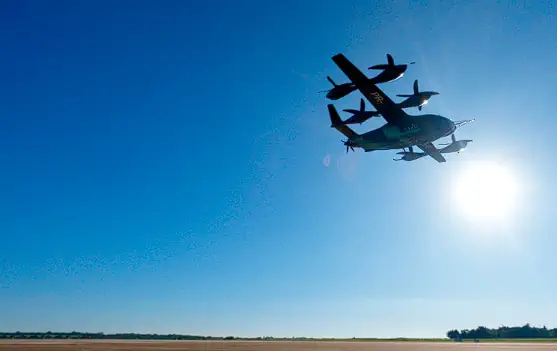
Newly leaked footage shows China's R6000 unmanned tiltrotor aircraft conducting its first free flights, including vertical flight, pedal turns, and sustained forward flight with rotors fully converted. Developed by United Aircraft, the R6000 bears a strong resemblance to the U.S. Bell MV-75A and represents a significant milestone for China's military and commercial vertical-lift ambitions.
Highlights
- China's R6000 unmanned tiltrotor, developed by United Aircraft, has completed tethered hover tests and entered free-flight testing, demonstrating vertical flight, pedal turns, and sustained forward flight.
- The R6000 is one of the world's largest unmanned tiltrotor designs and uses a fixed-nacelle/articulating-proprotor layout similar to the U.S. Bell MV-75A Cheyenne II.
- The first complete R6000 prototype appeared at United Aircraft's Wuhu, Anhui facility in October 2024; the design was publicly unveiled at the 2024 Singapore Airshow.
- The R6000 is strategically significant for the PLA, enabling resupply of South China Sea island outposts and operations aboard the Type 076 amphibious assault ship without reliance on prepared runways.
- Beyond logistics, the R6000's payload capacity supports potential ISR, electronic warfare, communications relay, and precision strike configurations, paralleling multi-mission tiltrotor concepts in the U.S.
Newly leaked footage has provided the first images of China's R6000 unmanned tiltrotor aircraft conducting free flight, marking a major leap beyond the tethered hover tests seen in earlier videos. The design has drawn considerable attention for its similarities to the U.S. Bell MV-75A "Cheyenne II," the second-generation manned tiltrotor under development for the U.S. Army. Viewed in a broader context, the R6000's development carries significant implications for both the People's Liberation Army (PLA) and civilian markets.
First Free-Flight Footage Emerges
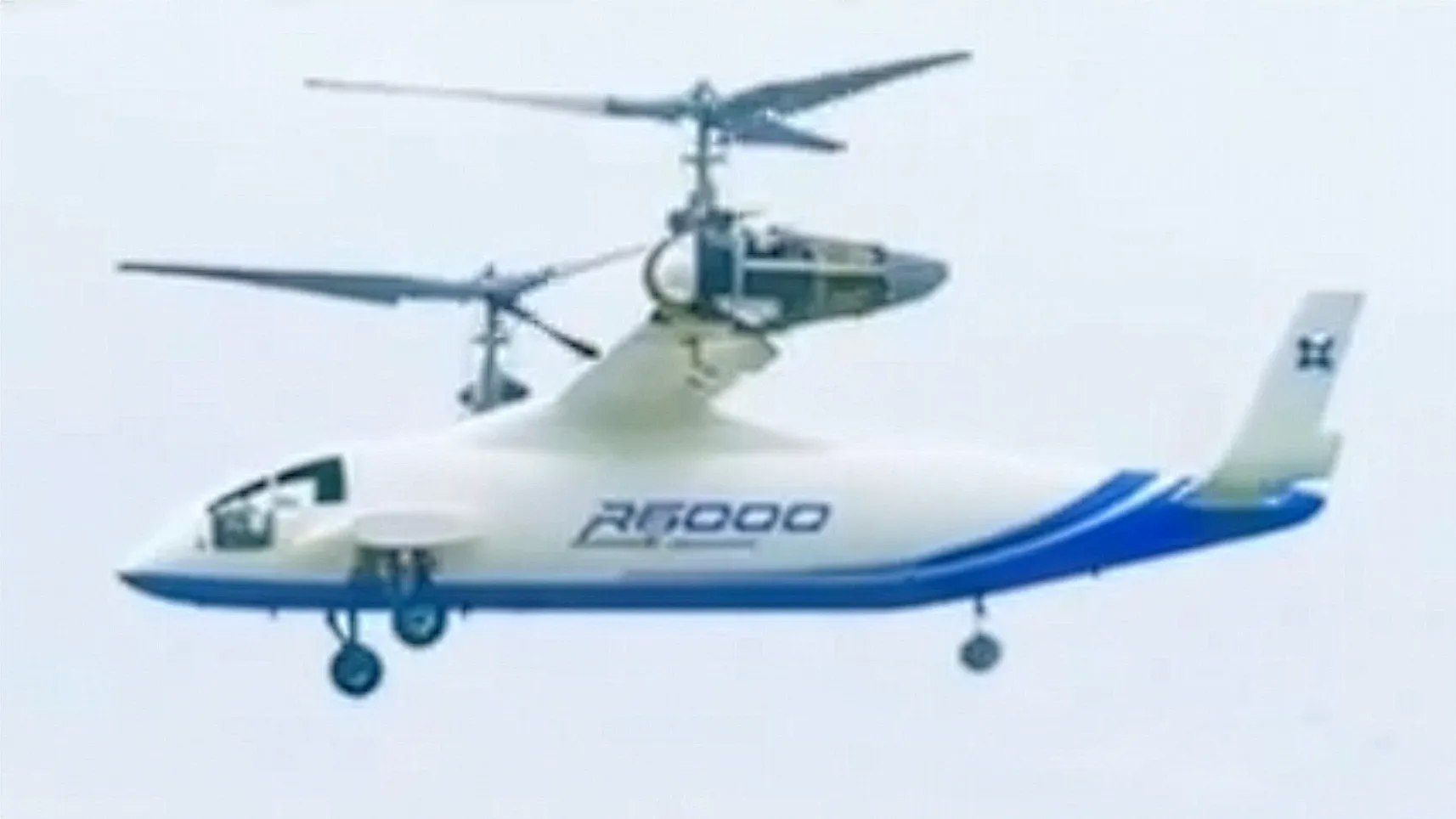
The video, which first appeared on Chinese social media, shows the large unmanned aircraft performing vertical flight, pedal turns (rotating about the vertical axis while in hover), and sustained forward flight with both proprotors fully tilted. Previous footage had been limited to tethered evaluation tests demonstrating only basic hover capability. As flight testing continues to advance, further insight into the aircraft's performance envelope is expected.
As in earlier images, the engines remain uncowled in the new footage, with streamlined fairings not yet installed. Like the MV-75, the R6000 uses a fixed-nacelle design with articulating proprotors, distinguishing it from the first-generation V-22 Osprey's whole-nacelle pitch approach.
Imagery of the R6000 conducting tethered hover tests began circulating last November, and was reported on at that time.
Although no official statements have been released regarding the current scope of flight testing, the ability to sustain untethered flight is a critical milestone for any tiltrotor program, given the inherent aerodynamic and flight control complexity involved — as the V-22's long and difficult development record amply demonstrates.
Development Background
In October 2024, a photograph revealed that the first complete R6000 prototype had appeared at United Aircraft's production facility in Wuhu, Anhui Province. United Aircraft formally unveiled the design at the 2024 Singapore Airshow; the aircraft is also referred to as the UR6000 or "Steel Shadow" (鋼影). United Aircraft has previously displayed both manned and unmanned variants of the R6000.
Developed by Chinese company United Aircraft, the R6000 is one of the largest unmanned tiltrotor designs currently under development anywhere in the world. It combines helicopter-like vertical take-off and landing (VTOL) capability with the speed and range advantages of fixed-wing aircraft. Officially stated mission profiles include at least logistics, disaster relief, offshore support, and other operations in areas without runways.
PLA Strategic Potential
As previously analyzed, a manned or unmanned tiltrotor of the R6000's class could fulfill a wide range of military roles for the PLA.
The aircraft would be particularly valuable for sustaining PLA garrisons on South China Sea island outposts, as well as other isolated facilities across the Pacific and in China's remote border regions — areas where conventional airfield infrastructure is extremely limited.
Such aircraft could also support overseas deployments and regional contingency operations, including potential operations involving Taiwan, moving personnel, supplies, and equipment between dispersed locations without reliance on prepared runways.
Of particular note is the R6000's suitability for operations aboard the Type 076 amphibious assault ship and other large PLAN amphibious vessels, which would significantly extend their operational reach across logistics, reconnaissance, and other mission sets.
Multi-Mission Platform Potential
Beyond logistics, a mature R6000 platform has clear multi-mission potential. Its payload capacity could accommodate intelligence, surveillance, and reconnaissance (ISR) equipment, electronic warfare payloads, communications relay systems, or even precision strike weapons. It is worth noting that special operations and gunship variants of the MV-75 are already in development, and concepts for maritime control roles have also been publicly demonstrated. China will very likely explore analogous development paths for its own tiltrotor.
In this light, the R6000 also invites comparison with Bell's V-247 Vigilant, which was originally designed to meet the U.S. Marine Corps' MUX (Multi-Utility/Tactical UAS) requirement and later marketed to the U.S. Navy. Bell has also showcased concepts of the V-247 operating alongside the manned V-280 Valor tiltrotor — the platform upon which the U.S. Army's MV-75 is based.
China's Unmanned Aviation Landscape
China has invested heavily in advanced unmanned aviation over the past decade. Programs span small tactical drones to high-altitude reconnaissance platforms and increasingly sophisticated combat unmanned aircraft. The R6000 fits squarely within China's broader strategy to develop unmanned transport aircraft of all types, including large autonomous logistics aircraft capable of operating in austere environments.
In the vertical-lift domain, China is also actively pursuing manned tiltrotor development. Earlier this month, new footage emerged showing what is believed to be China's first manned tiltrotor conducting flight trials; that aircraft made its public debut in August of last year.
Although the R6000 has been primarily marketed for civilian applications, its military relevance is evident. Large autonomous tiltrotors can rapidly resupply dispersed forces, support remote operations, and deliver cargo to ships and expeditionary bases without the need for conventional runways. For a PLA bearing major near-seas responsibilities and fielding a growing amphibious fleet, the potential of tiltrotor technology is substantial.
The R6000 warrants continued close attention — both as an indicator of China's increasingly ambitious military vertical-lift ambitions, and as a symbol of its diversifying, ever-expanding unmanned systems portfolio.
原文來源: 查看原文
FAQ
Reviewed and published by the LAETimes editorial desk ·