Hawaii Startup's Volcanic Rock Composite Drone Undergoes Live Testing at RIMPAC 2024
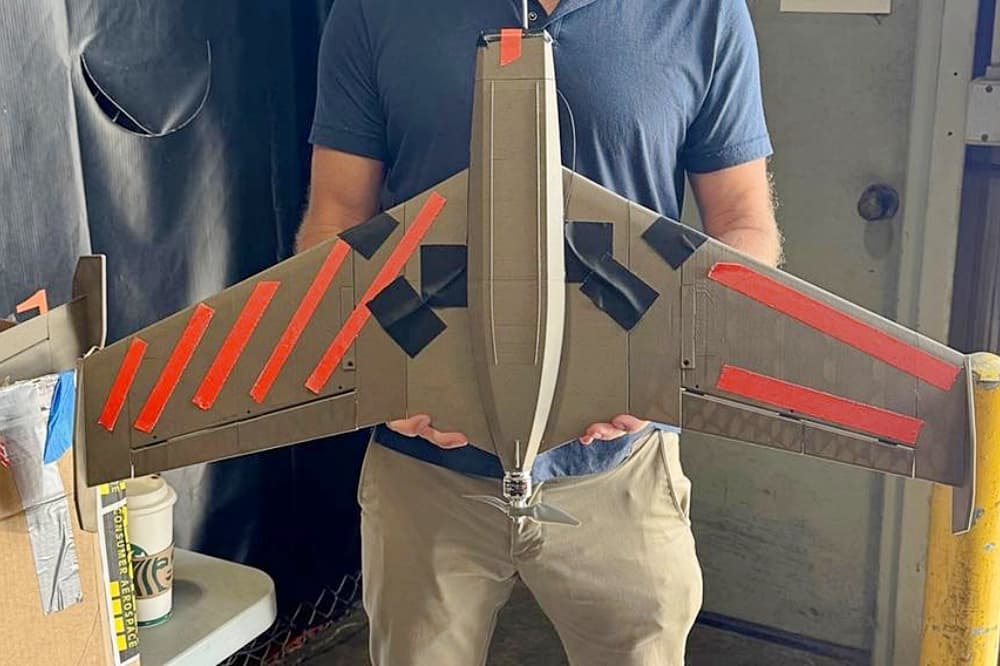
Maui-based startup Voltage Vessels has developed a patented composite material called Eclipse X9, combining basalt fiber derived from volcanic rock with PETG thermoplastic. The resulting material reportedly surpasses carbon fiber in strength and is currently being tested in 3D-printed drones during the 2024 Rim of the Pacific (RIMPAC) military exercises, highlighting its potential for next-generation military drone applications.
Highlights
- Maui-based startup Voltage Vessels developed Eclipse X9, a patented basalt-fiber-and-PETG composite claimed to exceed carbon fiber in tensile strength.
- 3D-printed drones built with Eclipse X9 are undergoing live operational testing at RIMPAC 2024, the world's largest multinational maritime military exercise.
- Basalt fiber offers high tensile strength, heat resistance, and corrosion resistance, and has long been considered a potential carbon fiber alternative.
- Combining basalt fiber with PETG thermoplastic makes Eclipse X9 compatible with 3D printing, reducing drone airframe manufacturing complexity and cost.
- Full technical specifications and RIMPAC test results for Eclipse X9 have not yet been publicly released; the industry is awaiting official findings.
Volcanic Rock Fiber Drone Debuts at RIMPAC Military Exercises
A hyper-durable composite material developed by a Maui, Hawaii-based startup is undergoing live battlefield testing in the form of 3D-printed drones at the Rim of the Pacific (RIMPAC) military exercises.
Eclipse X9: A Volcanic Composite That Outperforms Carbon Fiber
The startup, Voltage Vessels, has developed a proprietary composite material branded Eclipse X9. The material combines fiber derived from basalt—a volcanic rock abundant in the Hawaiian Islands—with PETG, a thermoplastic polyester, producing a composite that the company claims exceeds traditional carbon fiber in strength.
Basalt fiber has long been regarded as a promising alternative to carbon fiber due to its excellent tensile strength, high-temperature resistance, and corrosion resistance. By combining it with PETG thermoplastic, Voltage Vessels has not only enhanced overall structural integrity but also made the material well-suited for 3D printing processes, significantly reducing the complexity and cost of manufacturing drone airframes.
Live Field Testing: Proving Combat Reliability at RIMPAC
RIMPAC is the world's largest multinational maritime military exercise, held biennially in Hawaii with participation from dozens of nations. During the current iteration of the exercises, 3D-printed drones manufactured using Eclipse X9 have entered an active testing phase aimed at validating the new material's durability and reliability under real-world operational conditions.
For military applications, the strength-to-weight ratio of drone airframe materials and their stability in harsh environments are critical performance factors. A successful showing at RIMPAC could provide compelling evidence for a broader shift in military drone materials toward volcanic basalt-based composites.
Local Innovation: Turning Hawaii's Volcanic Resources into High-Tech Solutions
Voltage Vessels' development direction exemplifies an innovative approach to transforming locally abundant natural resources into high-technology applications. The Hawaiian archipelago is rich in basalt due to its volcanic origins, and converting this readily available volcanic rock into high-performance industrial fiber represents both a materials science breakthrough and a new avenue for local industry development.
Further technical details on the Eclipse X9 material and the results of its RIMPAC testing have yet to be publicly released. The industry is closely watching to see how this "volcanic rock drone" ultimately performs in one of the world's most demanding military exercise environments.
原文來源: 查看原文
FAQ
Reviewed and published by the LAETimes editorial desk ·


