Robin Radar Systems Extends Anti-Drone Radar to Maritime Domain, Protecting Critical Shipping Lanes
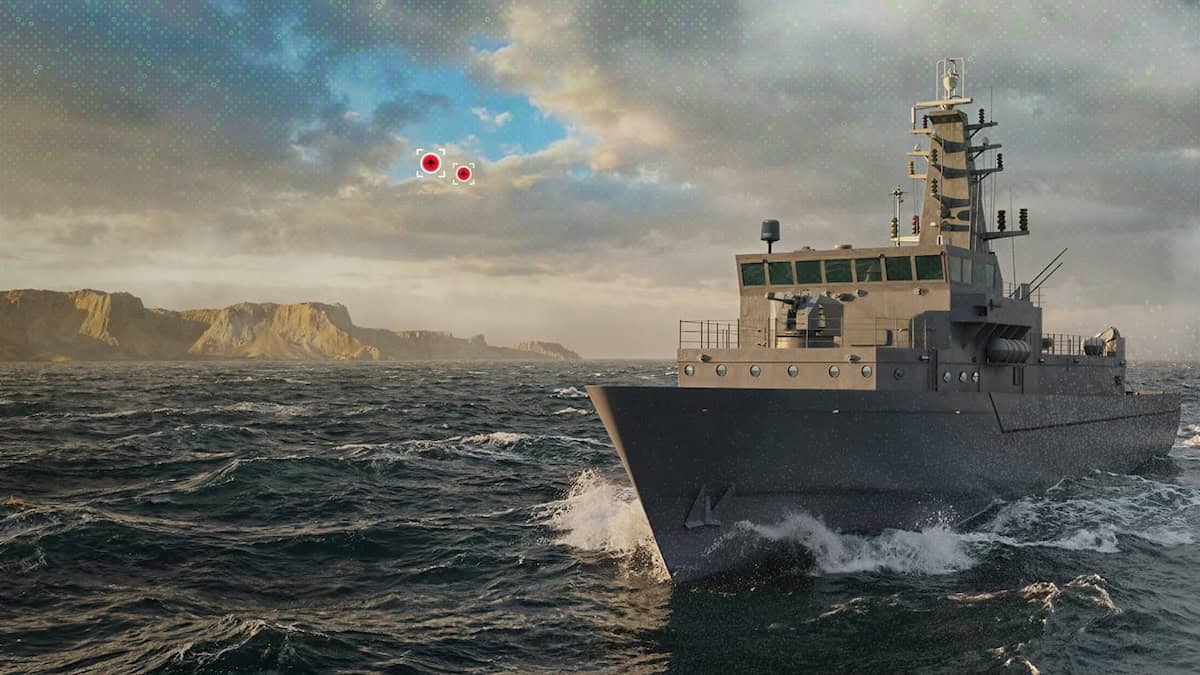
Dutch radar technology firm Robin Radar Systems has expanded its mobile counter-drone system, IRIS OTM, into the maritime domain. The upgraded system can operate on vessels travelling at up to 54 knots, track small aerial threats moving at speeds up to 100 m/s, and is deployable to existing units via a software update — requiring no hardware replacement.
Highlights
- Robin Radar Systems has expanded its IRIS OTM mobile counter-drone system to the maritime domain, targeting shipping lanes, ports, and offshore assets.
- The upgraded system operates on vessels travelling at up to 54 knots and can track aerial threats moving at speeds up to 100 m/s.
- Hardware features salt and corrosion resistance, vibration tolerance, and EMC compliance for extreme maritime environments.
- The maritime capability is delivered via a software update to existing IRIS OTM units worldwide, requiring no hardware replacement.
- The upgrade incorporates operational lessons from live-fire exercises and is designed to address the vulnerability exposed by drone threats in waterways such as the Strait of Hormuz.
Robin Radar Systems Extends Anti-Drone Radar to Maritime Domain, Protecting Critical Shipping Lanes
Dutch radar technology company Robin Radar Systems has announced the expansion of its mobile counter-drone capability into the maritime domain, offering protection for shipping lanes, ports, and offshore assets against increasingly sophisticated aerial threats.
Geopolitical Tensions Expose Maritime Air Defence Gap
Heightened geopolitical tensions in critical waterways such as the Strait of Hormuz and the Persian Gulf have laid bare the vulnerability of international trade to low-altitude unmanned systems and fixed-wing drones such as the Shahed. In response, Robin Radar Systems has upgraded its land-based tracking system to perform in complex maritime environments, delivering early-warning capability for dynamic naval operations and offshore infrastructure.
"We are seeing globally that drone threats no longer stay on the battlefield or target land-based infrastructure," said Siete Hamminga, CEO of Robin Radar Systems. "Shipping lanes, ports, harbours, and offshore assets are now confronted with low-cost aerial threats that can disrupt trade, damage infrastructure, and endanger civilian lives. The Strait of Hormuz has once again demonstrated how vulnerable critical maritime corridors are during periods of instability. IRIS OTM at Sea was designed specifically to address this challenge — providing a rapidly deployable, software-defined capability that transitions seamlessly between land and sea."
Technical Specifications: Sea Clutter Rejection and High-Speed Low-Altitude Threat Tracking
Originally engineered for land vehicles, the IRIS OTM system can operate on mobile platforms moving at speeds exceeding 100 km/h. The latest upgrade incorporates advanced software enhancements to suppress sea clutter, intense surface reflections, and vessel motion, enabling the radar to reliably detect, track, and classify targets on vessels travelling at up to 54 knots.
On the hardware side, the system features salt-resistant and corrosion-resistant engineering, vibration tolerance, and an electromagnetic compatibility (EMC)-compliant architecture designed to withstand the rigours of extreme maritime environments.
Unlike conventional naval radars optimised for large vessels and aircraft, IRIS OTM at Sea is specifically designed to isolate small aerial threats operating close to the water surface, with a tracking envelope that spans from hovering targets to high-speed systems travelling at up to 100 m/s. The upgrade incorporates operational lessons drawn from live-fire exercise environments — precisely the scenarios in which agile, mobile sensor systems are called upon to counter low-altitude threats.
Software Update Deployment: Existing Users Require No Hardware Replacement
"Modern security requirements demand speed and flexibility," said Vivien Croes, CTO of Robin Radar Systems. "Operators need systems that can be rapidly deployed, easily integrated, and adapted as threats evolve. What makes this update significant is that we are extending a combat-proven radar into one of the world's most demanding operational environments. The future of counter-drone systems is not static infrastructure — it is agile, mobile sensor systems that can protect people, critical infrastructure, and global commerce wherever a threat emerges."
The maritime capability will be rolled out to existing units worldwide via a software update, enabling current operators to enhance their defensive capabilities without replacing hardware — significantly reducing both upgrade costs and operational complexity.
原文來源: 查看原文
FAQ
Reviewed and published by the LAETimes editorial desk ·