H55 Delivers Certification-Grade Battery Modules for RTX Hybrid-Electric Flight Demonstrator
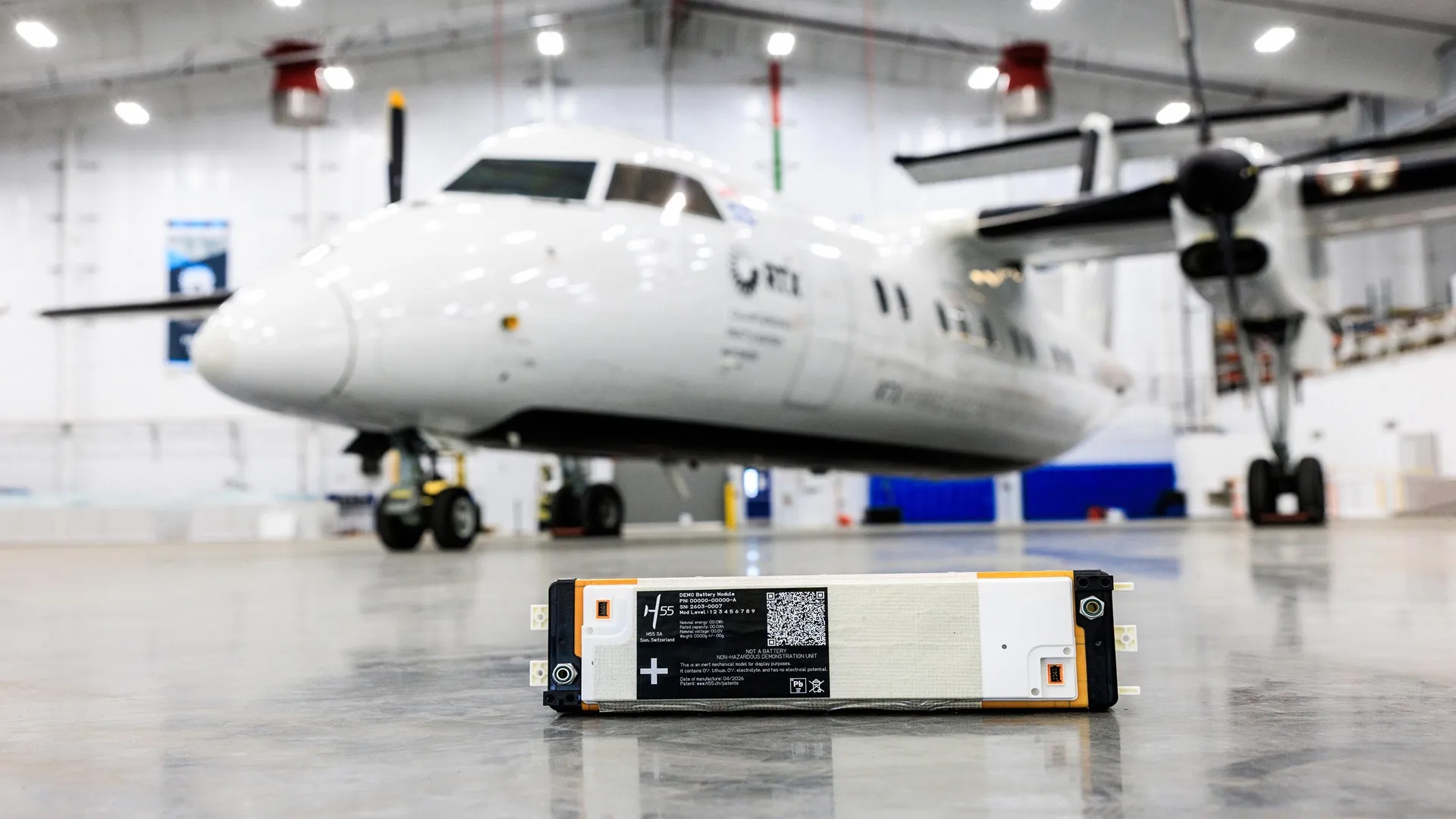
Swiss battery systems firm H55 has delivered certification-grade propulsion battery modules to Pratt & Whitney Canada for the RTX hybrid-electric flight demonstrator programme. The milestone marks a significant transition from laboratory development to regulated flight testing, with H55's modules now integrated into an active aerospace test environment aimed at improving aircraft efficiency and reducing fuel consumption.
Highlights
- H55 has delivered certification-grade propulsion battery modules to Pratt & Whitney Canada for the RTX hybrid-electric flight demonstrator programme.
- H55's battery systems have logged over 2,000 flight hours across multiple electric aircraft programmes with zero battery-related incidents.
- The delivery marks the transition of RTX's hybrid-electric demonstrator from development into active integration and flight testing.
- H55 has completed regulatory-required propulsion battery certification testing, reinforcing its position in the electric aviation supply chain.
- The programme aims to validate hybrid-electric propulsion technologies that could reduce fuel consumption and carbon emissions in commercial aviation.
H55 Delivers Certification-Grade Battery Modules, Entering Flight Test Phase
Swiss battery systems manufacturer H55 has delivered certification-grade propulsion battery modules to Pratt & Whitney Canada for RTX's hybrid-electric flight demonstrator programme, marking a pivotal step as the project formally enters its integration and flight testing phase.
The delivery places H55's battery systems directly into an active aerospace test environment, where they will support hybrid-electric propulsion trials designed to improve aircraft efficiency and reduce fuel consumption. The development signals a further maturation of H55's technology, advancing from prototype development towards certification-level aerospace application.
Hybrid-electric aviation has now moved beyond the concept-study phase and into regulated testing and certification pathways. Airframers and engine manufacturers are increasingly reliant on suppliers capable of meeting stringent aviation safety standards while maintaining the production capacity required for real-world deployment.
H55's modules are designed precisely for this environment. The company focuses on certification-grade energy storage systems that can be integrated into aircraft propulsion architectures and redeployed across different platforms once regulatory approval is obtained.
From the Lab to the Flight Line
The latest delivery reflects a shift from development work to industrial deployment. According to both companies, the battery modules are now part of the flight demonstrator programme led by Pratt & Whitney Canada under RTX.
"H55's ability to deliver aviation-grade battery systems within a rigorous certification and production framework has played a critical role in demonstrating hybrid-electric technology in flight."
The system is intended to support ongoing integration and flight test activities, evaluating hybrid-electric propulsion technology under real operating conditions — including verifying performance, safety, and reliability in scenarios that simulate commercial aviation use cases.
H55 states that its battery architecture was designed to certification requirements from the outset. The company has accumulated more than 2,000 flight hours across multiple electric aircraft programmes without a single battery-related incident, building a safety record that underpins its current aerospace partnerships.
Certification Push in Full Swing
The delivery also underscores the growing importance of certification readiness in electric aviation. Unlike early-stage prototypes, systems intended for flight demonstrators must already satisfy regulatory requirements for safety design, testing, and operational reliability.
"This achievement lays a solid foundation for further development across hybrid-electric aviation, defence, drones, and next-generation aerospace platforms."
The company adds that its technology is designed to scale from certified design to repeatable, volume manufacturing — a critical requirement as airframers prepare for the commercial deployment of future hybrid-electric systems.
RTX's demonstrator programme is one of the aviation industry's broader efforts to validate hybrid-electric propulsion technologies that have the potential to reduce fuel use and carbon emissions. Battery systems remain one of the most critical components in this transition, given their impact on weight, safety, and performance.
H55's role in the programme places it among a select group of companies supplying certification-centric energy storage systems for aerospace test programmes. The company has also completed regulatory-required propulsion battery certification testing, which it says strengthens its position in the emerging electric aviation supply chain.
As hybrid-electric aviation moves closer to commercial application, suppliers capable of satisfying both regulatory requirements and performance demands are expected to play a central role in shaping next-generation aircraft platforms.
原文來源: 查看原文
FAQ
Newsletter
Subscribe to our Low-Altitude Industry Newsletter
Daily curated news on low-altitude economy and drone industry, delivered to your inbox.
Reviewed and published by the LAETimes editorial desk ·