Russia's S-500, S-400, S-300, Pantsir, and Pechora Air Defense Systems Fail Against Ukrainian Drone and Missile Saturation Attacks
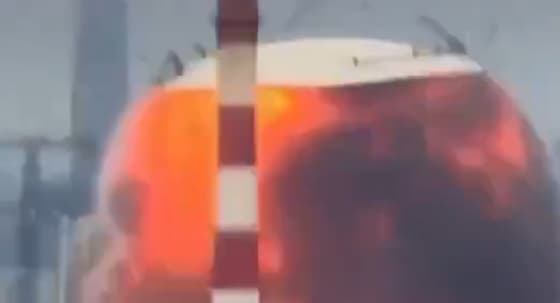
During a large-scale Ukrainian drone strike on Moscow, the roof of a storage tank at the Kapotnya refinery was destroyed by a malfunctioning Russian S-400 interceptor missile rather than a direct drone hit. The incident highlights critical vulnerabilities in Russia's multilayered air defense network when faced with Ukraine's coordinated saturation tactics combining low-cost drones and cruise missiles.
Highlights
- A malfunctioning Russian S-400 interceptor missile—not a Ukrainian drone—caused the explosion that destroyed a storage tank roof at Moscow's Kapotnya refinery during a large-scale Ukrainian drone strike.
- Russia's S-400 interceptor missiles cost an estimated $1 million USD each, while Ukrainian one-way attack drones cost only tens of thousands of dollars, creating a severe cost asymmetry that favors Ukraine in an attrition conflict.
- Moscow's air defense network—the world's densest—includes the S-500, S-400, S-300, Pantsir-S1, and Pechora systems, yet all failed to intercept all inbound threats during Ukraine's saturation drone and cruise missile attacks.
- Ukraine's saturation tactics simultaneously launch multi-directional drone and missile formations that exceed the processing limits of Russian radar and command-and-control systems, rendering multilayered defenses ineffective.
- Defense analysts warn that no single air defense system can provide absolute protection against large-scale drone swarm saturation attacks, forcing a global reassessment of air defense investment strategies.
Russia's Air Defense Systems Fail Against Ukrainian Saturation Attacks
During a large-scale Ukrainian drone offensive targeting Moscow, a storage tank roof at the Kapotnya refinery on the city's outskirts was severely damaged in an explosion. Subsequent analysis of video evidence revealed that the destruction was caused not by a direct Ukrainian drone strike, but by a Russian S-400 interceptor missile falling to earth after its guidance system failed.
Friendly-Fire Incident Exposes Fatal System Flaw
The friendly-fire incident has drawn intense scrutiny from international defense observers. Russia's S-400 "Triumf" system—long marketed as one of the world's most advanced surface-to-air missile systems—has now demonstrated a critical real-world weakness: guidance failures in combat. When an interceptor loses target-tracking capability, its kinetic energy and warhead become a significant threat to friendly ground infrastructure.
Multilayered Defense Network Collectively Overwhelmed
Russia has deployed what is considered the world's densest air defense network around Moscow, encompassing:
- S-500 "Prometey": Russia's latest-generation ballistic missile defense system
- S-400 "Triumf": The primary long-range surface-to-air missile system
- S-300 series: Multiple variants of medium-to-long-range interceptors
- Pantsir-S1: Short-range air defense and counter-drone system
- Pechora (SA-3): Legacy surface-to-air missile systems
Nevertheless, Ukraine's saturation tactics—deploying large numbers of low-cost drones as the primary strike element, supported by cruise missiles for coordinated penetration—overwhelmed the layered network's ability to intercept all inbound threats.
Saturation Tactics Prove Effective
Ukraine's recent deep-strike saturation model operates on a logic of quantity over quality:
- Depleting air defense inventories: Forcing Russia to expend high-value interceptors against cheap drones, creating an asymmetric cost drain
- Saturating engagement capacity: Launching simultaneous multi-directional attacks that exceed the processing limits of radar networks and command-and-control systems
- Multi-layer penetration: Mixed formations of drones and missiles that complicate threat prioritization
Defense Analyst Assessment
Multiple defense analysts note that the Kapotnya incident exposes a structural dilemma facing modern air defense: even technically sophisticated and expensive systems see their interception efficiency sharply degraded when confronted with high-volume, low-cost drone swarms. Each S-400 interceptor is estimated to cost in excess of $1 million USD, while some of Ukraine's one-way attack drones cost only tens of thousands of dollars. This vast cost asymmetry places Russia at a long-term disadvantage in an attrition-based conflict.
Battlefield Implications
The Kapotnya incident is not an isolated case—it reflects the broader strategic impact of drone tactics in modern asymmetric warfare. The widespread deployment of low-cost drone swarms is fundamentally reshaping the conceptual framework of traditional air defense, compelling militaries worldwide to reassess existing air defense investment strategies and interception priorities.
This conflict continues to validate a key lesson: no single air defense system can provide absolute protection against drone saturation attacks. While multilayered, high-density integrated air defense networks can reduce losses, they remain unable to fully neutralize large-scale coordinated penetration operations.
原文來源: 查看原文
FAQ
Reviewed and published by the LAETimes editorial desk ·


