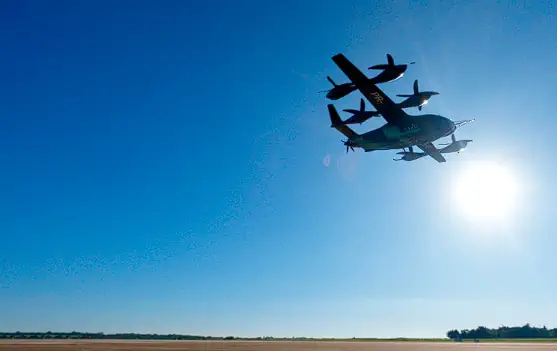
Video: Sarla Aviation Completes Sylla Flight Test Program — India's Largest and Heaviest Electric eVTOL Demonstrator
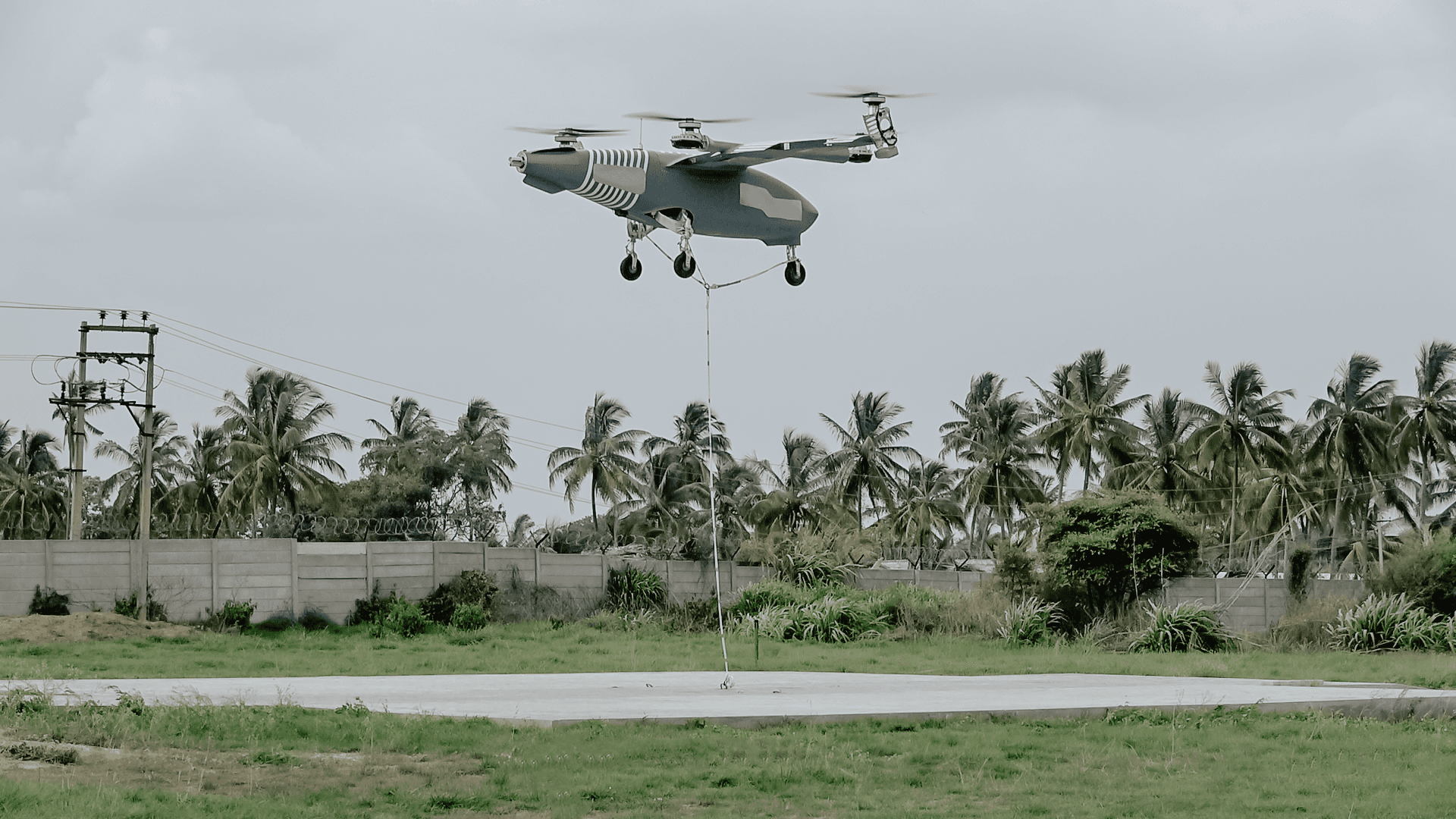
Indian startup Sarla Aviation has announced the successful completion of the flight test program for its half-scale eVTOL technology demonstrator, Sylla 1.0. Over six months, the aircraft completed more than 500 tests and 18 hours of flight time. Weighing 700 kg with a 7.5-metre wingspan, it is the heaviest electric aircraft ever to fly in India. The company has now commenced development of Sylla 2.0, targeting the next milestone: a controlled transition from vertical to wing-borne flight.
Highlights
- Sarla Aviation completed the Sylla 1.0 flight test program after six months, more than 500 tests, and over 18 hours of flight time.
- At 700 kg with a 7.5-metre wingspan, Sylla 1.0 is the heaviest electric aircraft ever to fly in India.
- The entire milestone — including a full-scale model and the flying demonstrator — was achieved for under USD 13 million in under 12 months from design to flight.
- The program set four Indian firsts: the first 700 kg-class eVTOL flown, first 400V electric powertrain flown, first distributed propulsion wing system demonstrated, and first full-stack airworthiness ground testing completed.
- Sarla Aviation has commenced development of Sylla 2.0, targeting a controlled transition between vertical and wing-borne flight ahead of its planned 6+1-seat air taxi, Shunya.
Sarla Aviation Completes Sylla Flight Test Program — India's Largest and Heaviest Electric eVTOL Demonstrator
Indian aerospace startup Sarla Aviation has officially announced the successful completion of the flight test program for its half-scale eVTOL technology demonstrator, Sylla 1.0.
Over six months of field testing, Sylla accumulated more than 500 test runs and over 18 hours of flight testing. At 700 kg and with a 7.5-metre wingspan, the aircraft has become the heaviest electric aircraft ever to fly in India.
What Does This Test Program Signify?
Sylla 1.0 is a half-scale technology demonstrator designed to validate aircraft-level and system-level integration under real operational conditions.
Throughout the test program, Sarla successfully evaluated the aircraft's electric propulsion system, battery architecture, distributed propulsion system, flight control algorithms, and the interaction between the airframe and landing gear — validating the vehicle as a fully integrated aircraft.
With the integrated flight test program now concluded, Sylla 1.0 has achieved all engineering objectives set at the outset of its design. As the southern Indian monsoon season arrives, the program has moved into its next phase.
Armed with comprehensive flight data, Sarla will incorporate these learnings into the design of the next-generation demonstrator, with the goal of achieving a controlled transition from hover to sustained wing-borne flight.
A Series of Indian Firsts
The Sylla program has set multiple domestic firsts in the field of electric aviation:
- India's first 700 kg-class electric vertical take-off and landing (eVTOL) aircraft to be built and flown
- India's first 400-volt electric powertrain architecture to fly
- India's first demonstration of a distributed propulsion wing system
- India's first full-stack ground testing conducted in accordance with airworthiness regulations
Sarla Aviation Co-founder and CTO Rakesh Gaonkar commented on the milestone: "Sylla 1.0 was never just built to hover — it was built to answer engineering questions that simulation alone cannot. Flying Sylla was the moment a thousand simulations became real, validating our aircraft architecture under actual flight conditions. We achieved this in under a year, at a fraction of the cost of our global peers, with a team that has helped build some of the world's most advanced aircraft."
He added: "The combination of world-class engineering expertise and India's execution speed is our competitive advantage. Sylla gave us the data we were after, and those learnings are already shaping the next aircraft, leading us toward transitional flight and sustained wing-borne flight, and ultimately our 6+1-seat air taxi, Shunya."
Under 12 Months — From Design to Flight
Sylla 1.0 progressed from design to flight in under 12 months — a development pace that is exceptionally rare among global eVTOL programs. Equally notable is the cost: Sarla achieved this milestone for under USD 13 million, which includes a full-scale model unveiled at the Bharat Mobility Global Expo in New Delhi in 2025, as well as the now-flying half-scale demonstrator.
Approximately 30% of Sarla's engineering team comes from leading global eVTOL companies, including Lilium, Volocopter, and Wisk. This high concentration of advanced flight experience, combined with India's speed-focused engineering culture, has enabled the company to compress development timelines that typically take years into a matter of months.
What's Next
The successful completion of the Sylla 1.0 program marks the beginning of the next phase of flight testing for Sarla Aviation.
The company has begun development of Sylla 2.0 — an upgraded demonstrator that incorporates the engineering learnings from the existing program. While Sylla 1.0 focused on validating integrated aircraft systems and controlled hover, Sylla 2.0 will pursue a controlled transition between vertical and wing-borne flight — a critical technical milestone that must be achieved before developing a certifiable passenger-carrying eVTOL.
Sarla Aviation is headquartered in Bengaluru and takes its name from Sarla Thukral, India's first female pilot. The company's mission is to revolutionise intra- and inter-city transportation in India, making travel faster, cleaner, and more affordable — in alignment with India's national vision of Viksit Bharat 2047 (Developed India 2047).
Founded in 2023 by former Lilium members Rakesh Gaonkar and Adrian Schmidt, the company's flagship project is a six-seat electric air taxi designed to dramatically cut commute times in India's most congested cities — including Bengaluru, Mumbai, Delhi, and Pune. Sarla's investors include IndiGo Ventures, Accel, and Nikhil Kamath.
原文來源: 查看原文
FAQ
Reviewed and published by the LAETimes editorial desk ·