Saronic Announces $3 Billion 'Port Alpha' Shipyard in Texas, Targeting Ships Up to 850 Feet
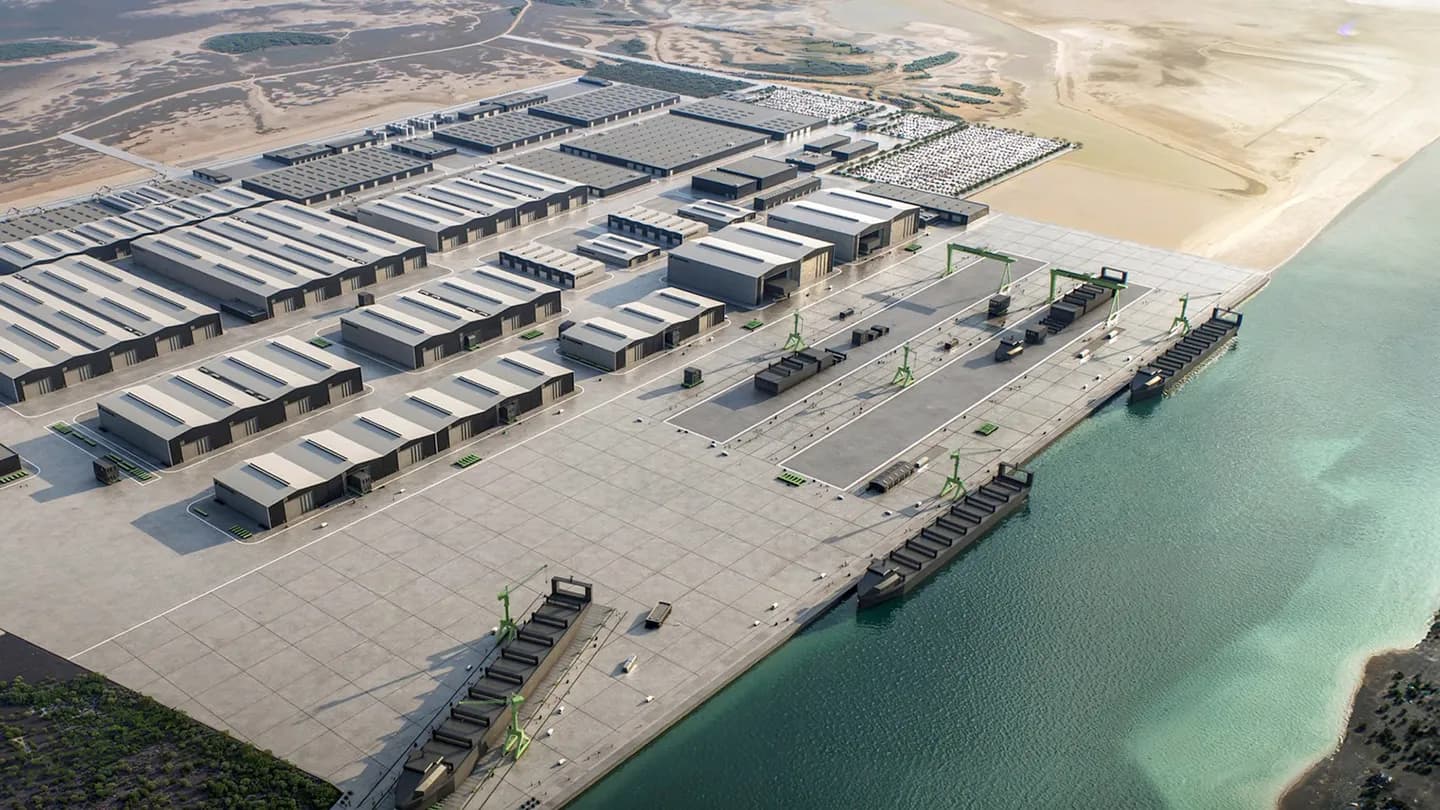
Autonomous surface vessel (USV) manufacturer Saronic has announced a $3 billion+ investment to build 'Port Alpha,' a massive new shipyard in Brownsville, Texas. The facility will initially span 835 acres and be capable of building manned and unmanned vessels up to 850 feet in length. Construction is slated to begin in 2026, with operations launching in 2028, potentially creating over 10,000 direct jobs and generating $264.5 billion in economic impact for Texas.
Highlights
- Saronic announced a $3 billion+ self-funded investment to build 'Port Alpha,' a greenfield shipyard in Brownsville, Texas, capable of producing vessels up to 850 feet in length.
- Port Alpha will initially span 835 acres with expansion potential to nearly 4,400 acres, and is targeted to become the largest shipyard in the Western Hemisphere.
- Construction is set to begin in 2026 and operations to launch in 2028, with projections of up to 10,000 direct jobs and $264.5 billion in economic impact for Texas.
- In December 2025, Saronic secured a $392 million U.S. Navy contract for USV production, and its Corsair USVs have already been used in combat and a historic maritime rescue mission.
- The announcement comes as the U.S. faces a critical shipbuilding gap versus China, with the Navy even exploring foreign-built warship options for the first time in 80 years.
Saronic Announces $3 Billion Investment to Build Massive 'Port Alpha' Shipyard in Texas
U.S. unmanned surface vessel (USV) manufacturer Saronic has announced plans to build a major new shipyard in Brownsville, Texas, capable of constructing a wide range of manned and unmanned vessels up to 850 feet in length. For a company whose largest current vessel measures just 180 feet, the move represents an extraordinarily ambitious strategic leap.
Strategic Timing Amid a U.S. Shipbuilding Crisis
The announcement comes as the United States continues to fall dramatically behind China in shipbuilding capacity, with existing domestic programs plagued by delays and cost overruns. Expanding American shipbuilding capability has become a key policy priority for the Trump administration.
Austin, Texas-based Saronic said it will self-fund more than $3 billion to build the facility, which it has named "Port Alpha." The site selection process took a full year and involved rigorous evaluation.
"Brownsville emerged after an exhaustive review of workforce resources, infrastructure readiness, land area, logistics, and expansion potential." — Saronic statement
Port Alpha: Facility Scale and Capabilities
Port Alpha will initially occupy 835 acres at the Port of Brownsville, with the potential to expand to nearly 4,400 acres. The facility will include a full shipyard and manufacturing complex capable of producing vessels up to 850 feet in length. If further expanded, the yard could accommodate construction of vessels exceeding 1,200 feet.
The site offers hundreds of acres of waterfront access, deep-water channel connectivity, multimodal logistics infrastructure, and ample long-term expansion capacity.
Ambition: 'Largest Shipyard in the Western Hemisphere'
Saronic co-founder and Chief Commercial Officer Rob Lehman told The War Zone (TWZ):
"Port Alpha is designed to become the largest shipyard in the Western Hemisphere. We saw an urgent demand for more shipbuilding capacity and are responding with a brand-new greenfield shipyard that can deliver the throughput the Navy, Coast Guard, and all maritime services desperately need."
Lehman noted that Port Alpha "will have the capability to produce all classes of vessels, including Panamax container ships, roll-on/roll-off (RoRo) vessels, and a wide range of commercial and military ship types."
Panamax vessels — the largest ships able to transit the Panama Canal — measure up to 294 meters in length and 32 meters in beam.
Lehman emphasized that Saronic is focused on "building a shipyard designed for multiple vessel types, operating at the speed and flexibility that technological advancement demands," adding that the company will invest its own private capital rather than burdening the government with open-ended R&D costs.
Comparison with the Existing Gulf Craft Facility
Lehman drew a direct comparison to the former Gulf Craft shipyard, which Saronic acquired last year: "Since acquiring it in April, we've invested $300 million in expanding that facility, bringing hundreds — and soon thousands — of jobs to the Gulf Coast. Port Alpha will replicate that model at a far larger scale. As a greenfield facility, we have no legacy constraints in designing the shipyard of the future."
Projected Economic Impact
Saronic projects the development will generate more than $160 billion in regional economic benefit for Cameron County, and more than $264.5 billion in total economic contribution to the state of Texas, while creating up to 10,000 direct jobs — making it one of the largest economic development projects in modern Texas history.
Construction is expected to begin in 2026, with the shipyard entering full operations in 2028.
Saronic's Current USV Fleet
Saronic currently operates three USV platforms:
- Corsair: 24 feet; payload capacity up to 1,000 lbs; range exceeding 1,000 nautical miles. Already employed by U.S. forces as a one-way kamikaze attack drone.
- Mirage: 52 feet; range of 2,500 nautical miles; payload capacity of 3,500 lbs.
- Marauder: 180 feet; range of 5,200 nautical miles; capable of carrying up to 150 metric tons of cargo, supporting modular payloads including four 40-foot containers or eight 20-foot containers. The U.S. Navy is evaluating the Marauder for its latest Medium Unmanned Surface Vessel (MUSV) prototype program.
Saronic's Recent Milestones
Saronic has attracted significant attention in recent months:
- In December 2025, the company was awarded a $392 million U.S. Navy contract for production of the Corsair and other USV models.
- Three Corsair USVs were used in an attack on "a submarine and ship repair facility inside Iran," marking the first recorded use of unmanned maritime vessels in a kamikaze strike role by U.S. forces.
- A Saronic Corsair USV successfully rescued the crew of a U.S. Army AH-64 Apache helicopter that crashed in the Gulf of Oman — the first recorded personnel rescue mission conducted by an unmanned surface vessel.
The Structural Crisis in American Shipbuilding
Port Alpha, if delivered on schedule, would represent a significant boost for the U.S. Navy and the broader American shipbuilding sector, which has long been burdened by aging fleets, deteriorating shipyard infrastructure, severe maintenance backlogs, and an inability to rapidly replace vessels lost in wartime.
Notably, the U.S. Navy has already issued formal Requests for Information (RFIs) to South Korea's major shipbuilders to assess their capacity to construct American destroyers and fleet oilers — a move that could end an 80-year ban on foreign-built warships and is a stark indicator of just how critical the U.S. shipbuilding shortfall has become.
The trajectory of Port Alpha will be closely watched by defense and maritime industry observers in the months ahead.
Source: The War Zone (TWZ); Contact: howard@twz.com
原文來源: 查看原文
FAQ
Reviewed and published by the LAETimes editorial desk ·