Saronic and Castelion Partner to Demonstrate First-Ever Hypersonic Launch from an Unmanned Surface Vessel
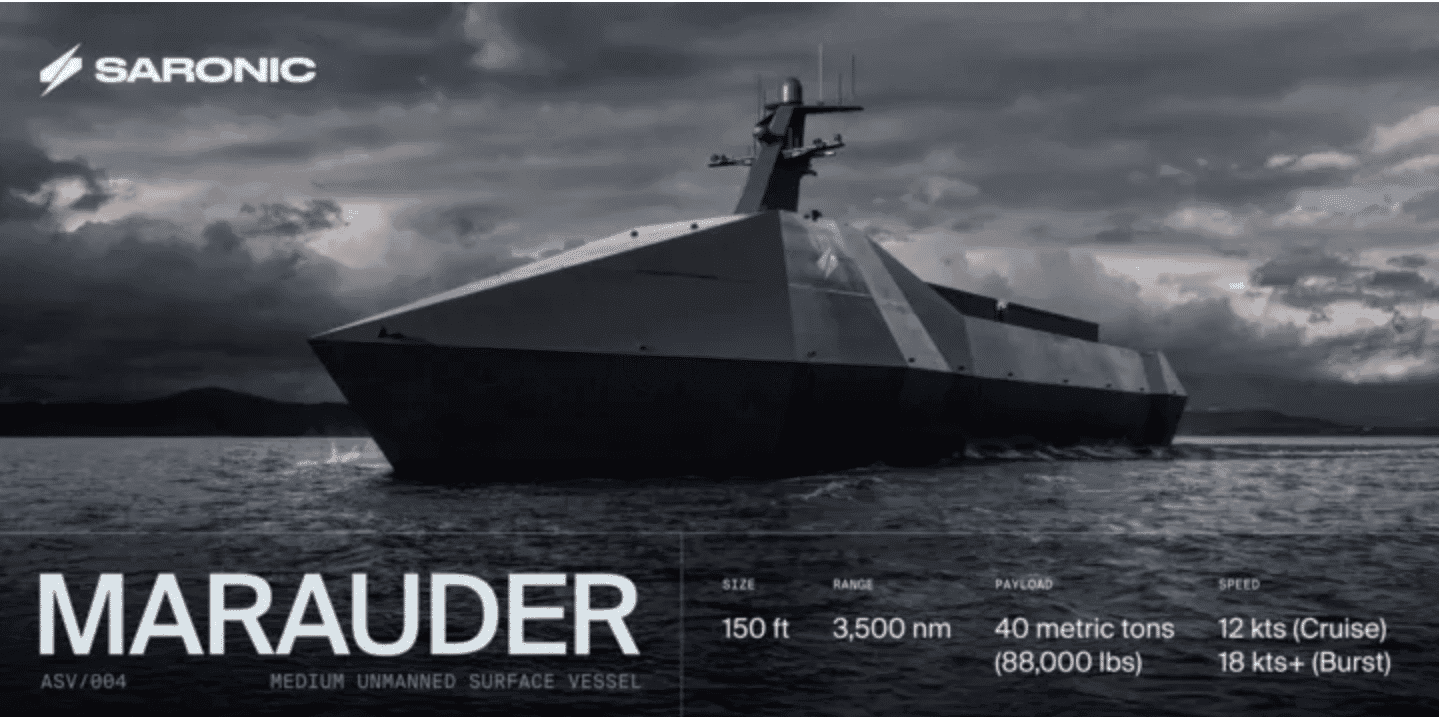
Unmanned surface vessel (USV) company Saronic and hypersonic weapons startup Castelion have announced a partnership to demonstrate the first-ever hypersonic launch from a USV by 2027. The collaboration will integrate Castelion's Blackbeard hypersonic missile with Saronic's Medium Unmanned Surface Vessel (MUSV) Marauder, delivering a scalable, low-cost, and unpredictable strike deterrent capability.
Highlights
- Saronic and Castelion announced a partnership in 2025 to conduct the world's first hypersonic missile launch from an unmanned surface vessel, targeting a live demonstration in 2027.
- The integration pairs Castelion's Blackbeard hypersonic missile with Saronic's Marauder MUSV, both companies founded in late 2022 with rapid development track records.
- Castelion's Project Ranger in New Mexico is a 1,000-acre hypersonic manufacturing campus backed by over $250 million in private capital, targeting thousands of Blackbeard missiles per year.
- Saronic is executing a $300 million shipyard expansion in Franklin, Louisiana, adding 300,000 sq ft of production space to deliver 20 Marauder vessels per year by end of 2026.
- In late 2025, Saronic's 24-foot ASV Corsair was already used as an autonomous maritime telemetry node to support Castelion's Blackbeard flight testing.
Saronic and Castelion have announced a joint initiative to launch a hypersonic vehicle from an unmanned surface vessel (USV). By integrating Castelion's Blackbeard hypersonic missile with Saronic's Medium Unmanned Surface Vessel (MUSV) Marauder, the two companies aim to deliver a compelling and credible strike option with genuine deterrent value.
An Unprecedented Integration Milestone
The Castelion–Saronic partnership marks the first integration of an autonomous surface vessel with a hypersonic weapon system. It is expected to accelerate the development of distributed hypersonic strike capabilities by pairing Saronic's autonomous surface vessels (ASVs) with Castelion's low-cost hypersonic systems. Both companies were founded in late 2022 and are targeting a live demonstration in 2027.
Saronic Co-founder and CEO Dino Mavrookas said: "Launching Castelion's hypersonic missile from the Marauder MUSV will fundamentally complicate any adversary's calculus about where and how the United States can strike. Deterrence is ultimately a function of capability, capacity, and credibility. Saronic and Castelion are working to advance all three — combining autonomous maritime capability with hypersonic strike to create a more scalable, lower-cost, faster-to-field solution."
Hypersonic systems launched from unmanned platforms give commanders additional pathways to generate credible strike options without relying exclusively on scarce and expensive crewed launch platforms. By distributing launch responsibilities across a greater number of low-cost assets, the United States can increase munitions inventory depth, generate greater operational flexibility, and confront adversaries with a wider range of launch positions, trajectories, and timing. This approach makes hypersonic forces more unpredictable, harder to suppress, and easier to scale.
Building the Infrastructure for Sea-Based Launch
Achieving a sea-launched demonstration by 2027 will require both companies to accelerate their flight-test cadence beyond what is possible using land-based test ranges and high-end crewed naval platforms alone.
Saronic's ASVs have already made meaningful progress on this front. In late 2025, Saronic's 24-foot ASV Corsair served as an autonomous maritime telemetry collection and communications node in support of Castelion's Blackbeard flight testing. The two teams are now advancing joint risk-reduction work to support ongoing flight-test operations as they move toward the 2027 at-sea launch demonstration.
Castelion Co-founder and CEO Bryon Hargis said: "The combination of Blackbeard and Marauder will give our warfighters more shots, from more places, with fewer constraints."
Laying the Groundwork for Mass Production
Both companies have a demonstrated track record of rapidly iterating hardware and software to achieve real-world results. Castelion went from a clean-sheet design to more than 25 flight tests in under two and a half years. Saronic brought the Marauder from design to waterborne trials in under a year and is currently building three additional hulls at its shipyard in Franklin, Louisiana. Both companies have invested in production infrastructure to sustain and accelerate the gains enabled by their rapid development pace.
Castelion is scaling its production capacity toward a target of thousands of Blackbeard missiles per year. Its "Project Ranger" campus in New Mexico is a 1,000-acre hypersonic manufacturing facility backed by more than $250 million in private capital, with a single purpose: producing hypersonic systems at the speed and scale required for effective deterrence.
Saronic is executing a $300 million shipyard expansion in Louisiana that will add 300,000 square feet of production space, with completion expected by end of 2026. The expanded facility will be capable of delivering 20 Marauder vessels per year. This is part of Saronic's broader capacity expansion strategy: an additional 400,000-square-foot facility at its Austin, Texas campus is designed to produce thousands of smaller ASVs annually, while Saronic's next-generation planned shipyard, "Port Alpha," is intended to serve as the cornerstone of a new era in American shipbuilding and a catalyst for revitalizing the U.S. maritime industrial base.
Together, these investments chart a clear path toward deploying this combined capability at the speed and scale the current strategic environment demands — for the United States and its allies.
原文來源: 查看原文
FAQ
Reviewed and published by the LAETimes editorial desk ·