Drones as First Responders: How Schenectady PD Is Rewriting Patrol Efficiency
The Schenectady Police Department in New York State has logged 1,437 drone flights since launching its Drone as First Responder (DFR) program in 2025. Drones arrived on scene before patrol units in 835 of those calls — a 58% first-arrival rate. The program has eliminated 455 officer dispatches, assisted in 62 arrests, and located 353 items, with an average mission time of just 14 minutes.
Highlights
- Schenectady PD completed 1,437 DFR drone flights since 2025, with drones arriving on scene before patrol units in 835 cases — a 58% first-arrival rate.
- The program eliminated officer dispatch in 455 calls (32% of deployments), freeing patrol units and reducing public wait times.
- DFR-assisted operations led to 62 arrests and the aerial location of 353 items, including firearms, with an average mission flight time of 14 minutes.
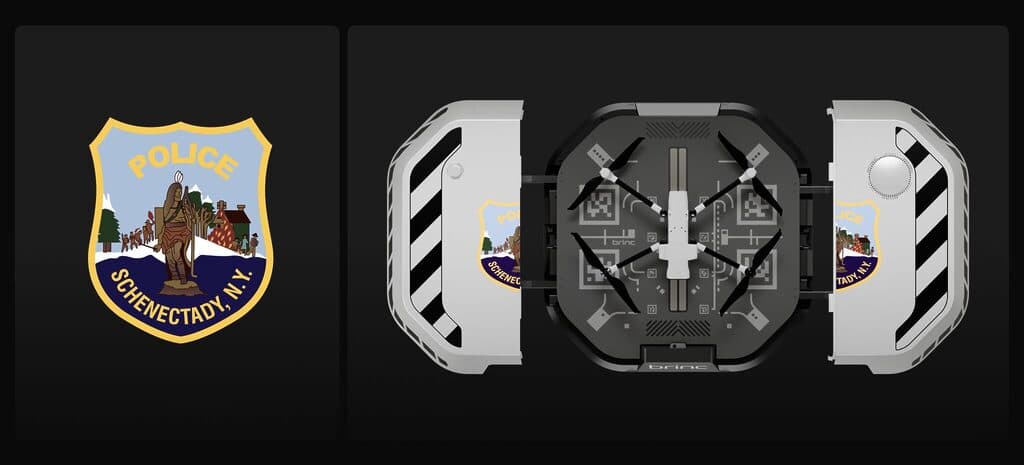
- Sergeant Peter Montalto identified battery endurance as the primary operational limitation, citing the Guardian docking system as a potential solution.
- Unexpected high-volume use cases include retail theft documentation and weapon recovery — neither of which was part of the original program scope.
Data figures are current as of May 27, 2026. For the latest statistics, refer to the department's official public transparency dashboard.
Since launching its Drone as First Responder (DFR) program in 2025, the Schenectady Police Department in New York State has completed 1,437 drone flights — with drones arriving on scene ahead of patrol units in 835 of those responses, representing a 58% first-arrival rate. That figure is quietly transforming how the department handles its daily call load.
The numbers on the department's public transparency dashboard tell the story: 455 calls handled without officer dispatch, 62 DFR-assisted arrests, 353 items located from the air, and an average flight time of 14 minutes per deployment. A system originally positioned as a supplement to major incidents has become essential day-to-day infrastructure. Sergeant Peter Montalto, who leads the program, says the DFR initiative has fundamentally changed what effective policing looks like.
An Aerial Perspective, Democratized
Helicopters have long given law enforcement a bird's-eye view of major emergencies and remain a valuable asset for public safety agencies. Drones have dramatically lowered the cost of that aerial perspective, making it viable for routine calls that make up the bulk of police work.
"With DFR, we can essentially do what a helicopter does, but we can use it on every call," Montalto said. "We don't have to save it for armed robberies or homicides. It's far more cost-effective — we can fly it all day and use it to close out calls."
That shift in thinking — from emergency reserve to always-available resource — is what drives the dashboard's most striking figure: in 835 deployments, the drone was the first unit on scene. In other words, for more than 58 out of every 100 drone-involved dispatches, aerial eyes reached the location before any patrol car.
It should be noted that this deployment model is not a fit for every agency, but in Schenectady, structuring the DFR program around call resolution as its core objective has produced strong results.
Measurable Efficiency Gains Across the Board
The dashboard records 455 officer-free resolutions — a 32% rate. That means roughly one in three drone deployments results in no officer needing to respond in person. Property checks, dropped 911 calls, and other low-risk incidents that once consumed significant officer time can now be resolved in minutes of flight time, without any ground deployment.
"We're on scene in two minutes, we do the check, we clear," Montalto said. "That frees up the officer to handle other calls, and that benefit compounds across every single deployment."
That compounding effect directly improves service for residents.
"It makes us more efficient," Montalto said. "Because officers aren't spending time on calls we can handle, they're available for more calls — and that shortens the queue and reduces wait times for the public."
Even when a ground response is still required, drones provide a critical head start.
"We can launch before the dispatcher has even finished entering the call," Montalto explained. "We're already minutes ahead of the officer, and we don't have to follow streets or stop for red lights or traffic."
Sharper Intelligence for Officers on the Ground
The DFR program delivers more than efficiency gains. While property checks — such as suspected break-ins — make up the largest share of deployment types on the dashboard, the program also covers fights, thefts, armed subject calls, and domestic disturbances. The reason: drones provide frontline officers with more precise situational awareness before they arrive.
"We're the eyes in the sky," Montalto said. "We give officers the information they need to operate safely and effectively — before they arrive or while they're on scene."
That includes capabilities Montalto admits he initially underestimated. The drone's onboard speaker, originally a secondary feature of the program, has become one of its most practical tools.
"It's more useful than you'd think, even in minor situations," he said. "It gets suspects to comply before an arrest rather than hiding in a backyard and having an officer rush them — which can turn physical."
The thermal imaging capability has also exceeded expectations. "I can switch to thermal in broad daylight and spot a squirrel in the woods that I'd never see with the regular camera," Montalto said. "If a suspect is hiding in there, I'm going to find them."
Unexpected Use Cases
Some of the program's most significant outcomes were not part of the original plan. Retail theft is one of them.
"I didn't anticipate we'd be using drones heavily on those calls, but we get a large volume of retail theft reports," Montalto said. "We can watch suspects discard or stash stolen merchandise — toss it in a bush, stuff it in a bag, and walk away — and we have it all on video."
Weapon recovery emerged as another unplanned application. "We've found a lot of handguns with it," Montalto said, referring to a portion of the 353 items catalogued on the dashboard.
Looking Ahead
Despite the program's results, Montalto is candid about its current limitations. Battery endurance remains the primary constraint.
"The most frustrating moments are when you're tracking a fleeing suspect and you can see you could keep following — but you don't have enough battery left to do it," he said. "I think the Guardian system could genuinely solve that problem."
He is also looking to expand thermal imaging capabilities and sees adding more launch sites as a clear path to improving the program's numbers in the coming year. "If we can launch from a point closer to the incident, our flight time efficiency will improve significantly," he said.
Schenectady's public transparency dashboard stands as a documented record of a law enforcement approach that treats aerial assets as everyday infrastructure rather than a last resort. Behind the numbers is a department that operates faster, smarter, and more safely than before.
原文來源: 查看原文
FAQ
Newsletter
Subscribe to our Low-Altitude Industry Newsletter
Daily curated news on low-altitude economy and drone industry, delivered to your inbox.
Reviewed and published by the LAETimes editorial desk ·