SkyFall AI Intercepts Drones Before Pilots Can React — Ukraine Knows the Risks It's Taking
Ukrainian drone maker SkyFall has demonstrated its P1-SUN interceptor using AI trained on over 10,000 real combat videos to detect Shahed drones before human pilots can visually acquire them. Since November, the system has completed dozens of AI-assisted intercepts. Separately, startup MaXon — identified as the firm behind Defense Minister Fedorov's claim of "95% automated" intercept workflows — recorded its first confirmed combat intercept on June 8 in Kharkiv Oblast.
Highlights
- SkyFall的P1-SUN攔截機以逾10,000段實戰影片訓練的AI系統,可在飛行員目視前偵測Shahed無人機,自2024年11月起已完成數十次AI輔助攔截。
- P1-SUN每架售價約1,000美元,SkyFall宣稱單月最高可生產50,000架。
- 國防新創MaXon(已被《紐約時報》點名)建造的固定翼攔截機自動化95%攔截流程,每架售價約3,500美元,首次實戰攔截於2025年6月8日在哈爾科夫州完成。
- SkyFall在示範中測試了對地面車輛與人員的AI自動瞄準功能,飛行員僅需確認最終攻擊指令,顯示「人在迴路」正從技術必要條件轉變為倫理選擇。
- 烏克蘭正將實戰驗證的攔截無人機技術轉化為出口產品,德國已資助數千架交付,波斯灣國家與美國亦在採購行列,但目前出口版本尚未配備AI。
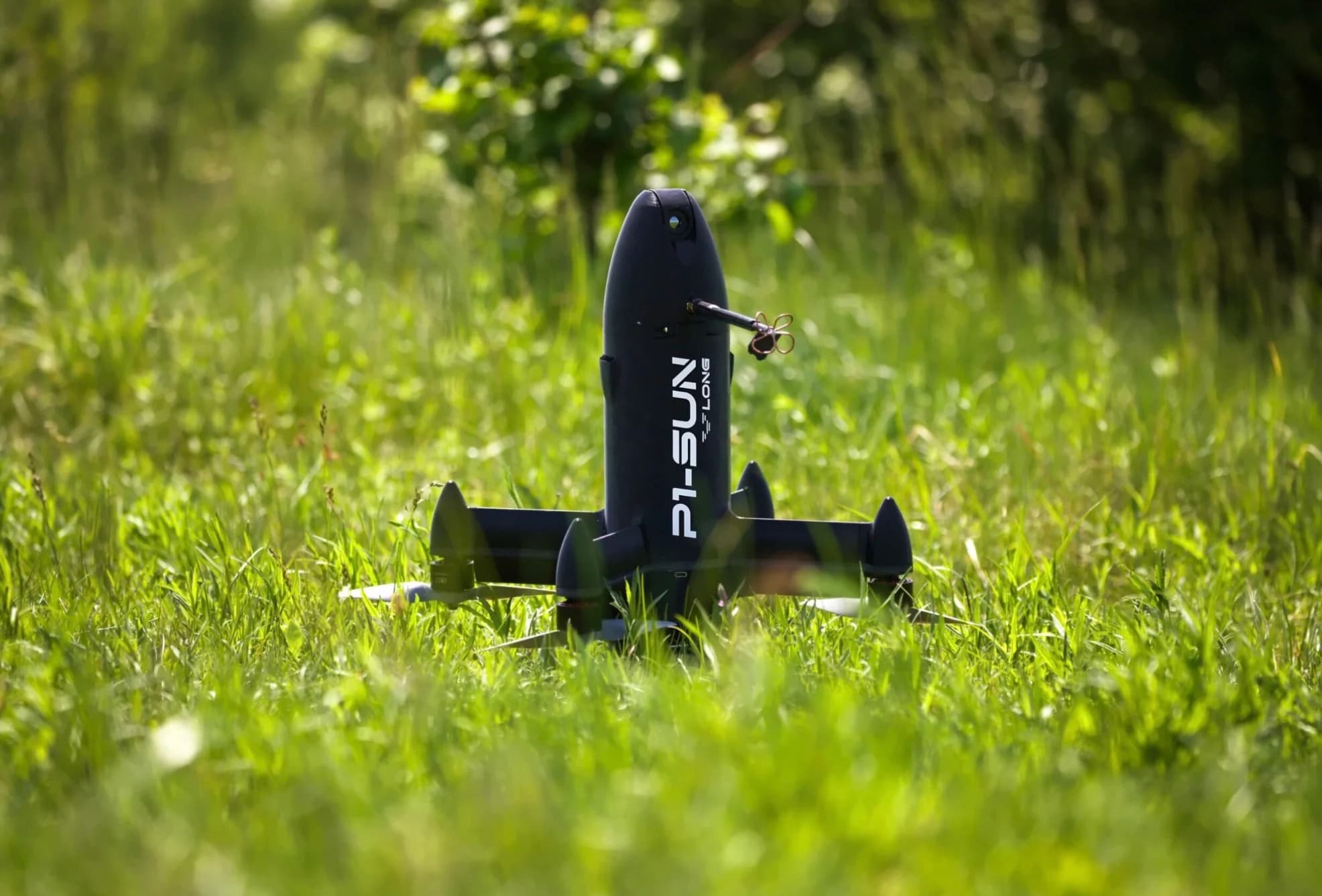
Ukrainian drone manufacturer SkyFall is applying artificial intelligence to a task human interceptor pilots have never been fast enough to perform reliably: detecting incoming Shahed drones before the human eye can pick them up. At a pine-forest launch site in central Ukraine, the company demonstrated its P1-SUN interceptor against a lightweight replica of the Iranian-designed attack drone. The onboard system detected the decoy target well before the pilot could spot it visually, flagged it with a green bounding box on the operator's screen, and autonomously steered toward the target for a strike after the pilot released the control stick.
SkyFall says its interceptors have completed dozens of AI-assisted Shahed-class intercepts since November, with cumulative intercept totals now in the thousands. The system guiding the demonstration was trained on more than 10,000 real Shahed intercept videos — a detail that speaks volumes. Ukraine is not purchasing off-the-shelf autonomous systems; it is generating training data in live combat every night, at a pace no peacetime program could match.
P1-SUN: Turning the Pilot Into a Supervisor
The P1-SUN is a vertically launched interceptor with a bullet-shaped nose, a partially 3D-printed modular airframe, and a unit cost of approximately $1,000. In the demonstration, a pilot flew it toward the Shahed decoy, waited until the target shape was clearly rendered on screen, issued a track command to the auto-aim system, released the stick, and the interceptor guided itself to the target autonomously. The pilot's final action was pressing a button to authorize the strike.
That division of labor matters more than it might appear. A pilot manually controlling an interceptor spends the majority of an engagement searching and tracking a small, fast target across a large sky. AI compresses that time window, and shortening the detect-to-track interval is precisely the bottleneck that allows Shaheds to survive mass-attack nights. SkyFall has previously stated that the P1-SUN can be manufactured at rates of up to 50,000 units per month, with capacity to export a portion without compromising domestic supply.
The pilot's screen during the demonstration showed the system running in "flight mode" with a firmware version number visible in the corner — production software on real hardware, not a laboratory prototype. SkyFall does conduct decoy exercises, but the company acknowledges it can never fly enough simulated targets to fully train the system. The 10,000 real-world combat videos fill the gap that simulation cannot.
The 95% Automation Claim: Now Has a Name, a Price, and a Combat Record
Ukrainian Defense Minister Mykhailo Fedorov recently stated that one company within the government's "Brave1" defense-tech accelerator had built a system that automates 95% of the intercept workflow. The system cannot launch autonomously; it engages after an operator selects a target and authorizes engagement, then guides the interceptor toward the Shahed, identifies it, and homes in precisely. The New York Times identified the company as MaXon, a defense startup founded early last year.
DroneXL reported on June 9 that MaXon Systems builds a fixed-wing interceptor that requires an operator to press just two buttons — for takeoff, transit, and attack — at a unit cost of approximately $3,500. The first confirmed combat intercept was carried out on June 8 by Ukraine's 12th Independent Special Purpose Center in Kharkiv Oblast. Fedorov's "95%" figure is not an abstract milestone; it has a manufacturer, a price tag, and a battlefield record set the week before he cited it.
The direction of travel across both systems is consistent: as autonomy increases, interceptors may be able to automatically arm and launch upon radar detection of an incoming attack. SkyFall says it is already testing such a configuration. For an undermanned military, the key payoff is a single pilot supervising multiple simultaneous engagements rather than managing one at a time.
In the Same Forest: AI Begins Targeting People on the Ground
The demonstration did not stop at airborne targets. SkyFall tested AI-assisted targeting for first-person-view (FPV) drones against ground targets — both equipment and personnel. When a dark-green minivan moved through the trees, the pilot designated a nearby point and the system automatically slewed the crosshair onto the vehicle. The test then shifted to a human target: a team member walked across a clearing playing the role of a Russian soldier, and the drone's targeting system locked onto the colleague, awaiting the pilot's command to strike or abort.
This segment should unsettle anyone who has been applauding the intercept numbers — and it should. Many AI systems in development can autonomously identify vehicles; some can lock on to personnel. SkyFall is among the companies quietly testing person-targeting. Company officials and military commanders consistently emphasize that lethal decisions remain human-confirmed. But by their own account, the honest framing is that human confirmation is now an ethical choice, not a technical necessity. Distinguishing friendly forces from enemy combatants through a camera feed remains a real and unsolved problem for machines.
Human rights organizations argue that reducing life-and-death decisions to algorithmic calculation is a threat to humanity. Ukrainian developers and officials say they hear that concern — and keep building anyway, because the alternative is letting Shaheds fly unchallenged. Both things are simultaneously true, and pretending otherwise serves only one side's narrative.
Intercept Expertise Is Becoming an Export Business
Ukraine's interest in autonomous systems extends beyond defending its own cities; the country aims to become a major defense exporter, and a combat-proven track record is the most compelling sales pitch available. After the United States and Israel went to war with Iran earlier this year, both countries and Gulf states expended hundreds of expensive interceptor missiles to shoot down cheap Iranian-made Shaheds. Ukraine has been offering low-cost interceptor drones — not yet AI-equipped — as an alternative, a pitch that helped President Volodymyr Zelensky secure security agreements with Gulf states.
DroneXL has been tracking this export pivot, from the legal amendments that finally allowed Ukrainian companies to sell surplus systems abroad, to the Gulf monarchies and U.S. commanders now queuing to procure. Several Ukrainian companies have introduced remote-operation technology enabling missions to be flown from Kyiv — a capability that converts a domestic defense program into a service foreign buyers can contract. Germany has already funded the delivery of thousands of Ukrainian interceptors, signaling that European buyers have moved past the demonstration phase.
The head of autonomous systems and computer vision at SkyFall, who requested anonymity for security reasons, stated that the company can produce 50,000 interceptors in a single month. The harder bottleneck is human capital — training enough skilled pilots is the binding constraint, and Ukraine's existing pilots are already operating around the clock. That is the honest case for automation, stripped of marketing language: not that machines are better, but that there simply are not enough humans.
DroneXL Perspective
The interceptor story has unfolded in three chapters, and DroneXL has tracked each one. Chapter one was the low-cost manual quadcopter — Wild Hornets' Sting — in which pilots wearing goggles flew drones directly into Shaheds and manually triggered detonation; we documented that fully manual workflow in May. Chapter two was the price-and-scale competition, with P1-SUN going up against the Sting and other rivals, covered in our March interceptor-scale report. This forest demonstration is chapter three: perception shifting from the pilot's eyes to the drone itself. The throughline is that every step forward has been forced by Russian adaptation, not driven by a pre-planned roadmap. Russia fitted Shaheds with rear-facing infrared lights to blind thermal cameras, then flew them lower to defeat GPS, and mounted air-to-air missiles on attack drones — each move forcing a Ukrainian countermove. AI perception is the latest one.
Even so, the demonstration leaves open questions. SkyFall says it is testing automatic launch-on-radar-detection. Fedorov says MaXon has automated 95% of the workflow, retaining human confirmation only at target selection and the final strike command. Together, those two facts describe a system in which humans intervene only at the very first and very last steps. No one has officially explained how those two steps hold up when hundreds of Shaheds arrive in a saturation attack faster than operators can authorize them individually. That is the question that will determine whether "human-in-the-loop" survives a 2,000-drone night — and it remains unanswered.
Sources: The New York Times, Military Times.
原文來源: 查看原文
FAQ
Reviewed and published by the LAETimes editorial desk ·


