I Tested the SkyRover X1 Against the DJI Mini 4 Pro in the Alaskan Wilderness — The Results Were Surprising
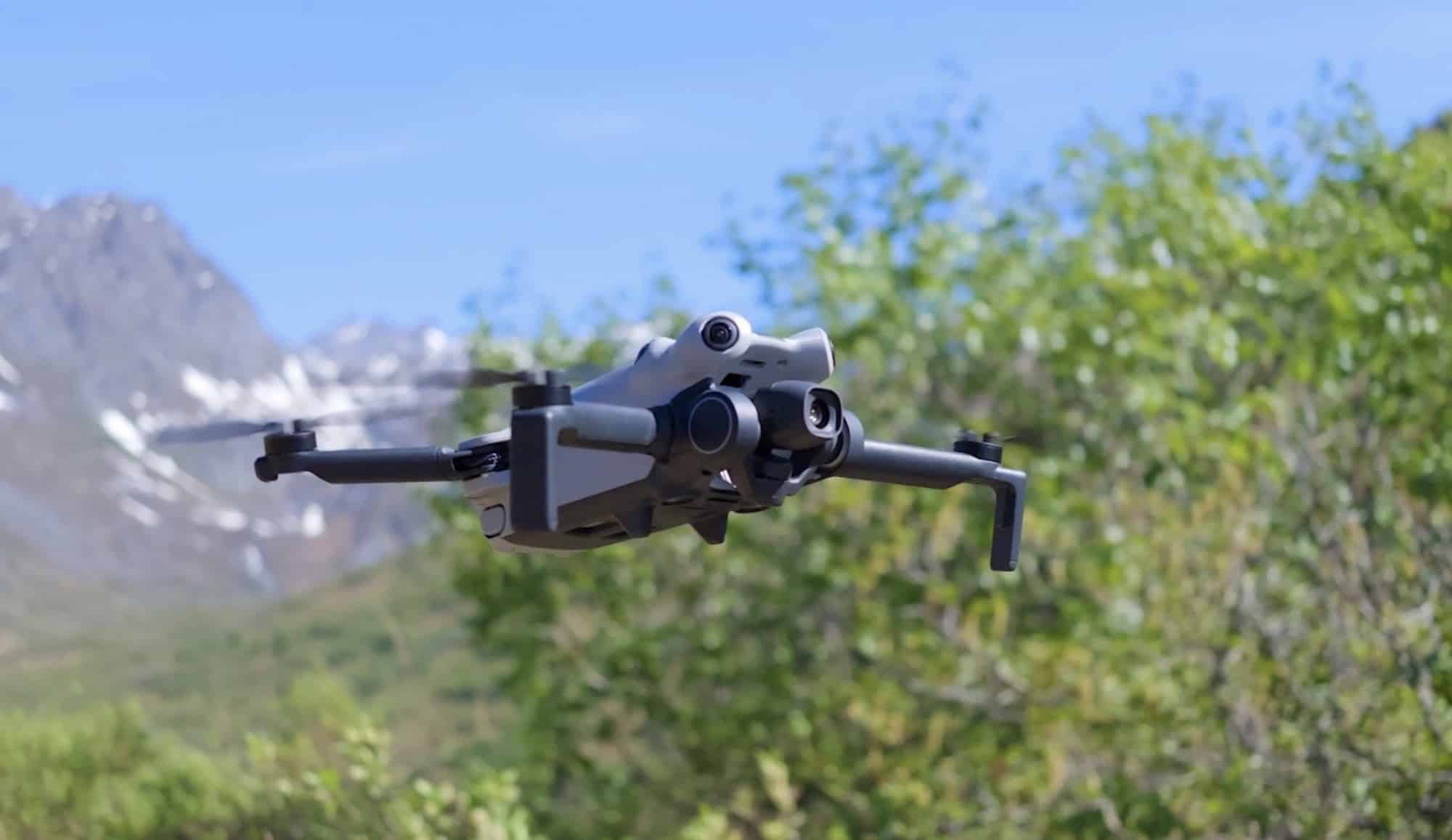
The SkyRover X1 is a 249-gram drone that goes head-to-head with the DJI Mini 4 Pro across tracking, 360° obstacle avoidance, wind resistance, battery life, and video transmission range — all tested in the Alaskan wilderness. The X1 holds its own in nearly every category and offers a notable advantage for U.S. commercial pilots: the ability to toggle Remote ID on or off, maintaining sub-249g compliance while meeting Part 107 requirements.
Highlights
- SkyRover X1 weighs under 249 grams and features a 1/1.3-inch sensor supporting 4K/100fps video and 48MP stills with a Quad-Bayer sensor.
- In Alaskan wilderness testing, the X1's subject tracking matched or outperformed the DJI Mini 4 Pro in the majority of scenarios.
- Real-world battery life measured 25–26 minutes per charge; three batteries lasted nearly a full day of mountain flying with roughly 70% remaining on the final pack.
- The X1's new controller features a built-in 5.5-inch, 700-nit screen with 32GB internal storage and 3 hours of battery life.
- The X1 allows users to toggle Remote ID on or off, giving U.S. commercial pilots FAA Part 107 compliance while retaining sub-249g weight-class benefits — an advantage the DJI Mini 4 Pro does not offer.
The SkyRover X1 is a sub-249-gram drone from SkyRover that stacks up impressively against the DJI Mini 4 Pro on paper. But how does it perform in the field?
Head-to-Head: SkyRover X1 vs. DJI Mini 4 Pro
This full comparison puts the SkyRover X1 through its paces alongside the Mini 4 Pro to see what this compact machine is truly capable of. Testing took place in the Alaskan wilderness. This review was sponsored by SkyRover.
Tracking in the Alaskan Wilderness
Tracking is one of the most common ways I use a drone in everyday shoots. Both drones were flown simultaneously while I walked along an open mountain trail to test their tracking capabilities.
The SkyRover X1 exceeded expectations — tracking stability was comparable to, and in some situations better than, the Mini 4 Pro. The Mini 4 Pro dropped the subject in certain scenarios, while the X1 maintained lock in the vast majority of situations. It struggled slightly when navigating through dense brush, but overall performance was solid.
360° Obstacle Avoidance Test
A dedicated obstacle avoidance test was conducted with bushes, trees, and scattered branches in the flight path. The SkyRover X1 performed well, matching the DJI Mini 4 Pro overall and outperforming it in select tracking scenarios.
Log Mode, Color Profiles, and Frame Rates
Both drones support 10-bit Log shooting — the Mini 4 Pro uses D-Log M, while the X1 uses SR-Log. To get the most out of the X1's 1/1.3-inch sensor, shooting in SR-Log is recommended for maximum dynamic range and post-production flexibility.
For casual family footage destined for social media, the standard color profile delivers great results straight out of the camera. For professional work requiring color matching with other footage, Log mode with grading is the way to go.
On the frame rate side, the X1 supports 4K at 60fps — ideal for subtle slow-motion effects — and goes up to 4K at 100fps and 1080p at 200fps for dedicated slow-motion work.
Photo Quality and Gear Weight
The X1 can shoot stills at 12MP or 48MP using a Quad-Bayer sensor. The 48MP mode delivers greater detail, while the 12MP mode provides better dynamic range. Both produced satisfying results in testing.
For hikers and outdoor adventurers, the sub-249g weight is a major advantage, significantly reducing pack weight. In the United States, this weight class also means fewer regulatory restrictions — unless the flight is commercial in nature, as in this test, which still requires Remote ID and Part 107 compliance. On that front, the SkyRover X1 holds a key advantage over the Mini 4 Pro for commercial operators (see below).
Low-Light, Vertical Video, and QuickShot Modes
Both the Mini 4 Pro and the SkyRover X1 feature dedicated low-light modes and performed comparably well. Alaska's extended summer daylight limited the truly low-light conditions available for testing, but both drones handled the available conditions with confidence.
For vertical video, both drones feature a gimbal that rotates 90°, enabling full-resolution 4K vertical capture. This is superior to cropping from a horizontal 4K frame — it preserves the full 4K resolution and offers a wider field of view.
Both drones also offer a range of automated QuickShot modes, including Dronie and Circle, making it easy to capture cinematic footage with minimal effort.
Waypoints Add Creative Flexibility
Waypoint functionality is one of the X1's standout features. In scenarios where active tracking or manual flight falls short, waypoints can unlock shots that would otherwise be impossible. Setup requires some time investment, but for users looking to capture compelling aerial sequences, it is well worth it — and significantly expands the X1's creative potential.
Wind Resistance on a Mountain Summit
Wind resistance is often the Achilles' heel of lightweight mini drones, so a mountaintop test was conducted. Both drones handled conditions well — there was slight instability when flying close to the subject, but overall performance was strong. The SkyRover X1's wind resistance proved reassuring.
Noise Levels and Battery Life
Another benefit of the sub-249g weight class is reduced motor noise. In testing, flight noise was recorded with a camera's built-in microphone at approximately 1.2 metres (4 feet) — the X1 was noticeably quiet compared to most drones.
SkyRover rates the X1 at approximately 32 minutes of flight time in ideal, windless conditions. In real-world use, 25 to 26 minutes is a more realistic figure. During this test, three batteries were used across nearly a full day of flying in mountain winds, with the final battery still at roughly 70% charge — a strong result given the demanding conditions. A higher-capacity battery option would be welcome, though the sub-249g weight ceiling is understood to be the key constraint.
Video Transmission Range and the New Controller
SkyRover rates the X1's maximum video transmission range at approximately 15 kilometres (about 10 miles). That far exceeds visual line of sight, but transmission was tested to the limits of VLOS with no signal issues whatsoever.
One of the X1's biggest upgrades is its new controller, which features a built-in 5.5-inch screen, 3 hours of battery life, 32GB of internal storage, and a brightness of 700 nits — clearly legible in bright outdoor conditions. All screenshots from this test were saved directly to the controller's internal memory. The controller also supports fast USB charging, so topping up mid-shoot is quick and straightforward.
The Key Advantage Over the Mini 4 Pro
The most significant edge the SkyRover X1 holds over the DJI Mini 4 Pro for commercial operators is this: the X1 allows users to toggle Remote ID on or off. This means commercial pilots can fly with Remote ID enabled — satisfying Part 107 requirements — while still operating a sub-249g drone, striking the ideal balance between regulatory compliance and weight class benefits.
Who Is This Drone For?
In summary, if you are looking for a high-performance sub-249g drone, the SkyRover X1 is an outstanding option. It delivers image quality and flight performance well beyond what its weight class might suggest.
It is particularly well-suited to hikers and backcountry explorers who want a capable drone without the added weight, as well as users looking to document family travel. At a competitive price point, the value proposition is strong.
Across a comprehensive comparison with the DJI Mini 4 Pro, the X1 holds its ground in virtually every category and edges ahead in select areas. U.S. buyers also benefit from domestic customer support, a 30-day exchange warranty, extended warranty options, and Flyaway Coverage — providing added peace of mind.
What Do You Think?
How do you think the SkyRover X1 stacks up against the DJI Mini 4 Pro? Or what drone are you currently flying? Share your thoughts in the comments.
This article is adapted from a video review by Jake Sloan. More content can be found on his YouTube channel and his author page at DroneXL.
原文來源: 查看原文
FAQ
Reviewed and published by the LAETimes editorial desk ·