SOF Weekly Brief – July 6, 2026: AI Battlefield Management, Escalating Drone Strikes, and Special Operations Trends
The U.S. Department of Defense has launched 'Agent Networks,' an AI-driven battlefield management and targeting system. Meanwhile, the CIA is accelerating adoption of AI and emerging technologies. The Russia-Ukraine conflict continues to escalate with mutual missile and drone strikes, while U.S.-Iran nuclear talks remain deadlocked. Denmark has assumed command of NATO's SOCC-NW, and the Global Peace Index has deteriorated for a 12th consecutive year.
Highlights
- The U.S. DoD officially launched 'Agent Networks,' an AI-driven battlefield management and targeting system, marking a major advance in intelligent military command-and-control.
- Ukraine is conducting long-range drone and missile strikes against Russian energy infrastructure, while Russia continues city-level strikes causing civilian casualties.
- Denmark formally assumed command of NATO's Special Operations Coordination Centre Northwest (SOCC-NW), boosting Nordic alliance SOF integration.
- The Global Peace Index has deteriorated for the 12th consecutive year, signaling a sustained worsening of international security conditions.
- U.S.-Iran nuclear negotiations remain deadlocked, with Iran using the threat of a Strait of Hormuz blockade as its primary diplomatic leverage.
SOF Weekly Brief – July 6, 2026
By John Friberg | Published: July 6, 2026
This weekly brief compiles essential news, analysis, and commentary on special operations, intelligence, irregular warfare, national defense, and global conflict.
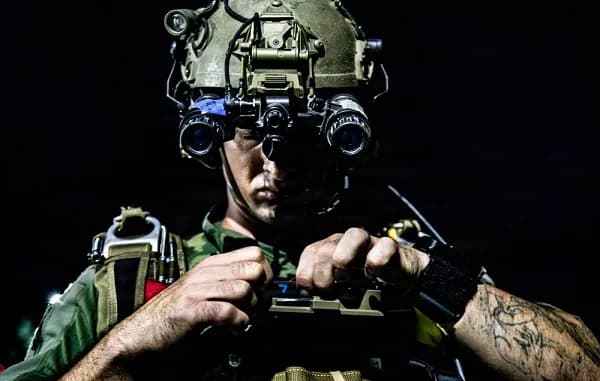
Photo caption: U.S. Army Special Forces soldiers (Green Berets) from 3rd Special Forces Group (Airborne) adjust their Android Tactical Assault Kit (ATAK) in preparation for a High Altitude Low Opening (HALO) parachute insertion during Exercise Radiant Shield at Fort Bragg, North Carolina, on June 23, 2026. (Army photo by Staff Sgt. Jillian Hix)
Executive Summary
This edition of the weekly brief covers major developments over the past week affecting Special Operations Forces (SOF), irregular warfare, intelligence, and national security:
- The U.S. Department of Defense (DoD) has officially launched "Agent Networks," an AI-powered battlefield management and targeting system, marking a pivotal step forward in the U.S. military's pursuit of intelligent command-and-control capabilities.
- The CIA is aggressively positioning itself at the forefront of AI and emerging technologies in response to the rapidly evolving landscape of espionage and modern warfare.
- Maritime critical infrastructure protection is addressed in a new SOF planning guide outlining three core elements for securing offshore assets.
- U.S.-Iran negotiations remain unresolved, with Iran continuing to leverage the Strait of Hormuz as its principal bargaining chip against the United States.
- The Russia-Ukraine conflict continues to see escalating two-way missile and drone strikes — Ukraine is sustaining long-range strike campaigns against Russian energy infrastructure, while Russia continues to attack Ukrainian cities.
These developments collectively underscore how technological capability, alliance interoperability, and strategic competition are increasingly shaping the operational environment for special operations forces.
Key Trends to Watch
- 🇩🇰 Denmark has formally assumed command of NATO's Special Operations Coordination Centre Northwest (SOCC-NW), strengthening alliance special operations integration across the Nordic region.
- 🌍 The Global Peace Index has deteriorated for the 12th consecutive year, reflecting a sustained tightening of the international security environment.
- 🚁 Ukraine continues to advance its long-range strike strategy, targeting Russian energy infrastructure with drones and missiles to erode Russia's war-fighting capacity.
- 💥 Russia continues striking Ukrainian cities, with ongoing civilian casualties and mounting infrastructure damage.
- 🛢️ Iran is wielding the threat of a Strait of Hormuz blockade as a negotiating lever, introducing a major variable into U.S.-Iran nuclear talks.
- 🌐 Modeling of the SOF global partner network continues to deepen, exploring how future special operations alliances can operate more effectively within worldwide cooperative frameworks.
About This Brief
This brief is authored by John Friberg and published by Small Wars Journal, a publication housed under Arizona State University. The journal provides long-term analytical coverage of global special operations, counterterrorism, and irregular warfare, serving as a key reference for both academic researchers and practitioners. Free subscriptions to the daily newsletter are available on the journal's website, with two to three updates delivered each week.
原文來源: 查看原文
FAQ
Newsletter
Subscribe to our Low-Altitude Industry Newsletter
Daily curated news on low-altitude economy and drone industry, delivered to your inbox.
Reviewed and published by the LAETimes editorial desk ·