SpaceX Starfall Reentry Capsule Completes Maiden Flight, Capable of Returning Up to 1,000 kg of Payload
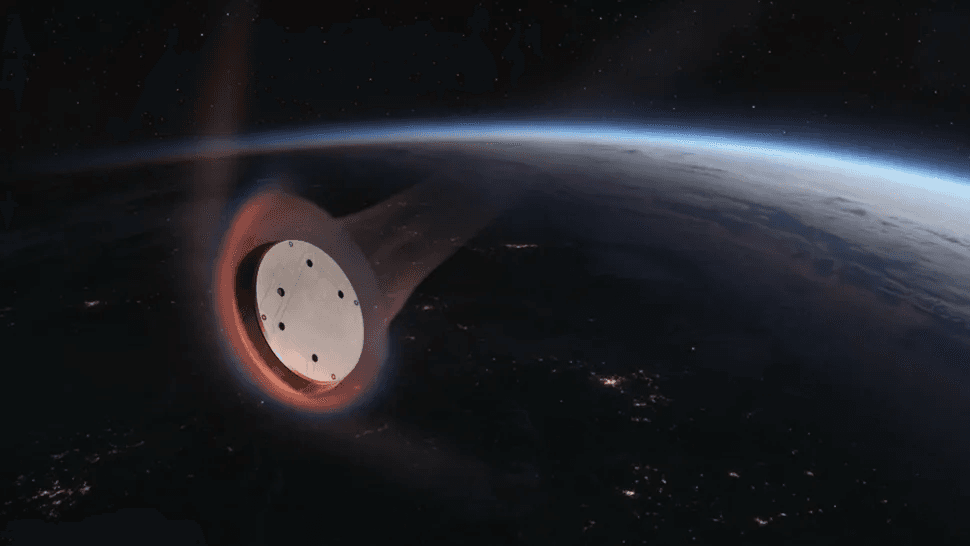
SpaceX's new cargo reentry vehicle, Starfall, lifted off from Launch Complex 40 at Cape Canaveral Space Force Station at 6:52 a.m. ET on June 23, completing its inaugural flight. Measuring 3.1 meters in diameter and 0.75 meters tall, Starfall can carry up to 1,000 kg of payload and is designed to provide low-cost, routine access to microgravity environments for scientific research and in-space manufacturing.
Highlights
- SpaceX's Starfall reentry capsule completed its maiden flight on June 23, 2025, lifting off at 6:52 a.m. ET from Launch Complex 40 at Cape Canaveral Space Force Station.
- Starfall measures 3.1 meters in diameter and 0.75 meters tall, with a maximum payload capacity of 1,000 kg — more than three times larger than Varda Space's competing W-series capsules.
- The capsule uses nitrogen cold gas for attitude control, contains no liquid propellants, and targets a splashdown zone approximately 1,300 km off the U.S. West Coast in the Pacific Ocean.
- SpaceX provided virtually no advance public disclosure about Starfall, and cut the live webcast approximately 10 minutes after liftoff — a practice typically associated with national security launches.
- Falcon 9 booster B1078 completed its 29th flight and successfully landed on drone ship A Shortfall of Gravitas in the Atlantic Ocean about nine minutes after liftoff.
SpaceX Starfall Reentry Capsule Completes Maiden Flight, Ushering in a New Era of Low-Cost Microgravity Access
SpaceX has sent its newest aerospace vehicle to space for the first time. The company's Starfall reentry capsule flew its inaugural mission on June 23, following SpaceX's submission of an application to the Federal Aviation Administration (FAA) to conduct two reentry vehicle landing tests. The mission lifted off at 6:52 a.m. ET from Launch Complex 40 (LC-40) at Cape Canaveral Space Force Station in Florida.
Starfall's Role: A Cargo Vehicle for Science and In-Space Manufacturing
Starfall is a cargo transport capsule designed to fly aboard a Falcon 9 or Falcon Heavy rocket, delivering payloads to low Earth orbit and beyond while safely returning materials to Earth. The capsule is not intended for crewed flight; its primary purpose is to serve scientific payloads and products that require an in-orbit stay followed by recovery — such as pharmaceuticals manufactured in space and materials produced through on-orbit manufacturing. This test flight was designed to validate its controlled flight capability and its ability to survive intact through the high-heat ablation zone of Earth's atmosphere during reentry.
A Surprise Debut: Near-Total Secrecy Before Launch
The demonstration flight caught much of the aerospace community off guard, as SpaceX had disclosed almost nothing about the Starfall capsule beforehand. The launch itself maintained the same veil of secrecy: the live webcast was cut approximately 10 minutes after liftoff — a practice typically reserved for national security missions. SpaceX subsequently offered a brief introduction to Starfall on social platform X, describing the new vehicle as one that will provide "low-cost, frequent transportation to and from microgravity for science and manufacturing."
Significantly Outclasses Competitors, With a 1,000 kg Payload Capacity
The concept of on-orbit capsule recovery has already been demonstrated commercially by Varda Space Industries. To date, Varda has successfully recovered five cone-shaped W-series reentry capsules, each measuring 0.9 meters in diameter and weighing approximately 300 kg — one of which spent more than eight weeks in orbit carrying a U.S. Air Force payload before returning to Earth. By comparison, Starfall is more than three times larger: 3.1 meters in diameter and 0.75 meters tall, with a maximum payload capacity of 1,000 kg.
Two-Section Design, Nitrogen Attitude Control for Safe Reentry
According to FAA filings submitted by SpaceX, the Starfall capsule consists of two primary sections that separate after reentry. The upper deck houses payload and attitude control components, while a carbon-fiber heat shield at the base incorporates compressed gas storage to power the precise maneuvers required during reentry, landing, heat shield jettison, and parachute deployment.
SpaceX plans for Starfall to conduct both extended stays in low Earth orbit and suborbital missions. The capsule has no onboard propulsion and is not capable of independently deorbiting. The FAA filing does not specify the deorbit mechanism, but the maiden test flight most likely relied on the Falcon 9 upper stage to bring Starfall back toward Earth.
SpaceX engineered a safe disposal contingency into Starfall's design to address potential anomalies during orbit or reentry. The company stated in its regulatory filing: "The reentry vehicle uses non-toxic, inert cold gas (nitrogen) for attitude control and contains no liquid propellants or hazardous materials. All pressurized lines will be vented prior to ocean splashdown, so no propellant will be released into the ocean."
Target Splashdown Zone: Pacific Ocean, Approximately 1,300 km off the U.S. West Coast
SpaceX has not disclosed how long Starfall remained in orbit during the maiden test. After stage separation, SpaceX did not stream footage of the Falcon 9 upper stage. On the return leg, Starfall's target splashdown zone was located approximately 1,300 km west of the U.S. West Coast in the Pacific Ocean.
Falcon 9 Booster Successfully Recovered
On the opposite side of the country, the Falcon 9 first-stage booster used for the Starfall demonstration returned to an Atlantic recovery zone. This was the 29th flight of booster B1078, whose prior missions included NASA's International Space Station Crew-6 crewed launch, a U.S. Space Force mission, and 23 Starlink satellite deployments. Approximately two and a half minutes after liftoff, stage separation occurred and B1078 adjusted its trajectory before performing a landing burn, ultimately touching down on SpaceX's autonomous drone ship A Shortfall of Gravitas in the Atlantic Ocean roughly nine minutes after launch.
原文來源: 查看原文
FAQ
Newsletter
Subscribe to our Low-Altitude Industry Newsletter
Daily curated news on low-altitude economy and drone industry, delivered to your inbox.
Reviewed and published by the LAETimes editorial desk ·