Will Storm Fighter Suffer the Same Fate as Mosquito? UK MoD Unveils Latest Loyal Wingman Concept for the RAF
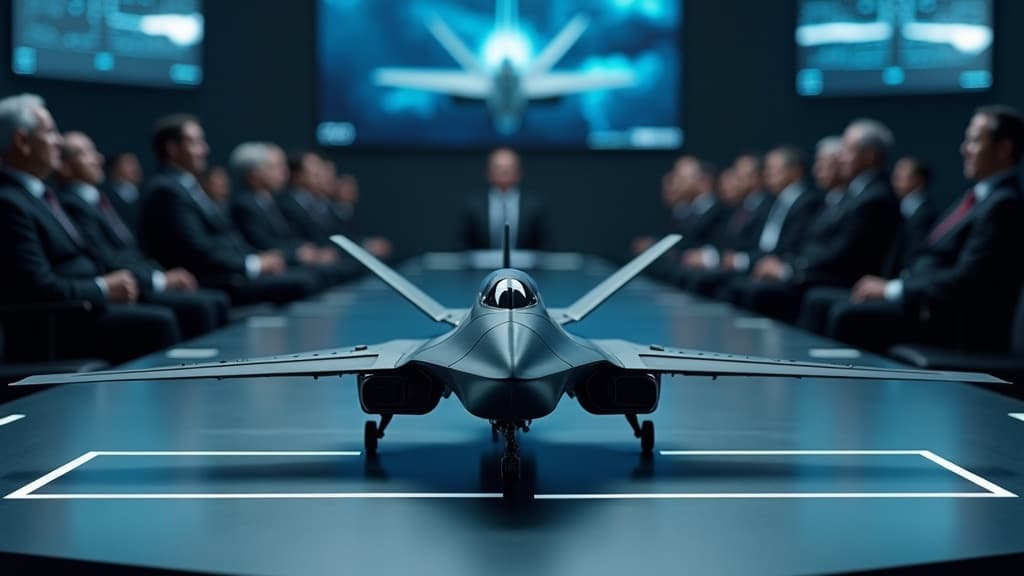
The UK Ministry of Defence has officially unveiled its latest loyal wingman concept, the Storm Fighter, at the Global Air and Space Chiefs' Conference. Designed to support Royal Air Force manned-unmanned teaming operations, the concept raises questions about whether it can avoid the fate of the cancelled Mosquito programme, which failed to reach full production despite years of development.
Highlights
- The UK Ministry of Defence unveiled the Storm Fighter loyal wingman concept at the Global Air and Space Chiefs' Conference, targeting Manned-Unmanned Teaming (MUM-T) capability for the Royal Air Force.
- Storm Fighter is the UK's second major loyal wingman initiative, following the Mosquito programme, which was cancelled after years of development due to defence budget constraints.
- The Mosquito programme was originally developed under the RAF's Future Combat Air System (FCAS) strategy to operate alongside Typhoon and F-35 aircraft but never reached full production.
- No technical specifications or projected in-service date for Storm Fighter have been released by the UK MoD as of the announcement.
- Analysts warn that budget pressures, technological maturity, and political will remain critical variables that could determine whether Storm Fighter meets the same fate as Mosquito.
The UK Ministry of Defence (MoD) has officially revealed its latest loyal wingman concept for the Royal Air Force (RAF) — the Storm Fighter — at the Global Air and Space Chiefs' Conference.
A New Push for Loyal Wingman Capability
The Storm Fighter represents the UK's renewed effort to advance Manned-Unmanned Teaming (MUM-T) capability, following the troubled Mosquito loyal wingman programme. Loyal wingman designs of this type are intended to fly in formation with crewed combat aircraft, performing missions such as reconnaissance, electronic warfare, and suppression of enemy air defences — reducing the exposure of human pilots to high-risk environments.
However, doubts remain over whether Storm Fighter can successfully progress beyond the concept stage. The UK's previous loyal wingman effort, Mosquito, was scaled back and ultimately discontinued after years of development, leaving the industry disappointed. Analysts are now asking whether Storm Fighter risks repeating the same trajectory.
Background: Lessons from the Mosquito Programme
The Mosquito programme was originally part of the RAF's Future Combat Air System (FCAS) strategy, aimed at developing an uncrewed wingman capable of operating alongside the Typhoon or F-35. Despite demonstrating some technical achievements, the programme ultimately failed to reach full-scale production or operational service, largely due to defence budget pressures.
Can Storm Fighter Break the Pattern?
The decision to unveil Storm Fighter at the high-profile Global Air and Space Chiefs' Conference signals that the UK MoD has significant ambitions for the programme and intends to demonstrate to allied nations its continued commitment to autonomous combat air systems.
Nevertheless, a concept reveal remains far removed from operational service. Budget constraints, technological maturity, and political will are all critical variables that will determine Storm Fighter's ultimate fate.
The UK MoD has yet to release detailed technical specifications or a projected in-service date for Storm Fighter. Further developments will be closely watched by the industry.
原文來源: 查看原文
FAQ
Reviewed and published by the LAETimes editorial desk ·