Su-57 Repurposed as Drone Interceptor: Russia's Most Advanced Fighter Takes on a New Role Under Ukrainian Strike Pressure
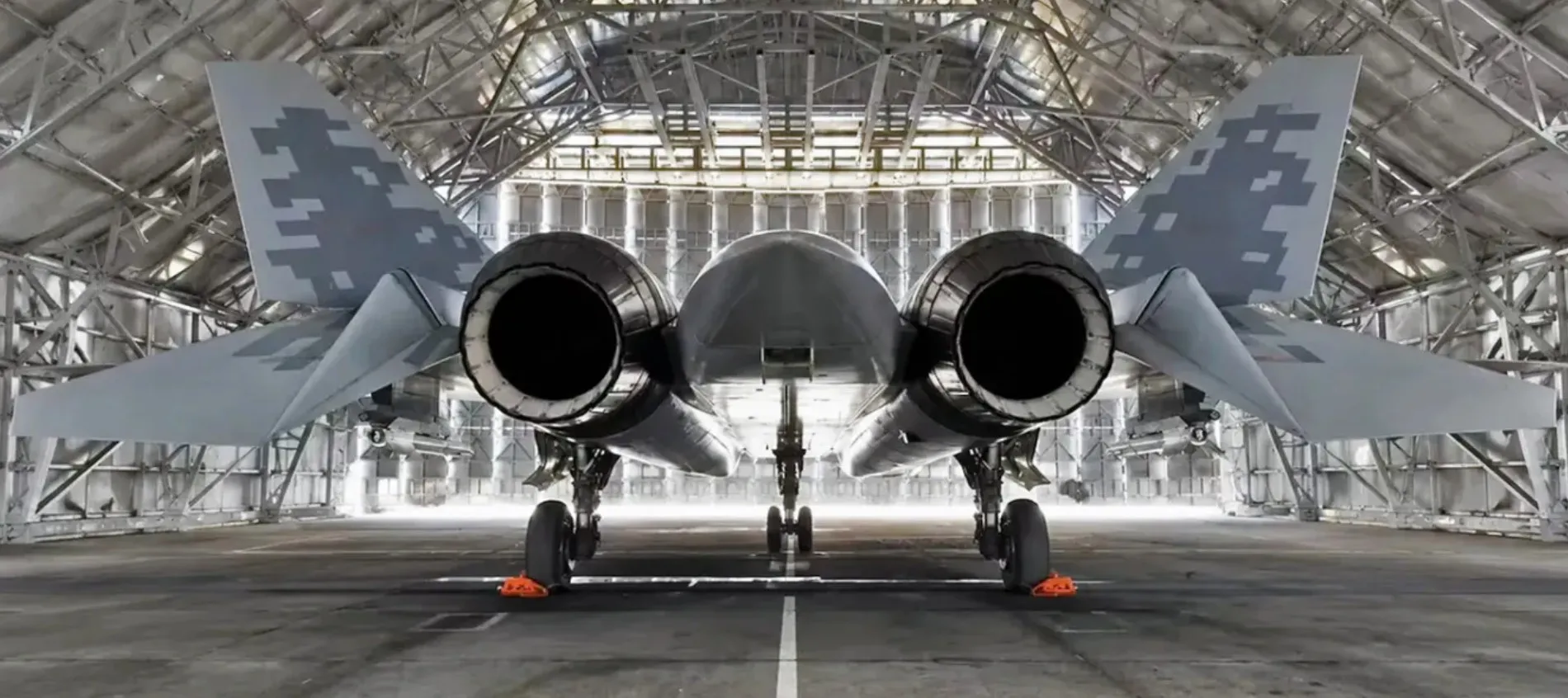
As the Russia-Ukraine war enters its fifth year, Russia has begun deploying its Su-57 stealth fighter in an anti-drone role. On July 6, 2026, a Ukrainian drone strike on the Omsk oil refinery — more than 3,000 km from the front line — saw Su-57s scrambled to intercept, but they reportedly downed only one drone while others hit their target. The episode has intensified debate over Russia's reluctance to expose its most advanced aircraft to high-risk combat.
Highlights
- On July 6, 2026, Russia deployed Su-57 stealth fighters to intercept a Ukrainian drone strike on the Omsk oil refinery, located more than 3,000 km from the front line, but only one drone was shot down.
- Images released days before the Omsk incident showed an Su-57 carrying R-73/R-74 short-range air-to-air missiles on external wing pylons, sacrificing stealth for close-range anti-drone engagement capability.
- Russia has approximately 30 operational Su-57s — far below Moscow's original target of delivering 76 additional aircraft by 2027 — severely limiting large-scale deployment.
- The Su-57 is Russia's only operational combat aircraft equipped with an AESA radar and a passive 101KS IRST sensor system, giving it technical advantages in tracking small, low-flying drones.
- Russia's sole confirmed Su-57 export order is from Algeria; analysts say avoiding any confirmed combat loss is critical to protecting the aircraft's international sales prospects.
The Russia-Ukraine war has entered its fifth year, yet Moscow has so far committed its most advanced combat aircraft, the Su-57, to frontline action only sparingly.
Critics argue that Moscow is deliberately limiting the Su-57's operational exposure to protect its export market potential, contending that any confirmed loss to Ukrainian forces would severely damage the aircraft's credibility on the international arms market.
Su-57 Deployed Over Omsk in Anti-Drone Operation
Recent Ukrainian media reports indicate that Russia has begun using the Su-57 in anti-drone operations — though even in this lower-risk role, the stealth fighter has reportedly delivered mixed results.
According to the Kyiv Post, Russia deployed Su-57 stealth fighters to intercept Ukrainian drones during an attack on the Omsk oil refinery on July 6, 2026, yet the facility was ultimately struck.
The target was Russia's largest oil refinery and the deepest strike Kyiv has carried out against Russian territory to date, at more than 3,000 kilometres (approximately 1,864 miles) from the border. Videos filmed by local residents and circulated online clearly show the silhouette of an Su-57 streaking through the sky.
Notably, the fact that Russia deployed the Su-57 for anti-drone duties at a location more than 3,000 km from the front underscores Moscow's reluctance to expose its most advanced fighter to high-risk combat environments.
Ukrainian monitoring channel Exilenova+ shared footage showing an Su-57 hunting drones near the Omsk refinery, and reported that the aircraft downed only one drone while the others successfully hit their targets.
Reuters reported that the refinery suspended operations following the drone strike.
External Missile Loadout Points to Tactical Shift
Reports of Russia using the Su-57 in anti-drone missions emerged just one week after the release of images showing an Su-57 carrying R-73 air-to-air missiles on external wing pylons rather than in its internal weapons bays.
Mounting missiles externally compromises the Su-57's stealth characteristics; however, if the aircraft is being used primarily for anti-drone operations, preserving low-observable performance is of limited relevance.
Earlier this month, social media images surfaced showing an Su-57 carrying short-range R-73/R-74 (AA-11 Archer) series air-to-air missiles on external hardpoints.
Carrying such short-range air-to-air missiles externally suggests the Su-57's armament configuration is optimised for close-range aerial engagements — most likely against the long-range one-way attack drones and cruise missiles that Ukraine has been deploying in increasing numbers.
A separate photograph showed a mysterious targeting pod mounted beneath the left engine nacelle. Russian military bloggers at the time commented that the images indicated the Su-57 had been configured to hunt Ukrainian drones and cruise missiles.
Fifth-Generation Fighters in the Anti-Drone Role: Not a Russian First
It is worth noting that Russia is not the only nation to have used a fifth-generation stealth fighter for anti-drone operations. The United States, the United Kingdom, the Netherlands, and Israel have all previously employed the F-35 in this role.
In 2022, Israel revealed that it had shot down two Iranian drones heading toward Israeli territory, marking the F-35's first confirmed air-to-air kills. Later that same year, a Royal Netherlands Air Force (RNLAF) F-35A was observed bearing a drone kill marking after shooting down a Russian drone that had entered Polish airspace.
Technical Strengths and Operational Constraints
The Su-57 is the only Russian frontline combat aircraft currently equipped with an Active Electronically Scanned Array (AESA) radar. While Russia has announced plans to retrofit the Su-35 with a new AESA radar to replace its existing Irbis-E Passive Electronically Scanned Array (PESA) radar, that upgrade has yet to be integrated into the Su-35 fleet. AESA radar offers significant advantages in tracking drone and cruise missile threats.
The Su-57 also carries the passive 101KS electro-optical system, which includes an Infrared Search and Track (IRST) sensor located ahead of the cockpit as well as an imaging infrared sensor for low-altitude operations. IRST sensors are particularly effective against low-speed, low-altitude targets with a small radar cross-section — a profile that fits many modern attack drones.
The Su-57 also carries a 30 mm single-barrel cannon with 150 rounds in its starboard wing root, which can serve as an additional weapon against drone threats.
Limited Fleet Size Constrains Deployment
Nevertheless, the number of Su-57s available to Russia remains very small. Russia is reported to have approximately 30 operational Su-57s — far short of the 76 additional aircraft Moscow had originally planned to deliver by 2027.
The Su-57 has previously conducted limited stand-off strike missions in the Ukraine war, and its use in anti-drone operations allows Russia to employ the aircraft without over-exposing it — protecting both its export potential and its operational survivability while still exploiting its technological advantages.
To date, the Su-57 has secured only one confirmed export order, from Algeria.
Debate: Calculated Caution or Lack of Confidence?
Russia's decision to deploy its most advanced fighter exclusively in low-intensity defensive roles thousands of kilometres from the front has drawn divergent interpretations from analysts.
Many defence experts view Moscow's reluctance to send the Su-57 to the front line as reflecting a lack of confidence in its stealth capabilities. Others, however, suggest that it may simultaneously point to the Su-57 evolving into a multi-role platform — one capable of conducting stealthy deep-strike missions in high-threat environments while also performing high-volume Defensive Counter-Air (DCA) operations.
In this emerging role, the Su-57 could function as a mobile, networked interceptor protecting strategic airspace rather than a dedicated stealth penetrator.
Russia Continues to Upgrade the Su-57
Russia's Ministry of Defence has not publicly acknowledged the photographs and reports concerning the Su-57 carrying external short-range air-to-air missiles or conducting anti-drone operations near the Omsk refinery.
According to Ukrainian accounts, the Su-57 achieved limited results in its new role — downing just one drone while the rest struck their targets. However, this single engagement is insufficient for a comprehensive assessment of the Su-57's capabilities as a high-volume interceptor.
What is clear is that Russia continues to upgrade the Su-57. Recent developments include the unveiling of a two-seat variant and the replacement of the AL-41F1 engines used in early-production aircraft with the new Izdeliye 177 (Product 177) powerplant.
The Su-57's future role will ultimately depend on how these improvements are integrated and how the aircraft performs in its evolving air intercept mission.
原文來源: 查看原文
FAQ
Newsletter
Subscribe to our Low-Altitude Industry Newsletter
Daily curated news on low-altitude economy and drone industry, delivered to your inbox.
Reviewed and published by the LAETimes editorial desk ·