Thiel and Sequoia Back German Drone Startup Stark Defence with $570M Round
Berlin-based Stark Defence has closed a €500 million (~$570M) funding round led by Sequoia Capital and Peter Thiel's Founders Fund, pushing its valuation to €3.5 billion (~$3.65B). Founded less than two years ago, Stark already holds a €269M Bundeswehr contract and has deployed its Virtus loitering munition in active combat in Ukraine, making it one of Europe's most closely watched defense tech companies.
Highlights
- Stark Defence closed a €500 million (~$570M) round led by Sequoia Capital and Peter Thiel's Founders Fund, valuing the Berlin startup at €3.5 billion (~$3.65B) less than two years after founding.
- Eight institutional investors participated in the round, including the NATO Innovation Fund — an Alliance-backed vehicle for dual-use European startups.
- The Bundeswehr awarded Stark a €269 million contract in February 2026 to supply drones to the 45th Armored Brigade stationed in Lithuania, with a framework agreement expandable to €1 billion.
- Stark's Virtus loitering munition has been confirmed deployed in active combat in Ukraine, offering the company a credible 'combat-proven' claim in an increasingly competitive market.
- Over 80% of the new capital will be directed toward manufacturing expansion and R&D, targeting production of thousands of drone systems per month from facilities in Swindon, England and across Europe.
Berlin-based Stark Defence has closed a €500 million ($570 million) funding round led by Sequoia Capital and Peter Thiel's Founders Fund. The deal values the two-year-old company at approximately €3.5 billion ($3.65 billion) and brings its total capital raised to €660 million. The trajectory from seed round to a $3.65 billion valuation took less than 18 months — an exceptional pace even by defense tech standards.
Sequoia, Founders Fund, and NATO All Back the Same Berlin Startup
According to The Next Web, the round was co-led by Sequoia Capital and Founders Fund, with participation from the NATO Innovation Fund, Döpfner Capital, Air Street Capital, 201 Ventures, Advent, and Project A. Eight institutional investors in a single round is unusual by any measure.
The NATO Innovation Fund is the Alliance's dedicated venture vehicle for dual-use startups in Europe. Its appearance alongside two of Silicon Valley's most prominent funds — investing at the same valuation, in the same Berlin company — would have been nearly unimaginable five years ago. U.S. tech capital and NATO strategic capital are now betting on the same table.
Image credit: Stark Defence
CEO Uwe Horstmann is not a career defense bureaucrat. He previously co-founded Project A, one of Germany's leading venture firms, before taking the helm at Stark in October 2025. He also holds a reserve officer commission in the Bundeswehr, giving him direct first-hand insight into military procurement.
"The challenge Europe faces is no longer whether we can innovate, but whether we can scale," he said in a statement. Stark is backing that claim with capital allocation — more than 80% of the €500 million round is earmarked for manufacturing expansion and R&D, with an explicit target of producing thousands of systems per month.
Stark achieved unicorn status in January 2026, just over five months after Sequoia led its $62 million seed round in August 2025. The jump from a $1 billion to a $3.65 billion valuation took roughly five months, a pace that reflects how quickly European defense procurement has accelerated. Russia's war on Ukraine has compressed procurement cycles that once spanned a decade into a matter of months.
Virtus Loitering Munition Confirmed in Active Combat in Ukraine
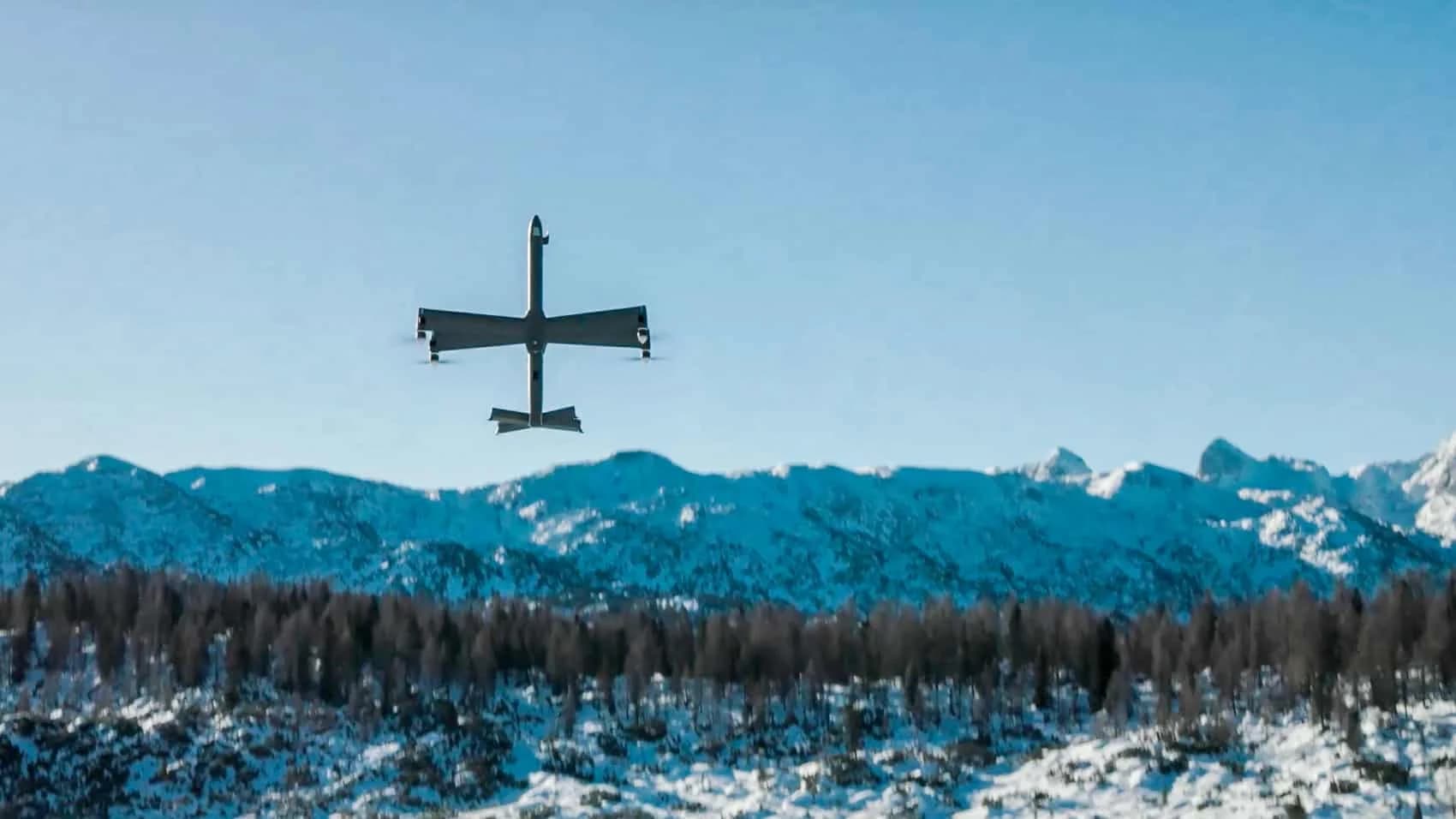
Stark's flagship product is Virtus — a loitering munition designed to be assembled in under ten minutes and capable of autonomously engaging armored targets. The drone carries a self-destructing warhead, requires no human intervention during its terminal attack phase, and has been confirmed deployed on the Ukrainian battlefield.
Image credit: Stark Defence
This is not a marketing demonstration. Ukraine is currently the world's most rigorous live-fire test environment for drone systems. Operating there means Virtus has faced real electronic warfare jamming, genuine countermeasures, and actual combat conditions.
The ten-minute assembly time carries more weight than it might appear. On the battlefield, time is a tactical variable. Two weapons with near-identical specifications on paper can diverge sharply in procurement decisions when assembly time is factored in. That figure is not a marketing claim — it is a procurement argument.
Stark's product line extends beyond Virtus. The company is also developing unmanned surface vehicles (USVs) and threat-tracking software for weapons system coordination, positioning itself as a broad autonomous weapons platform company rather than a single-product drone manufacturer.
Co-founder Florian Seibel previously founded Quantum Systems — one of Germany's earliest prominent drone companies — before transitioning to a founding investor role at Stark. The company operates a 40,000 sq ft production facility in Swindon, England (opened in 2025), with additional offices in Germany, Ukraine, Sweden, and Greece. Stark has also acquired autonomous navigation software startup Pleno and integrated its technology into the broader platform.
Bundeswehr Contract Gives Stark Real Revenue Before the Valuation
In February 2026, the German Bundeswehr awarded both Stark and defense AI startup Helsing contracts worth approximately €269 million each to supply drones to the 45th Armored Brigade stationed in Lithuania.
The framework agreements associated with these contracts could expand to €1 billion per company. This is not speculative future revenue — it is a current procurement commitment by a NATO member state for a specific unit at a specific forward position.
Image credit: Stark Defence
The 45th Armored Brigade in Lithuania sits directly on NATO's eastern flank, within dozens of kilometers of the Russian and Belarusian borders. These drones are not headed to a training base in Bavaria — they are bound for one of the most exposed positions on Alliance territory.
The contract also marks a meaningful distinction from earlier European defense startups: revenue came before the valuation climb, not after. Many European defense tech companies burned through venture capital while still chasing their first procurement contract. Stark secured a nine-figure government contract before its first birthday.
Stark's domestic political situation is more complicated. Peter Thiel's ties to the Trump administration and his libertarian-right politics have drawn scrutiny from some German politicians. Those concerns did not prevent the contract award or the funding round, but they are likely to remain a background factor as the company deepens its relationship with the Bundeswehr and pursues procurement deals across European defense ministries.
DroneXL Perspective
This is a company that is less than two years old, has confirmed combat deployments, holds a nine-figure government contract, and has just raised $570 million from Sequoia and Peter Thiel's Founders Fund.
Many defense drone startups spend years in prototype development without a single paying customer. Stark signed a Bundeswehr contract and closed a €500 million round in the same quarter.
The round sends a clear signal: European defense tech is scaling fast and will not slow down. They have a live war to validate hardware. Stark can credibly call its systems "combat-proven" today — which is a direct competitive challenge to U.S. drone manufacturers, and one that relevant stakeholders should take seriously.
Manufacturing capability remains the biggest open question. "Thousands of systems per month" is as much a production challenge as a technical one. The 40,000 sq ft Swindon facility and the R&D investment point in the right direction, but scaling a production line for autonomous strike weapons is fundamentally different from scaling software. Whether Stark can hit its output targets without quality failures will be determined by operational pressure, not press releases.
Image credit: Stark Defence
原文來源: 查看原文
FAQ
Reviewed and published by the LAETimes editorial desk ·