USS Abraham Lincoln Surpasses 200 Days at Sea, Possibly Setting Modern Carrier Record
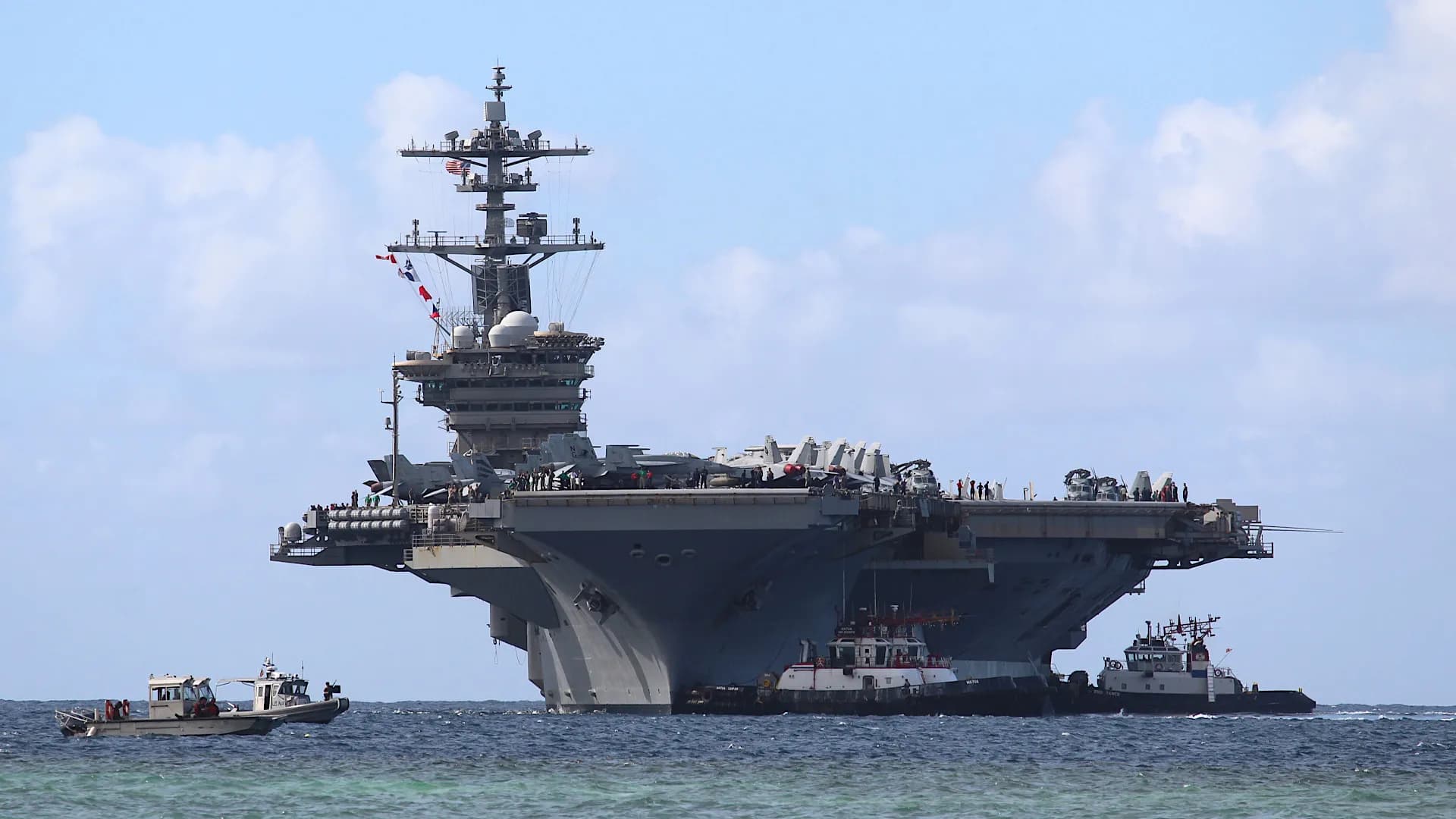
The Nimitz-class aircraft carrier USS Abraham Lincoln (CVN-72) has been continuously underway for more than 200 days in support of Operation Epic Fury and the subsequent naval blockade of Iran, potentially setting a record for the longest continuous at-sea deployment in modern carrier history. The ship departed San Diego on November 21, 2025, and remains on station in the northern Arabian Sea, with more than 5,000 crew members having gone over seven months without a formal port call.
Highlights
- USS Abraham Lincoln (CVN-72) has been continuously underway for more than 200 days since departing San Diego on November 21, 2025, in support of Operation Epic Fury and a subsequent naval blockade of Iran.
- The deployment is believed to be the longest continuous at-sea period in modern carrier history, potentially surpassing USS Eisenhower's 206-day record set in 2020 under COVID-19 port restrictions.
- More than 5,000 Navy and Marine Corps personnel aboard Lincoln and CSG-3 have gone over seven months without a formal port call; a one-day Guam stopover in December was too brief for most sailors to go ashore.
- CVW-9, which includes F-35C Lightning IIs from VMFA-314, flew thousands of sorties over 40 days, while DESRON 21 destroyers fired dozens of Tomahawk Land Attack Missiles against Iranian targets.
- The U.S. Navy has not officially confirmed the record, and Lincoln's exact movements over the past week—including a possible recent port call—are still being verified.
USS Abraham Lincoln Surpasses 200 Days at Sea, Possibly Setting Modern Carrier Record
The U.S. Navy's Nimitz-class aircraft carrier USS Abraham Lincoln (CVN-72) has been continuously underway for more than 200 days—well past the six-month mark—in sustained support of Operation Epic Fury and the ensuing naval blockade of Iran. The milestone is believed to represent the longest continuous at-sea period in modern carrier history. Lincoln, flagship of Carrier Strike Group 3 (CSG-3), remains forward-deployed in Middle Eastern waters.
From San Diego to the Arabian Sea
Lincoln, the fifth Nimitz-class supercarrier and self-described home of "the most combat-ready carrier strike group in the fleet," departed Naval Station Guam on December 12, 2025, after only a single day of brief resupply. Port calls typically afford sailors and Marines an opportunity to go ashore for rest and recuperation, but the Guam stopover was so short that most crew members likely never set foot on dry land.
Lincoln and CSG-3 had quietly departed Naval Station San Diego three weeks earlier, on November 21, 2025, with a combined complement of more than 5,000 Navy and Marine Corps personnel. At the time, public attention was focused on U.S. force posture in the Caribbean, and Lincoln was widely expected to conduct a routine Pacific patrol. However, following Operation Midnight Hammer—B-2 Spirit bomber strikes on Iranian nuclear facilities—contingency planning for Iran was already well underway, and Lincoln's Composite Training Unit Exercise (COMPTUEX) had incorporated Middle East combat scenarios.
After leaving Guam, Lincoln transited the South China Sea, crossed the Indian Ocean, and arrived in the northern Arabian Sea in late January. Carrier Air Wing Nine (CVW-9) immediately commenced strike operations in the opening wave of Operation Epic Fury, with CSG-3 playing a pivotal role in the subsequent maritime blockade. Since the Memorandum of Understanding (MOU) was signed on June 17, Lincoln has remained on station in the northern Arabian Sea and has participated in retaliatory strike operations during the most recent round of hostilities.
Crew Voices: "Nobody Signed Up for This, But We Did It"
"We have officially claimed the title of most consecutive days at sea for a modern aircraft carrier," wrote Lincoln's Lieutenant Commander Alexis Travis in an Instagram post dated June 16. "Literally nobody signed up for this deployment, but here we are, still safe and successfully completing the mission. It's a bunch of tough people doing hard things, breaking records, and waking up to do it again."
The War Zone, which first reported the milestone, has reached out to the U.S. Navy for confirmation that this constitutes an official record; no response had been received at the time of publication.
Comparing the Historical Record
-
USS Dwight D. Eisenhower (2020): In June 2020, the U.S. Navy announced that Eisenhower and the Ticonderoga-class cruiser USS San Jacinto had set a record of 161 consecutive days at sea. Eisenhower ultimately logged 206 continuous days underway before making port in July 2020—a figure inflated in part by strict COVID-19 port restrictions. The carrier had departed Norfolk in January 2020 for a Middle East deployment, conducting combat operations in support of Operation Freedom's Sentinel, and had not made a port call in nearly seven months.
-
USS Theodore Roosevelt (2002): Earlier still, Theodore Roosevelt set a record following the September 11 attacks, deploying in support of Operation Enduring Freedom. She departed Norfolk in September 2001 and made a brief port call in Bahrain 160 days later in February 2002.
-
USS Gerald R. Ford (2024): In April of this year, America's newest and largest carrier, Gerald R. Ford, completed a deployment of 326 days—a record for total deployment length. However, Ford operated primarily in relatively permissive environments across Europe and South America during those nearly 11 months, making at least nine port calls in locations including Marseille, Oslo, Palma, Split, St. Thomas, and Souda Bay—an average of one port visit every 36 days.
CSG-3: Tip of the Spear
CSG-3—including multiple guided-missile destroyers of Destroyer Squadron 21 (DESRON 21)—served as the leading edge of Operation Epic Fury. DESRON 21 fired dozens of Tomahawk Land Attack Missiles (TLAMs) against Iranian targets and employed Standard Missiles and other interceptors to defeat incoming threats, providing layered air and missile defense for the strike group. CVW-9, the air wing embarked aboard Lincoln, flew thousands of sorties over the course of the 40-day conflict, maintaining persistent pressure along Iran's southern axis, escorting commercial vessels through the contested Strait of Hormuz, and tracking and neutralizing Iran-affiliated vessels attempting to breach the blockade.
Notably, Lincoln's air wing includes F-35C Lightning II joint strike fighters operated by Marine Fighter Attack Squadron 314 (VMFA-314), significantly enhancing the strike group's penetrating strike capability.
The destroyers assigned to screen Lincoln had some opportunity to make port calls before the onset of hostilities, but several had already been underway for more than four months. USS Frank E. Petersen Jr. (the IAMD command ship) made a two-day port call in Duqm, Oman, in mid-February. USS Michael Murphy, the last destroyer to withdraw from the Persian Gulf, called at Dubai from February 25–27, departing the day before Iran's first retaliatory salvo. USS Spruance, which got underway the same day as Lincoln and made only a single brief stop at Guam in December, has logged the same number of days at sea and was photographed firing a Tomahawk missile on the first day of Operation Epic Fury.
Postscript
Upon further review, the precise details of Lincoln's movements over the past week have yet to be fully confirmed. While the carrier has been continuously underway for more than 200 days, the exact count and the date of any possible recent port call—which may have occurred this week—remain to be verified. The U.S. Navy has been contacted for clarification.
With the future of the U.S.-Iran MOU also in doubt following the latest exchange of retaliatory strikes—casting a shadow over diplomatic talks between Washington and Tehran—more than 20 U.S. Navy surface combatants remain active in the region. When Lincoln's crew will next set foot ashore remains an open question.
原文來源: 查看原文
FAQ
Reviewed and published by the LAETimes editorial desk ·


